Oswaldo Paya: Activist who fought to bring democracy to Cuba
‘We think it’s not an accident,’ said his daughter. ‘He just wanted Cubans to have their rights’
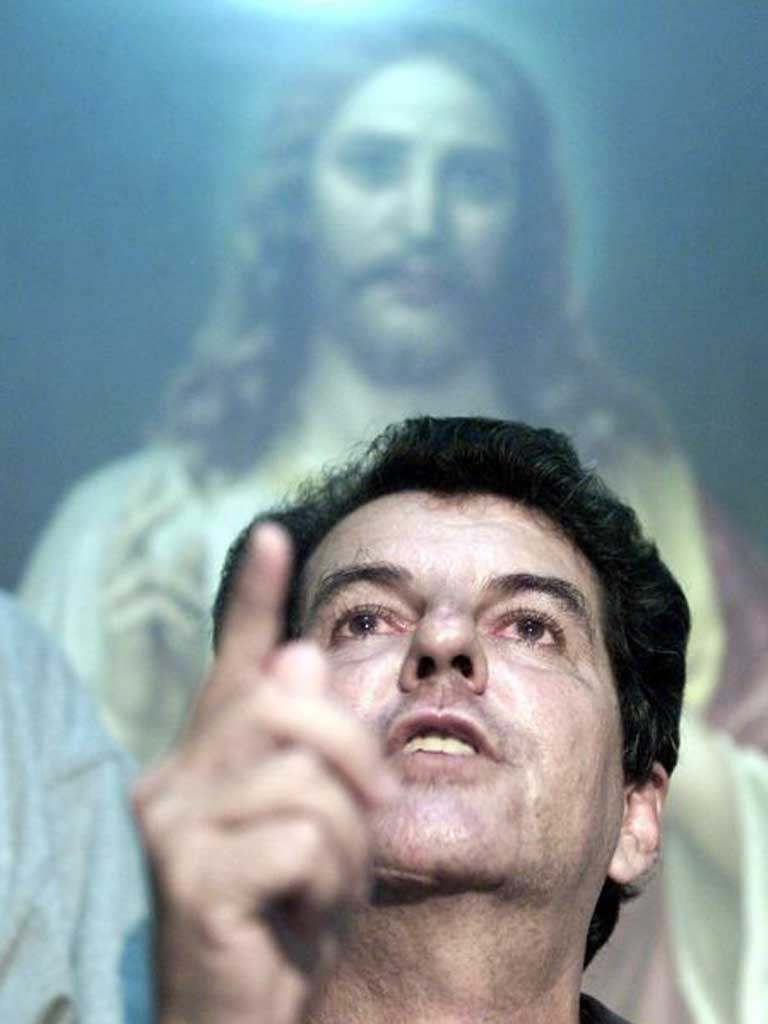
Oswaldo Paya, who died in a mysterious car crash in his native Cuba, was, for decades, one of the greatest thorns in the flesh of his nation's leader, Fidel Castro. A pro-democracy, anti-communist dissident and human rights campaigner, Paya was banished to a forced labour camp to cut sugar cane "for the revolution" when he was only 17. Many years later, in 2002, his efforts to create a non-violent transition to democracy in Cuba were recognised by the European Parliament, which awarded him the Sakharov Prize for Freedom of Thought.
Needless to say, his nation's leader did not send him a congratulatory telegram. The award appeared to escape the notice of the state media, which considered him "an anti-revolutionary agent of the United States." Mind you, they called me exactly the same thing, specifically "a CIA agent," when I covered Cuba for The Independent, even though I did my utmost to highlight the successes of the revolution, notably in the health sector.
In accepting the Sakharov Prize, Paya told the European Parliament: "I believe you have awarded this to all Cubans, because I believe that, in awarding it, Europe wishes to say: 'You, too, are entitled to rights." He was nominated five times for the Nobel Peace Prize, twice by Vaclav Havel.
When an opponent of Castro dies relatively young, questions are automatically raised. The fact that Castro and his Ernesto Ché Guevara showed no mercy after their 1959 revolution remained hard to live down, no matter how hard the Cuban leader tried in recent years to show a more human face. The fact that Paya had received many death threats added to suspicions, not least from his family.
Paya was a passenger in a car being driven from his native Havana to the city of Bayamo when it swerved off the road and hit a tree. The Castro-controlled state media said the driver had lost control. Paya's son Oswald Jnr and daughter Rosa, quoting eye witnesses, said they believed the car had been rammed and forced off the road by another vehicle which disappeared.
"There was a car trying to take them off the road, crashing into them at every moment. So we think it's not an accident,'' said Rosa. "They wanted to do harm and they ended up killing my father. He just wanted for Cubans to have their rights. That's all he ever wanted." A fellow dissident, Harold Cepero, 31, was also killed and two others in the car, a Swedish and a Spanish politician, both 27, were injured, at La Gavina, outside Bayamo in Cuba's Granma province. The Spaniard, Angel Carromero, was believed to have been driving the rental car.
"When Messrs Jens Aron Modig [the Swedish politician] and Angel Carromero are released from hospital, we might learn more," according to Heinz Dieterich, a respected political analyst who specialises in Cuba and is friendly with the Castro family. "Political assassination is not part of their [the Castros] strategy. They have never used it. It would be political suicide." Oswaldo Payá Jnr replied: "In a democracy, perhaps yes. But this is the opposite end of the spectrum."
His father was best-known for starting the so-called Varela Project at the end of the 1990s, a campaign to gather signatures in favour of freedom of speech, a peaceful transition to democracy and a guarantee of civil rights. It was an unprecedented challenge to Castro, one which even brought criticism from hardline anti-Castro exiles in Miami, who called Paya naïve and insisted the Cuban leader should be summarily overthrown, if not killed. The Varela Project won 25,000 votes, not insignificant under a totalitarian regime. Castro, of course, responded with a referendum of his own, which resulted in an overwhelming vote saying the revolution was "irrevocable."
Oswaldo Paya Sardinas was born in Havana in 1952, when Cuba was still run by the US-backed dictator Anastasio Somoza. He was six when Castro and Guevara rolled into the capital, smoking big cigars, having forced Somoza to flee. A devout Roman Catholic, he went on to become an engineer and kept a relatively low profile in the anti-Castro movement as the leader of the so-called Christian Liberation Movement until he launched the Varela Project. At his funeral in a modest Havana church yesterday, mourners shouted "Viva Paya!" and "Libertad, Libertad!"
"His death is tragic not only for his family but for the entire human rights and pro-democracy movement," said Elizardo Sánchez, head of the banned but tolerated Cuban Commission for Human Rights. "Paya was considered the most notable political leader of the Cuban opposition." A White House statement said: "The President's thoughts and prayers are with the family and friends of Oswaldo Paya, a tireless champion for greater civil and human rights in Cuba."
Oswaldo Paya Sardinas, engineer and dissident: born Havana, Cuba 29 February 1952; married Ofelia Acevedo (three children); died La Gavina, Cuba 22 July 2012.
Join our commenting forum
Join thought-provoking conversations, follow other Independent readers and see their replies
Comments