Professor David Frisby: Sociologist who established himself as the world's leading expert on German social thought
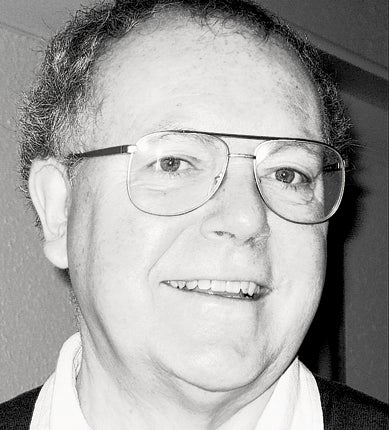
David Frisby had a knack of inserting jokes, anecdotes, and gentle wisdom into lectures on the most seemingly austere areas of social theory, leaving his audience with gossip concerning Max Weber's love life as well as insights into the intricacies of neo-Kantian antipositivism.
David Patrick Frisby was born and brought up in working-class Sheffield, and after Grammar School he worked as management trainee for the National Coal Board, who awarded him a scholarship to study sociology at the London School of Economics. The terms of the scholarship demanded that David spend part of his vacations painting coal wagons black, a task he cited with amused relish as an example of pointless labour. He graduated from the LSE with the prize for the best finals marks in his year.
He taught at the University of Kent from 1968-73, and in 1975 was appointed to a lectureship at Glasgow University, where he spent the next 30 years, establishing himself as the world's foremost expert on German social thought. He gained his PhD in 1978, and with Tom Bottomore translated Georg Simmel's gargantuan Philosophy of Money (1978); his books and essays on Simmel and other German social thinkers – including Sociological Impressionism (1981), Fragments of Modernity (1988) and Simmel and Since (1994) – have achieved definitive status.
It was a career of considerable distinction. Frisby loved to travel, teaching at Heidelberg, Konstanz and Freiburg in Germany; and Princeton, Yale, San Diego and New York University in the United States. He spent three months in Heidelberg while finishing his PhD, and talked fondly of his daily writing routine, which involved three two-hour stretches punctuated by a series of carefully planned walks, a long lunch and a draft beer every evening which, so he said, took eight and a half minutes to pour. He also spent some time in Australia where, every Friday afternoon, the Head of Department would hand him cash in an envelope for "beer money". He was fascinated by the recent financial crisis, ingesting the FT every morning at a corner table at the LSE's Garrick bar and recalling that his first application for a bank loan had been rejected by Barclays: it had been for money to buy a car in which he could drive to various conferences.
He spoke warmly of his years at in Glasgow, his home until he died, gaining a further MA qualification from the Glasgow School of Art for a thesis on Otto Wagner in 1998. His appointment to a Chair in Sociology at the LSE came in 2005. Just as in Glasgow he was a popular teacher and a quiet but influential operator on academic committees. He had a talent for "seeing through" people and had little time for fragile academic egos and their associated protocols, which he could subtly burst with an amusing recollection and a pointed remark about the "great and good" of sociology.
For David Frisby the work of a scholar involved a great deal of painstaking detective work as well as careful, precise interpretation. His books and articles are meticulously researched, and he paid particular attention to getting his references spot-on. Faithful translation was important to him, and he took pains to correct those instances where inaccuracy had led to significant misunderstanding. He also enjoyed discovering connections between scholars and texts: he recently took the trouble of reading a PhD thesis written by someone who played tennis with a neighbour of Simmel – "I realised I may have finally exhausted my topic," he said with typical modesty when he found nothing of interest.
He wrote everything out in longhand, and his prose style was invariably elegant and precise. But it is for the substance of his contribution to our understanding of the history of social thought that he will be long remembered, and with considerable gratitude. Besides doing so much to establish Simmel's centrality as a key sociological thinker, Frisby offered highly illuminating and original interpretations of the work of other great modernist thinkers such as Lukacs, Benjamin, and Kracauer.
More recently, his focus had moved to architecture and the city, with Cityscapes of Modernity (2001) and an anthology, Metropolis Berlin: 1880-1940 (co-edited by Iain Boyd White) currently under preparation. He had his more private academic passions, too, on which he never published but could talk at length: he cited Wittgenstein's Culture and Value as among his favourite books, and a copy of The Big Typescript always sat on his desk. He had long planned to write a book on detectives and social theory (Amazon.com even lists such a book, although it doesn't exist – David rather liked that), said privately that he would love to write something on Wittgenstein, and in the last year spend a great deal of time reading Nietzsche, whose style he enjoyed.
David was an extraordinarily generous academic: anyone (student or colleague) who knocked at his door with a question was ushered inside, and would leave some time later, always enthused and clutching a list of references, and even a book or two plucked from his packed and elaborately organised shelves. He was genuinely interested in what colleagues were up to, often surprising them by how much he knew about the topic in which they specialised. One would always come away from a conversation with him wanting to read more, but despite the astonishing depth and range of his learning he was never intimidating. In his work he always deferred to the status of those he was writing about, never pushing himself forward, always standing back, committed to offering his subjects what Wittgenstein used to call a "perspicuous" view. He was, as countless colleagues remarked, the most gentle of gentlemen scholars.
He is survived by Tanya, his wife, with whom he shared almost 30 happy years, Michelle and Anton, and two grandchildren.
Dick Hobbs and Nigel Dodd
David Frisby, sociologist: born Sheffield 26 March 1944; married (one son, one daughter); died 20 November 2010.
Join our commenting forum
Join thought-provoking conversations, follow other Independent readers and see their replies
Comments