Professor David Furley: Celebrated scholar of Greco-Roman philosophy
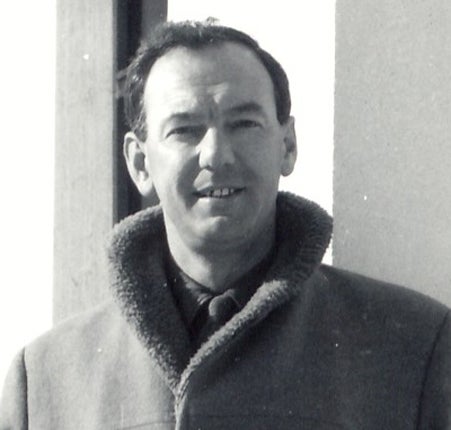
David Furley was one of the 20th century's outstanding scholars of Greco-Roman philosophy. The quantity of Furley's published output is perhaps modest by today's standards. But virtually every item is a gem, and many have become classics.
He was educated at Nottingham High School and at Jesus College Cambridge, where he became an Honorary Fellow. In 1947, after war service in Burma and a return to Cambridge to complete his degree, he took up an assistant lectureship in the Departments of Greek and Latin at University College London. Following promotions up to the level of reader, he moved in 1966 to a professorship at Princeton University. He remained there until his retirement in 1992, which was marked with a conference in his honour at the Institute of Classical Studies, London, and not long after by his return to residence in England, at Charlbury in Oxfordshire.
The most recurrent motif of his work was the systematic contrast between two radically opposed philosophical and scientific worldviews, atomism and Aristotelianism, his analyses typically shedding equal light on both traditions. The leading exhibit is undoubtedly his brilliant 1967 book Two Studies in the Greek Atomists. Here he took two central themes of Epicurean atomism and reconstructed the origins of each, above all by minute study of the relevant texts in relation to their Aristotelian background. A model of lucid and judicious scholarship, this monograph did much, perhaps more than any other single book, to bring Epicureanism into the philosophical mainstream.
Another way in which Furley's work proved seminal lay in his genius for writing a short but incisive article which provoked an entire micro-industry of debate. His classic "Self-movers", a mere 15 pages in the original 1978 publication, became the focus of a subsequent conference at Pittsburgh, which in turn led to a multi-authored volume (Self-motion from Aristotle to Newton, ed. M.L. Gill and J. Lennox, 1994).
Another such case is "The rainfall example in Physics II.8" (1986), which argued with amazing concision – it weighed in at just six printed pages – that, contrary to the current orthodoxy, Aristotle in fact believed that rainfall is purposive, and not merely the mechanical outcome of meteorological processes. Again, a debate accumulated around the article, with far-reaching implications for Aristotle's natural philosophy.
A third case is "Lucretius and the Stoics" (1966). Lucretius was one of Furley's heroes (the Epicurean Latin poet's eloquent repudiation of the fear of death was read at his funeral). The article, running this time to an impressive 20 pages, presented a major challenge to the orthodoxy that Lucretius's polemics are typically directed against Stoic rivals. Resistance to this article's findings has been widespread in Lucretian circles, but it still has its defenders, and the debate remains evenly balanced.
Furley's services to scholarship were wide-ranging. For example he co-authored with J. S. Wilkie a fine annotated edition, Galen on Respiration and the Arteries (1984); translated the pseudo-Aristotelian On the World for the Loeb Classical Library (1955), as well as parts of Philoponus's commentary on Aristotle's Physics (1991); was editor of the journal Phronesis from 1968 to 1972; and also edited, among other collective publications, the second volume of the Routledge History of Philosophy (1997). His final long-term project was a major two-volume work, The Greek Cosmologists. The first volume appeared in 1987, but the eagerly awaited sequel never followed. Meanwhile most of his articles were collected in his 1989 book Cosmic Problems. These succinct masterpieces may well prove to be his most enduring intellectual legacy.
He was widely regarded within the ancient philosophy community as one of the subject's most brilliant practitioners. He received Princeton University's Howard T. Behrman Award for Distinguished Achievement in the Humanities in 1984, and was elected a Corresponding Fellow of the British Academy in 1990. From 1969 to 1982 he directed Princeton University's Program in Classical Philosophy.
In collaboration at first with Gregory Vlastos and Terry Penner, and later with Michael Frede, John Cooper and Alexander Nehamas, he helped build Princeton's reputation as a world-leading centre for the study of ancient philosophy. While still in the UK he had co-founded the Southern Association for Ancient Philosophy, and in September 2005 he was one of a tiny handful of survivors from the inaugural meeting present in Oxford to help celebrate its 50th birthday.
Furley's second wife, Phyllis, predeceased him by nine months. They were much-loved figures at Princeton, in and beyond the classics community. The play-readings that they held in their house at Ringoes over a period of 27 years became legendary. He particularly cherished his graduate students, many of whom went on to distinguished careers of their own. He found relaxation in bridge, furniture-making and bird-watching.
He is survived by his first wife Diana and their two sons, John and Bill (the latter himself a classical scholar), by four grandchildren, and by three generations of step-offspring from his second marriage.
David Sedley
David John Furley, Greco-Roman scholar: born Nottingham 24 February 1922; taught at University College London 1947-1966; Professor of Classics 1966-74, Charles Ewing Professor of Greek Language and Literature, Princeton University 1974-1992; Fellow, British Academy; married 1948 Diana Armstrong (divorced 1966; two sons), 1967 Phyllis Ross (died 2009); died Banbury 26 January 2010.
Join our commenting forum
Join thought-provoking conversations, follow other Independent readers and see their replies
Comments