Professor Frank Cioffi: Philosopher and authority on Freud
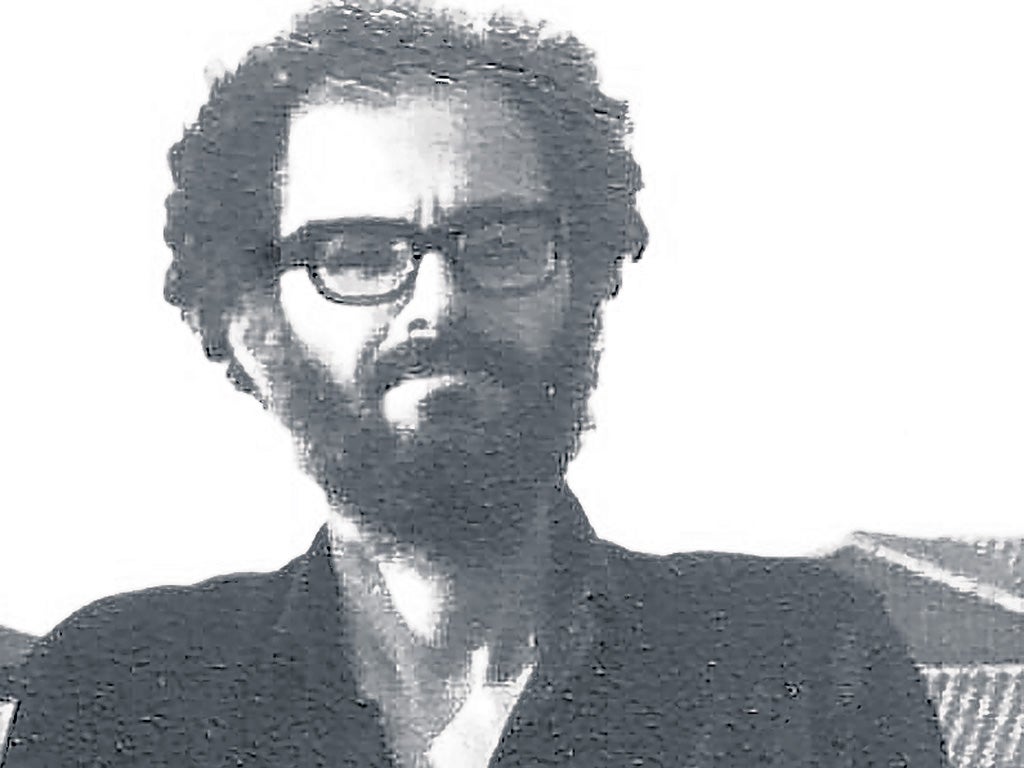
Frank Cioffi was a remarkable member of the early-1950s Oxford generation of philosophers. In his later career he was known for the fresh, original, combative precision of his essays and lectures, his half-century of critical engagement with Freud and his illuminating explorations of often neglected aspects of Wittgenstein's later works. The enormous range of his reading and conversation provided a wealth of accessible examples, often humorous or earthy, to anchor difficult philosophical points. His explorations of the character, scope and complexity of humane knowledge offer strength to those who seek to develop a philosophy of the humanities to supplement or rival the philosophy of science and expand our philosophical understanding of human knowledge.
Cioffi moved from an early fascination with Popper's falsifiability test for distinguishing science from pseudo-science to a view that criticisms of Freud as a defective scientist were misguided. He saw Freud as a flawed humanist whose insights were comparable to Nietzsche's and the great novelists of his time. Among psychologists he preferred the restlessly inquisitive William James to Freud, whose faults, he held, were grounded in failures of integrity as a humanistic investigator rather than in failures of scientific method.
As an undergraduate, Cioffi was struck that some Oxford philosophers, so careful in their analysis of philosophical doctrines, failed to extend their sceptical caution to the examination of Freudian views. He was especially impatient with those he considered to be apologists: he held that they failed to ask crucial questions.
Cioffi's commitment, drawn from Wittgenstein, to looking at cases rather than relying on received views can be shown by his famous intervention in an Oxford discussion of how to characterise our perception of a straight stick that looked bent when half-immersed in water. In what seemed to be tiresome pedantry he brought a stick in a bucket of water to a lecture and gained agreement that the stick was straight but appeared to be bent. He then pulled the stick from the water to reveal that this stick was in fact bent. In the same vein, Cioffi began preparation of many papers and lectures by assembling examples to explore the variety and complexity of the domain he was investigating.
He was impressed by Wittgenstein's anti-scientism but also argued that in some cases, but not all, scientific understanding does have a bearing on our humanistic philosophical concerns. He sought to distinguish between what we take comfort from in believing and what we are justified in believing. His concern for explanation was expressed in his frustration with what he saw as a lack of explanatory power in the sociologist Erving Goffman's riveting studies of the presentation of self in everyday life. He was also intrigued by what we can learn from fiction or from reading the great narrative histories, such as those of Macaulay.
Frank Cioffi's background differed from that of his Oxford contemporaries. He was born in New York in 1928 to a poor Italian family; his mother perished in childbirth and his father died soon afterwards. He was raised by his grandparents, and even after he learned his actual parentage he considered his revered uncle Lou to be his brother.
After he dropped out of a terrible high school, he began his real education in the streets and clubs of wartime Manhattan, where he met writers such as James Baldwin, and in the New York Public Library. He served with the American army of occupation in Japan and with the war graves registration service in France, and while living in Paris he was encouraged by his friend Lionel Blue to apply to Oxford, where he studied first at Ruskin College, then at St Catherine's College, graduating in 1954 in PPP (Psychology, Philosophy and Physiology), all financed by the GI Bill of Rights. He was tutored by Friedrich Waismann and Anthony Quinton and, for a term, by Iris Murdoch.
After two years of research in social psychology he took up a Lectureship in Philosophy at the University of Singapore, where he met and married Nalini Nair. When foreigners were forced to resign from the university, he left for a Senior Lectureship at the University of Kent.
In 1973 he became the founding Professor of Philosophy at the University of Essex, contributing ground-breaking courses in the Philosophy of Psychopathology and Philosophy, Literature and Literary Criticism, as well as first-year lectures that persuaded many students initially aiming at other studies to pursue philosophy.
After two decades at Essex, Cioffi retired to a Research Professorship at Kent and returned with Nalini to their home in Canterbury. Explanation in the Behavioural Sciences (CUP, 1970), which he co-edited with Robert Borger, influenced the development of the Philosophy of Social Science, and many of his papers were collected in Wittgenstein on Freud and Frazer (CUP, 1998) and Freud and the Question of Pseudo-Science (Open Court, 1998).
Frank Cioffi's tall, lean figure, his bearded face, his intense mind and brilliant conversation will be remembered at both Kent and Essex. For many colleagues and students he exemplified what it is to live the life of a philosopher.
Frank Cioffi, philosopher: born New York 11 January 1928; married Nalini Nair (one stepson); died Canterbury 1 January 2012.
Join our commenting forum
Join thought-provoking conversations, follow other Independent readers and see their replies
Comments