Sula Wolff: Child psychiatrist who made pioneering advances in her field
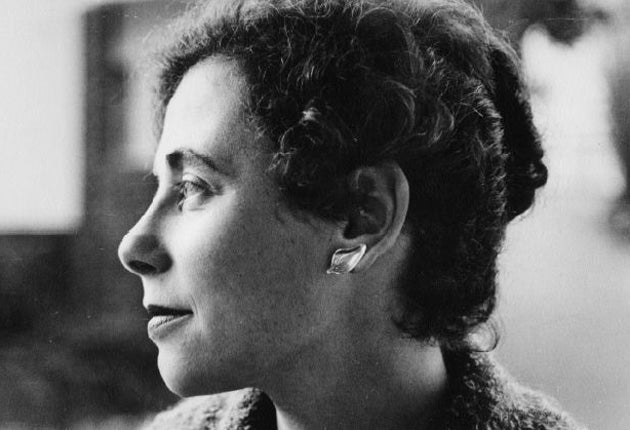
The eminent child psychiatrist Sula Wolff has died aged 85. She was one of the founders of modern child psychiatry in post-war Britain, helping to bring a rigorous scientific engagement to augment clinical practice.
She had a unique ability to bridge the professional divide. I was one of countless professionals worldwide – doctors, psychologists, social workers, teachers and nurses – whose development was profoundly shaped by her exceptionally clear writing, her encouragement and absolute commitment to the families she treated. Her writing captures the essence of her clinical encounters, always with carefully observed behaviour and openness to the world of the child. For the expert, nonspecialist and layman, her writing, a happy combination of the scientist and the clinician, is the most instructive and disciplined introduction to the study of children experiencing difficulties.
She made the child’s point of view come alive. This was due to her remarkable ability to comprehend and to communicate with children.
It is easy to forget how radical this perspective was when children’s interests were not as central to the legal and political agenda as they are now. She introduced a language in which to speak of children that avoided stigmatising them. This might be taken for granted today. The very title of her book Children under Stress brought a new perspective to the psychiatric treatment of children and their families. She took children’s anxieties and problems seriously, and taught never to underestimate the importance of seeing the world through the child’s eyes. From my own observation as her co-worker, she always had children’s welfare at heart and she never blamed parents for the behavioural difficulties of their children. She could be direct, though, because of her translucent honesty.
Whatever their background, she treated children and parents with equal consideration.
It was from her base in Edinburgh at the Royal Hospital for Sick Children that she undertook the greater part of her research, writing and clinical practice.
She was the author of three highly influential books: Children under Stress, which had two editions (1969 and 1981) and was frequently reprinted; Childhood and Human Nature: the Development of Personality (1989); and Loners: The Life Path of Unusual Children (1995). She published earlier papers in the medical journals on this subject and translated from the German A Short History of Psychiatry (Erwin Ackerknecht, 1968). Her books were also translated into all major languages.
She was widely recognised as an authority on childhood autism and Asperger’s syndrome. She was one of a small group of psychiatrists who together set up the Child Psychiatry Research Society to promote the scientific study of child and adolescent treatment. She was also the first psychiatrist to be awarded a Medical Research Council grant in the subject of child psychiatry.
At the core of her work was a longstanding interest in unusual children. She identified from her first 200 consecutively referred children a small group who had a particularly puzzling clinical picture and who were not responsive to standard treatments.
This early observation led her to carry out a longitudinal study of a cohort of children and adolescents seen in the course of her everyday clinical practice who were socially withdrawn with unusual interest patterns, and who often had difficulties fitting in at school and making friends. Her research defined, with exacting behavioural detail, what the precise difficulties of the children were and established that their particular personality constellation endured well into adult life.
Her pioneering work, identifying the differences in children’s personality development, is a forerunner of what today would be viewed as Asperger’s, “schizoid” children, falling within the broad autism spectrum.
She established ahead of her time that children may differ in personality because of inbuilt, constitutional factors, not derived from their life experiences. These children, who she called loners, needed specialist help, even when mildly affected, to avoid emotional and behavioural difficulties and to help fulfil their individual potential.
Sula Wolff was born in Berlin in 1924. She grew up as an only child. Her father was a patent agent and her mother the daughter of a farmer. As a young child she relished playing on the pavements. As she said, “I had an active street life”. At the age of four she was treated in hospital for a broken thumb by a woman doctor, her aunt, and she determined then to become a doctor. She never wavered from this childhood resolve.
In 1933 her father was taken briefly into Nazi custody. He saw the writing on the wall and soon thereafter the family left Germany as refugees. Her father came on ahead to England to find a home for her and her mother who stayed with relatives for a year in Rotterdam. Wolff, her parents and their furniture were reunited in London when she was nine years old and speaking only German. Educated at South Hampstead High School, she won a school prize for English the following year.
She was evacuated during the war, from 1939 to 1944, with her school to Berkhamstead, Hertfordshire – an experience that catapulted her into social interaction with a wide cross-section of British society, which she found intensely liberating. Wolff subsequently studied medicine at the University of Oxford.
From 1947 to 1955 she held various appointments in paediatrics at prestigious teaching hospitals in England. In 1955 she changed direction and began her training in psychiatry at the Maudsley Hospital, London. Here she met her future husband, Henry Walton. Following their training she joined him in Cape Town at the Groote Schuur Hospital where she became the first child psychiatrist in South Africa, treating children of all races.
Because of the continuing apartheid regime they both left South Africa to take up research fellowships in New York. In 1962 they both took up posts in Edinburgh, where she began her long association with the Royal Hospital for Sick Children, Edinburgh, first as senior registrar and, from 1966, as consultant child psychiatrist, retiring early from the NHS in 1984 to concentrate on her research.
Wolff and Henry pursued many cultural interests, especially in the visual arts, and were avid collectors, their pictures now in the National Galleries of Scotland. With their many contacts in the art world they were able to commission striking works of art for hospitals in Scotland.
With her particular affinity for 20th-century Scottish painting, Wolff had an Anne Redpath in her consulting room. She is survived by her husband, Professor Henry Walton, and greatly missed by a wide circle of friends.
Lorraine Waterhouse
Dr Sula Wolff, child psychiatrist and author: born Berlin 1 March 1924; consultant child psychiatrist, Royal Hospital for Sick Children, Edinburgh 1966-1984; Honorary Fellow of the University of Edinburgh, Department of Psychiatry; married 1958 Henry Walton; died 21 September 2009.
Join our commenting forum
Join thought-provoking conversations, follow other Independent readers and see their replies
Comments