Q & A: Is this bad news for ordinary people? Or absolutely disastrous news?
Q. So I see the stock market rose yesterday. Are the problems over?
AIf only. The stock market is a poor guide to the health of the world economy at the best of times. Lots of other markets were still in freefall – many commodities plunged and credit market indicators are flashing an ever more scarlet shade. In the Prime Minister's words, we are still "staring down the barrel".
Q. What's the biggest problem at the moment?
A. The marked slowdown in the pace of the global recovery. It's the same across almost all industrialised nations, including the US, the world's largest economy, where unemployment remains close to 10 per cent and the disastrous housing market is damaging people's confidence.
Governments are also under huge pressure to reduce their debts, which limits what they can do to promote growth. The quandary facing Britain's government – how much can we cut by without tipping the economy back into recession – is familiar the world over.
Q. And where do the banks fit into all this?
A. Their primary worry is the eurozone sovereign debt crisis. Greece owes so much money, the markets don't believe it can pay it all back, however much the eurozone protests. Much of the money is owed to European banks, which would be very seriously damaged if Greece were to default.
Q. How will events play out if it does reach crisis point?
A. Remember what happened last time banks started failing in 2008? The entire financial system can go into lockdown very quickly – no one knows how badly anyone else is damaged, so everyone pulls in their horns. Banks stop lending to each other, which threatens more institutions; eventually they may find it difficult to fund their day-to-day operations – like filling up cash machines. Banks may also stop lending – to businesses and households. That's disastrous, as the economy can't grow without credit to oil the wheels. Many countries plunge back into recession.
Q. Is all this financial trouble coming from Greece?
A. Greece doesn't exist in a vacuum. Many say countries with much larger economies – Spain and Italy, for instance – are in danger of going the same way. A Greek default would add to the chances of those fears being realised, since it would do such serious damage to their banks and economies. Then we might have more sovereign debt defaults and yet another round of bank failures. A vicious circle.
Q. If Greece defaults, would happen then?
A. We'd have another global recession, probably even deeper than in 2009, when the world economy shrank by 0.7 per cent (the figure for the UK was 4.9 per cent). Governments have almost run out of ammunition to throw at the slowdown, so pulling the world out of the spiral would be even harder than last time.
Q. What can we do to prevent all this?
A. The short answer is a great deal more than we are doing today. Yesterday's G20 communique was typical of policymakers' response so far: strong on words, short on detailed action.
Q. So what can be done to fix the economy in the long term?
A. The first thing to deal with is Europe. Greece is going to default on its debts within days unless it gets the next slice of promised bail-out money. Eurozone leaders will, sooner or later, have to accept the markets' view that a default of some sort is certain. Such an event can be dealt with, if it is anticipated.
The size of the European Financial Stability Facility, the European bail-out fund, needs to substantially increased, and the launch of the European Stability Mechanism, due to replace it in 2013, brought forward. The less weaker banks in Europe will have to be strengthened. We may have to pool the eurozone's debts which, in totality, are manageable. There will also have to be closer fiscal integration, so that individual members of the euro can never again get themselves into this sort of trouble. That may well mean some sort of eurozone treasury.
Q. So why doesn't the eurozone just get on with it?
A. Because these are difficult ideas to sell to taxpayers. In Germany, people want to know why they should have to pay for the profligacy of others. Looking ahead, fiscal integration is undemocratic. It means voters in any one member state have much less control over economic policy. In the eurozone, where the lack of political accountability is already an issue for many, that's tough to take.
Q. Would solving the eurozone crisis at least secure the global recovery?
A. Not necessarily, though not solving it would certainly mean recession. We are also going to have to address other matters. It's difficult to see how the US economy will leap forward until the mess in the housing market has been resolved. That may have to mean writing off some of the debts outstanding – and working to ensure America's banks can take that pain. We probably are going to see more quantitative easing in Britain, and similar policies elsewhere (like the $400bn bond purchases the US Federal Reserve announced this week). But cutting the cost of borrowing and ensuring more credit is available is no use unless individuals and businesses are confident enough to take advantage. Recovery is going to take a while.
Q. How can we prevent this happening again in a few years' time?
A. We're back to the tricky business of politics. The global economy is horribly unbalanced, with the world's exporters selling the rest of us their wares but also lending us the money to buy them. The imbalances have been exaggerated by some deliberate policy interventions – like China's determination to keep its currency hugely undervalued, which has the effect of making its goods much cheaper they should be. Over-borrowed countries need to reduce their debts, exporting nations need to find more domestic sources of demand and the world needs to agree on how to make the transition to a system with fewer trade barriers and currency controls.
Q. So what's the short answer then? should we not hold our breath?
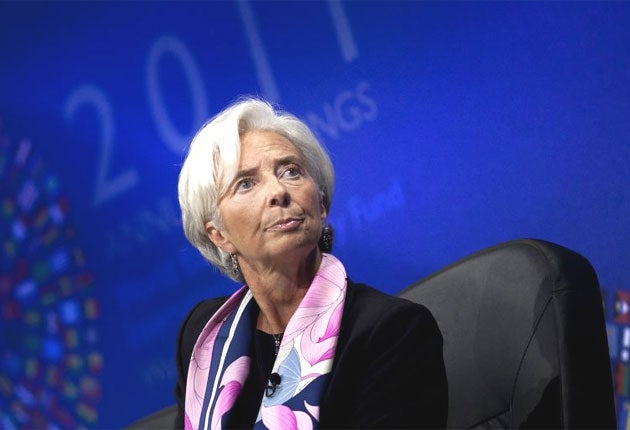
A. Let's just say that when Christine Lagarde, the IMF managing director, warned yesterday that this weekend's meetings probably wouldn't be able find solutions but would try to agree on a "common diagnosis", she was being optimistic.
Join our commenting forum
Join thought-provoking conversations, follow other Independent readers and see their replies
Comments