How Bush went from hero to zero in the eyes of Dick Cheney
Memoirs to tell of Veep's change of heart in waning years of presidency

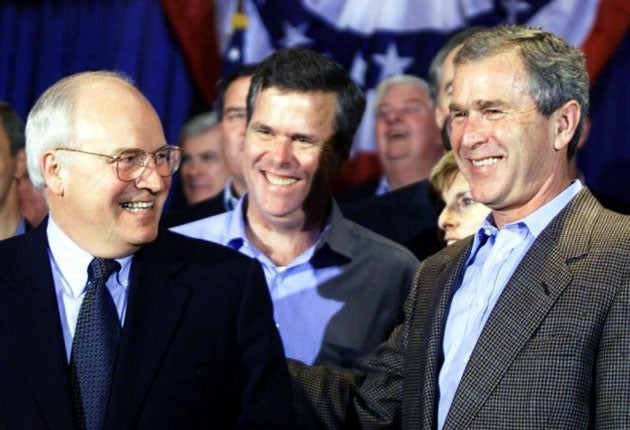
In office he was the eminence grise behind the George W Bush throne, a silent brooding figure who was the most powerful and probably the most unpopular vice president in modern United States history. Now however Dick Cheney is poised to go public, in a memoir charging that, in his second term at least, his old boss ignored his advice and, in a word, went "soft".
Mr Cheney's frame of mind as he prepares his memoirs, likely to be published in spring 2011, was described yesterday in a front page article in The Washington Post, drawing on discussions the former vice president has held with former officials, aides and policy experts. What emerges is a man convinced he is right, now as then, that the US faced extraordinary threats, above all that a renegade state might pass nuclear weapons to terrorists. These threats in turn demanded an absolutely uncompromising response.
At first Mr Bush agreed, "but in the second term he [Mr Cheney] felt Bush was drifting away from him," according to one anonymous participant in a recent conversation with Mr Cheney. "He said Bush was shackled by public reaction and the criticism he took. The implication was that Bush had gone soft on him, or rather that Bush had hardened against Cheney's advice." The Cheney doctrine was "cast iron strength at all times – never apologise, never explain" while Mr Bush moved towards a conciliatory approach.
From the start, Mr Cheney was a vice president with a difference – a number two who was far more experienced in foreign policy than his boss, far more versed in the ways of Washington, and yet who had no ambition of becoming top dog himself, and thus cared little what the public thought of him. His watchword might have been the saying attributed to the Roman emperor Caligula, Oderint dum metuant – let them hate so long as they fear.
These factors combined to give him extraordinary influence in Mr Bush's first term. Later however, that influence seems to have waned. Even at the time, it was clear Mr Cheney had scant enthusiasm for the more emollient policies pursued by Mr Bush, from an end to waterboarding of terror suspects to a gentler approach to North Korea and Iran, the erstwhile founder members of the "axis of evil".
In his memoirs, Mr Cheney will make clear "doubts about the main channels of American policy during the last few years," John Hannah, his foreign policy adviser during the second Bush term, told The Post. Personal factors also contributed to the growing distance between the two men. Mr Cheney was dismayed when Mr Bush forced his old friend and mentor Donald Rumsfeld out of the Pentagon in 2006. At the time he described the departing Mr Rumsfeld as the "finest" Secretary of Defence in history – not a widely-shared view.
Later, Mr Cheney was even more upset by Mr Bush's refusal when he left office to grant a pardon to the vice-president's former chief of staff Lewis "Scooter" Libby, convicted of perjury in 2007 for leaking the name of a CIA operative. After his impassioned appeals were rejected, Mr Cheney reportedly accused Mr Bush of "abandoning" an innocent man, likening it to "leaving a soldier on the battlefield."
This dirty laundry, it seems, is now to be aired in Mr Cheney's book. Robert Barnett, the super-lawyer who negotiated the contract, has apparently been telling publishers the memoir will be "packed with news", while the author himself has whetted appetites by noting cryptically that the "statute of limitations has expired" on many controversial issues of the Bush years.
The most secretive vice president of modern times, rarely interviewed and famously fond of "secure undisclosed locations," is set to reverse course completely in retirement.
Join our commenting forum
Join thought-provoking conversations, follow other Independent readers and see their replies
Comments