I Want Your Job: Comic book artist
'Getting in print is a great buzz'
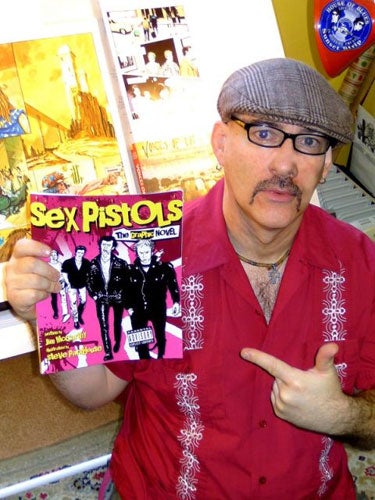
Jim McCarthy, 52, is a comic artist and author based in Sussex. His book, Sex Pistols – The Graphic Novel, co-authored with Steve Parkhouse, is published on 9 June.
What do you actually do?
I draw comic art pages and write scripts for graphic novels. My work involves liaising with other cartoonists and publishing houses, coming up with rough concepts and the conception of new ideas. New ideas flow through me everyday, but I need to select ones to pitch commercially. Some of my ideas are too weird or obscure, so may not be the publishers' first choice. There's a lot of art direction involved, almost like shooting a film script with a storyboard.
What is your typical work day like?
I work from home, mainly in the afternoon and evening, because I'm a nightbird. I'm always jotting ideas down on the page or on my computer. Sometimes I'll sit down late at night with a thick black marker and a box of A4 paper and automatically draw images, concepts and characters, straight out of my head. I love grabbing ideas out of the ether. If you're working for a comic publisher like Marvel or DC Comics, you usually have to turn around a five to six page strip in about three weeks. A graphic novel takes much longer – it might be 18 months to two years from the original inception to a finished book.
What do you love about it?
Seeing my ideas get published and become a physical reality is a great buzz – although I've never been totally happy with anything I've published. I like listening to groove music when I'm working – anything from salsa to Jah Wobble. Music can put you in a trance, where you get totally immersed in your art. The ideal state is to forget about anything else apart from the page.
What's the down side?
It can be frustrating dealing with lazy editors at publishing houses who are looking for a quick media tie-in. I also get really annoyed by artists and writers who'll work for nothing to get their work in print. They make it harder for everyone else.
What skills do you need?
You need to know how to draw, and how to tell a story. If you're working for mainstream and sci-fi comics you need to be able to draw figures, faces, and guns. If you're doing more personal work, like Persepolis, you can develop a more individual, naïve style. You need to be motivated and reliable. Deadlines are key – it's crucial that you deliver on time. You must believe in your ideas, so you're confident when you pitch to editors.
What advice would you give someone who wanted your job?
Practise drawing, and try to form a personal style that isn't superhero cookie-cutter. Look at the kind of work publishing houses are producing and see if your work tallies with that. Go to comic book conventions, show your portfolio around and send out samples of your work to magazines. Be determined – if you really want it, then you'll get it.
What's the salary and career path like?
There's so much flux in the comics industry that it's hard to talk about a career path – when I worked for the publisher 2000AD, it was taken over four or five times. If you're fast and diligent, there is money to be made, but not loads. British rates for a page of work are roughly between £120-150 for a page of black and white artwork, and around £230-250 for colour. You can make £30-50 for a page of writing. If a film of your work gets adapted, like Alan Moore's League of Extraordinary Gentlemen, you can make money from selling the rights.
For more information on graphic novels and comic art, visit www.comicartistsdirect.com; www.comicbookresources.com; or www.theaoi.com
Join our commenting forum
Join thought-provoking conversations, follow other Independent readers and see their replies
Comments
Bookmark popover
Removed from bookmarks