Simon Calder: Why overbooking can be a good thing
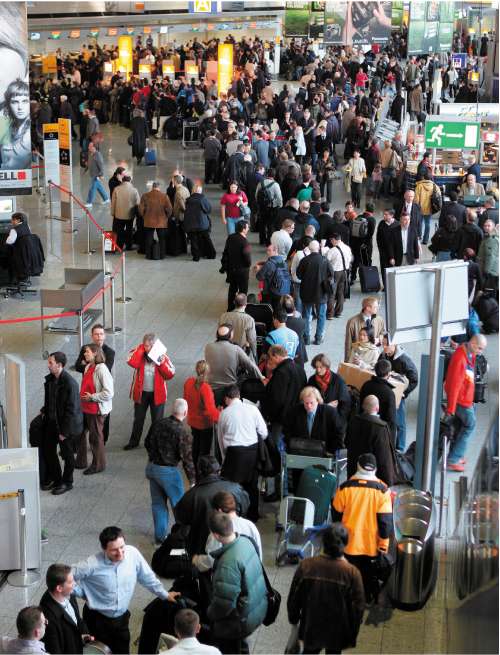
Safe bets are rare in travel. But one cert is that the practice among airlines of selling more seats than their planes actually hold infuriates everyone from consumer groups to financiers: "This overbooking thing beggars belief," said Charlie Morris from HSBC on Radio 5 Live this week.
Deliberately accepting more passengers than there are seats on the aircraft sounds both unkind and unwise as a business practice: after all, when you book tickets for the theatre, you don't expect someone else to be allocated the same seat. But when handled intelligently, overbooking is a strategy that benefits airlines, travellers and the environment.
For the airlines: planes are more likely to depart with every seat full, boosting revenues. For the passenger desperate to travel on a particular date, overbooking allows you to be sold a ticket for what is, theoretically a full flight. For the planet, the more seats filled, the lower the environmental damage per passenger.
In the US, the world's biggest aviation market by a country mile, overbooking has become a fine art. An example: every Monday morning, United Airlines flies a 50-seat jet from Denver, Colorado, to Boise, Idaho. The airline routinely sells all the seats for UA6611, and then a few more, knowing that the chances of everyone dragging themselves out of bed before dawn and reaching the airport in time are remote. Every so often, though, everyone shows. A curious auction then begins: who'll accept $100 to travel on the lunchtime flight? No one? What about $200 with guaranteed upgrade to first class? The incentive increases until sufficient volunteers are recruited.
For British Airways, the proportion of "no-shows" is startling. "An average of one in five reserved passengers fail to check in," says BA – meaning that, for the typical Jumbo flight, the airline can sell an extra 88 seats. "On some more heavily travelled business routes," says the airline, "this percentage can increase considerably." Club World and First Class passengers are particularly prone to fail to turn up, because many of them have tickets that carry no penalty for no-shows – they simply re-book on a later flight.
In order to keep its planes as full as possible, BA uses data for the same flight in previous years to predict the likely level of no-shows. "Since we are able to gauge the number of passengers who are likely to travel," the airline boasts, "it is rare for seats not to become available at departure." But BA evidently needs to upgrade the way it deals with those rare occurrences: a recent confrontation in Barbados could cost the beleaguered airline a reported £2m a year in lost revenue.
CHRIS BELL, the chief executive of Ladbrokes, turned up at Bridgetown airport to board his flight home. Had he been travelling alone, he would have been unaware that the departure to Gatwick was overbooked. He is a BA Executive Club gold-card member; when staff scan the lists for candidates for offloading, such valued customers are never considered. However, Mr Bell was travelling with his 14-year-old daughter and her friend. The teenagers were told they wouldn't be able to travel – which appears to be a breach of BA's policy of handling overbooking.
If too many people show up for a particular flight, says the airline, "we would ask at the airport for volunteers to transfer to a later flight". But it seems that the voluntary aspect was overlooked, and the girls – who were booked on a separate reservation to the Ladbrokes boss – were targeted for offloading. After the sort of robust discussion that frequently livens up check-in queues, the teenagers were allowed on board. But so furious was Mr Bell that he has told his 14,000 staff that they must not travel on company business on BA unless there is no alternative. "Mr Bell is a valued customer," a BA spokesman told me, "and BA Customer Relations has been in touch with him."
Often when the airline upsets its top passengers, the matter is settled with a prodigious number of frequent-flyer miles. But the overbooked bookmaker appears unmoved: just as BA is free to accept more passengers than it has room for, chief executives of betting companies are at liberty to ban staff from flying on the airline. But my forecast: once Ladbrokes executives have experienced the long journey from the company's west London headquarters to the unfamiliar surroundings of Ryanair check-in at Stansted, they'll beg their boss to reverse the boycott.
The price of an e-ticket
Stansted airport is now the unwitting destination for the wife of The Independent's deputy political editor, Colin Brown.
Last week, I explained on this page that the paper airline ticket is heading for the waste bin; the International Air Transport Association has stipulated that, after next Saturday, all tickets must be electronic. But one side-effect of the e-ticket is that, if you decide to present someone else with a ticket, you could have to show up at the airport with them.
"My wife bought a couple of Cyprus Airways tickets as a honeymoon present for a couple of relatives on the internet," my colleague reports. "She has now been told that she has to go to Stansted airport to produce her credit card at the check-in. How mad is that?"
In the electronic age, benevolence can, evidently, have unintended consequences: the gift of travel is best provided, prosaically, in the form of cash.
Join our commenting forum
Join thought-provoking conversations, follow other Independent readers and see their replies
Comments