However modest they may be, Lord Leveson's proposal will give Cameron a nightmarish dilemma
Either he incurs the wrath of powerful forces within the media, or his Coalition partners, Tory rebels and the Labour Party. Which way will the Prime Minister face?

When Prime Ministers are in trouble, they tend to announce a review. Nearly always the review lands them in more trouble than they were already in. When a review is instigated, the cliché is widely deployed that Prime Ministers are kicking a problem “into the long grass”. The grass never grows. The problem remains and gets bigger.
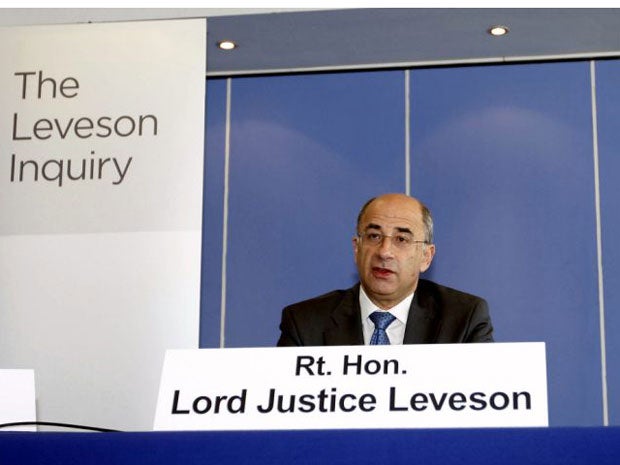
For David Cameron, the sequence has applied with considerable emotional intensity to his decision to instigate Lord Justice Leveson’s inquiry into newspapers. Trapped amid the fever that broke out during the summer before last, Cameron ran for protective cover by appointing Leveson to explore the conduct of newspapers. Some critics condemned Cameron for responding in this way, but he had no choice. The range of scandals surfacing merited the most robust response available to a leader, and Ed Miliband, ahead of the curve as he quite often is, was already calling for an inquiry. Polls suggested that most voters were, too. Suddenly, Rupert Murdoch’s summer parties did not look so enticing. In many ways an unlucky leader, Cameron was caught between two stools: alienating voters, the famous, and most politicians if he did not act – and infuriating some still-mighty newspapers if he did. There was no choice after it emerged that Milly Dowler’s phone was hacked.
Doing what he had to do did not alleviate the pressure on Cameron for more than a moment. The televised inquiry, and the publication of some emails he sent to Rebekah Brooks, ensured that the fever of July 2011 raged on. Yet it was a one-day cold compared with what’s coming – the dilemmas that Cameron faces when Leveson announces his proposals next week.
Unless Leveson has succumbed to the hectoring of some newspapers, it is probable that he will propose a modest form of statutory regulation for newspapers. When a group of Conservative MPs and peers wrote a letter to a newspaper expressing their support for such a move, I asked one of them whether they had liaised at all with Lord Justice Leveson and his team. I was told Leveson was “not discouraging” of their initiative. Evidently, Leveson contemplates the lightest possible statutory underpinning and welcomed advance support from Conservatives in parliament.
In the same way that Cameron had no choice but to appoint a review, Leveson has no choice but to make such a proposal. After the weight of shocking evidence he heard about the behaviour of some newspapers, he could hardly proclaim next week that he will leave it all up to them and other newspapers to regulate. I love newspapers, and those of you reading this online – start buying newspapers and enjoy a higher quality of life for less than the price of an Americano. I make the proclamation wholly relaxed about the introduction of limited statutory regulation.
Nonetheless, in No 10 and of course No 11 a thousand agonised calculations are being made. Already what has happened has sent the Cameron/Osborne election strategy off kilter. They had looked forward to a cosy, intimate relationship with News International, with the latter killing off Ed Miliband as it did Neil Kinnock in the late 1980s and early 1990s. Perhaps Rupert Murdoch’s newspapers and others will still attempt to destroy Miliband but it can no longer be guaranteed. Some newspapers are already furious with Cameron for daring to cast light on their misconduct via the Leveson Inquiry.
For Cameron, the agonising takes many forms. Most obviously, he does not want to alienate any further those newspapers that are already quite stroppy towards him. More fundamentally, some of his close allies tell me he has genuine doubts about statutory regulation. One of the ironies of the current situation is that Cameron leads a government that believes, with more conviction than any administration since 1945, that the state should be much smaller and intervene a lot less. Yet Cameron might intervene to regulate newspapers. When Michael Gove spoke out against Leveson, he almost certainly articulated – without authorisation – Cameron’s doubts.
Yet Cameron commissioned Leveson with the full support of Nick Clegg and Miliband. Clegg has indicated that he expects the parties to work together to implement Leveson unless the proposals are unreasonable – which they will not be. Indeed, some of the more interesting moments during the Inquiry were when Leveson asked semi-detached witnesses like Andrew Marr and Jeremy Paxman, “What would you do?”, conveying his exasperation at the challenge of meeting the scale of the crisis without infringing press freedoms. Leveson will not deliver unreasonable proposals.
For Cameron, the dilemma is heightened. Very reasonable Conservative figures such as Lord Fowler, with his insider’s knowledge of newspapers, and George Eustice, Cameron’s first Press Secretary and a man who exuded such integrity that the Prime Minister might well have done better keeping him in post, are strong supporters of modest statutory regulation. Cameron had a brief conversation with Miliband on the thorny issue when they were sitting next to each other waiting for the speech of the Burmese opposition leader, Aung San Suu Kyi, during her visit to Westminster in the summer. He gave Miliband the impression that he was relaxed about Leveson and thought there was scope for the parties working together to implement his recommendations.
Cameron is less relaxed as the moment nears. Having wooed assiduously Murdoch’s closest allies in the UK, he faces the prospect of regulating their newspapers. As a fresh face on the political stage, he appeared keen to form different relationships with the media, with Eustice as his Press Secretary, but then he turned to Andy Coulson. If Cameron does not implement Leveson’s recommendations, he faces the hostility of some of the most famous people in the Western world. If he implements Leveson, he risks alienating the newspapers that he hopes will help him deliver that elusive overall majority.
As is often the case, I suspect Cameron will turn to Tony Blair. With a great song and dance, Blair asked his friend and mentor Roy Jenkins to come up with recommendations for electoral reform. In 1998, after much earnest endeavor, Jenkins did so. An agonised Blair issued a statement welcoming the report, adding that he looked forward to giving the proposals careful consideration. He was still considering them when his time in office came to an end. Expect Cameron to do the same with Leveson, but I doubt if such prevarication will be sustainable for very long. When it comes to the misconduct of the media, there is no long grass.
Join our commenting forum
Join thought-provoking conversations, follow other Independent readers and see their replies
Comments
Bookmark popover
Removed from bookmarks