
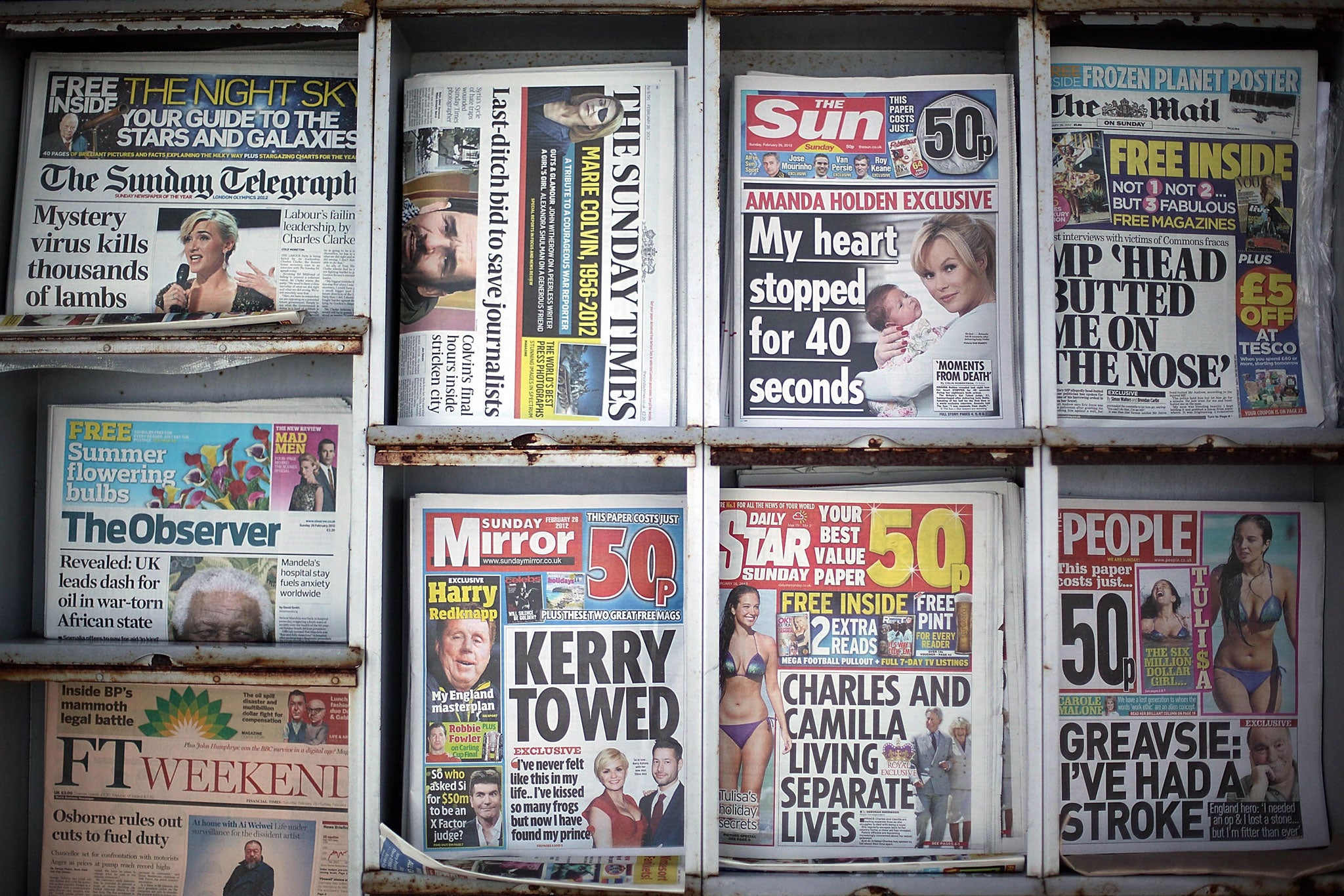
With David Cameron ramping up the debate on Britain's place in Europe, recent reports that a high level European Union working group was making noises about various aspects of press regulation were duly regarded in some quarters as symptomatic of the EU's propensity for meddling.
It is by no means clear that press regulation is an area in which member states' competence could - or would - be conferred to the European level. Then again, the European Court of Human Rights in Strasbourg already deals with questions of media law and it is not hard to see why Brussels might want a piece of the action. Press regulation is, after all, a subject on which almost everyone seems keen to express a view.
The British compact
There is no suggestion - at this stage - that the European Commission is seeking to harmonise the varied models of press regulation that currently exist around the continent, although the wider debate about regulating the internet inevitably has a cross-border feel. Yet it was interesting that the report of the High Level Group on Media Freedom and Pluralism should make a point both of highlighting the importance of the Leveson Inquiry and of criticising 'some politicians in high office' for allegedly rejecting Lord Justice Leveson's proposals.
Notwithstanding that this criticism apparently misunderstands the relationship between politicians and judicial inquiries, it nonetheless says a lot about the way in which events in Britain - and the actions of our media and government - can have repercussions elsewhere. The amendments to the defamation bill that were carried in the House of Lords yesterday might perhaps have been noted with a greater degree of approval by those fond of legislators who grab bulls by horns.
Whether it is a consequence of colonial shame or simply cynicism about the merits of our 'establishment', there is a tendency in Britain to baulk at the idea that our institutions are models to the rest of the world. Yet the fact is that this country's democratic foundations - including its press freedoms - are widely admired in places where democracy and free speech are more limited. Expenses scandals and occasionally putrid papers might have dimmed that appreciation but the fact that such scandals have been exposed and scrutinised can just as equally be held up to show that the UK's 'constitutional' compact between parliament, people and press remains strong.
For the most part we take our freedoms for granted. But there are plenty of governments elsewhere which are founded largely on corruption rather than democratic process and which do all they can to avoid scrutiny by the media or indeed by voters. And the corrupt and repressive are as keen to use Britain as an exemplar when it suits their purposes as those who campaign for fair elections and an unrestricted fourth estate.
Some years ago, when I worked at the Press Complaints Commission (and yes, I can take on the chin any amount of flak about the PCC), I was contacted by the Foreign Office, which was following up reports from the British Embassy in Nairobi that the Kenyan parliament was planning to establish a government-appointed press council. The Embassy had been surprised that one of the stated justifications for the measure was that it followed the British model and therefore must be alright. It didn't, of course, and wasn't alright from the point of view of Kenya's independent media.
Before its eventual repeal in 2009, the retention of criminal defamation on British statute books was often cited by less savoury regimes as proof that similar laws of their own were acceptable. The only difference was that, unlike here, they were regularly in use, handy for locking up overly-nosy or critical journalists.
Beyond our shores
A couple of weeks after the establishment of the Leveson Inquiry I was invited to run a series of seminars about media ethics and self-regulation in Georgia by a network of enlightened and independent journalists, editors and publishers. During my stay I was asked to speak to a group of aspiring reporters and writers, to whom I talked about the horrors that had led to Leveson and the calls for stricter regulation. A member of the audience shook his head ruefully: “If your country introduces tougher controls, our President will immediately use it as an excuse to clamp down on our media too.”
Government policy in Britain clearly cannot be determined by reference to how it might impact on other countries, rather than by a proper examination of needs at home. And after all, public dismay at phone-hacking and other media excesses rightly demands a response to restore confidence in the press and its regulation. Nevertheless, it is equally wrong to believe that British policy-making happens in a vacuum; and that campaigners and governments elsewhere do not use (or abuse) Britain's example either to promote democratic development or to resist it.
The recent report by the EU's High Level Group is a reminder in the interminable Leveson debate that whatever new system of press regulation we end up with (and after David Puttnam's intervention in the Lords yesterday that is arguably less clear than ever), eyes beyond our shores will be watching keenly. For this reason, it is essential not only that the new system maintains press freedom - while demanding responsibility - but also that its presentation to the wider world leaves no room for doubt as to its positive intentions.
Will Gore is Deputy Managing Editor of the Independent titles and London Evening Standard
Join our commenting forum
Join thought-provoking conversations, follow other Independent readers and see their replies
Comments