This week Ed Miliband was likeable and funny. But now we need a serious alternative to austerity
Labour Party activists, trade unions, and a broader political movement can together fight the destructive and failing policies of this Coalition government
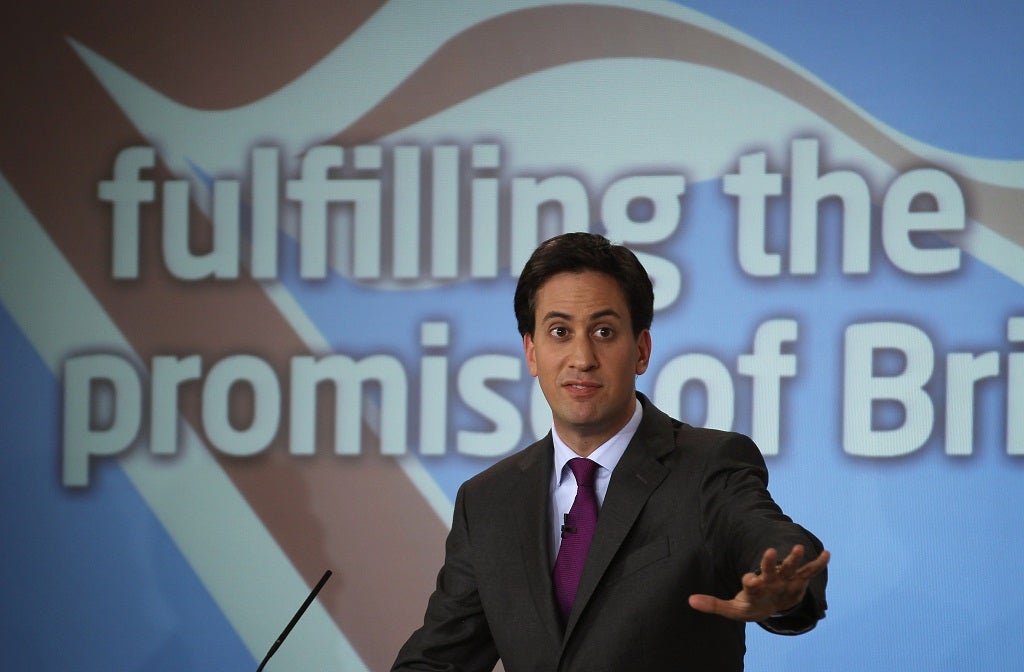
Speaking for more than an hour without reading from a script is a tough gig to pull off. Most struggle with a 5 minute speech without at least a few bullet points in front of them. So from a purely technical point of view, Ed Miliband's speech was impressive stuff. During his leadership campaign, we were promised that the younger Miliband would “speak human” - something he has struggled to do throughout his leadership, leaving him failing the “would you like to go for a pint with him?” test for most voters. But today a Miliband emerged that was likeable and even - without overdoing it - funny. It was reminiscent of his performance at the 2008 Labour Conference, which put him on the radar as a prospective leadership candidate for the first time.
Politics should be about policies rather than personalities, but the media ensure that it is not. So his team's strategy to make him out as human as possible makes sense. Given much of the population presume he is privately educated like his Conservative opponents, he went to great lengths to stress that - like 93% of us - he is a child of the comprehensive system. The key message here? “Unlike-you-know-who”.
'One Nation' was the theme of the speech, an audacious raid on a defunct Tory tradition. David Cameron attempted to claim it in Opposition - promising to hug hoodies and the like - but it has been left a nonsense by an austerity agenda that leaves the bottom 10% facing a 15% decline in income by 2020 while millionaires enjoy a tax cut. If this 'One Nation' agenda is about taking on inequality, then fine. Ed Miliband spoke about taking the yawning gap between rich and poor seriously, in contrast to New Labour: as Peter Mandelson put it, he was “intensely relaxed about people getting filthy rich, as long as they pay their taxes” - which, as we know, they often did not.
But the reality of Britain is that it is two nations because it is made up of two different groups: the majority, working people; and a small wealthy elite. It is in the interests of working people to have good public services, decent wages and pleasant working conditions. Those at the top, however, generally opt out of public services, resent paying taxes for them, and - if they are businesspeople - are not interested in higher wages that eat into their profit margins. It is a reality that these are different and conflicting interests. Labour should make clear that it does take sides - and represent working people, which is why it was set up in the first place.
A public NHS
The most resounding applause came when he pledged to “end the free market experiment” in the NHS - and repeal the NHS Bill. It is, after all, an assault on Labour's proudest ever achievement. But let's not forget that Labour pledged to renationalise the railways in opposition, then claimed it was politically impossible to do so when in Government. If Labour wins the next election - as indeed it may well do - that pledge must be played on loop until it comes good.
He highlighted stories of unemployed people desperately looking for work that does not exist. It was a clear take on the “scrounger” myth - that, even as hundreds of thousands of full-time jobs have been sucked out of the economy, people are somehow choosing not to work. But it is important to remember that his Work and Pensions spokesman, Liam Byrne, is failing to offer an alternative to welfare cuts that are destroying lives.
He rightly spoke of how austerity was driving up borrowing, a point he repeated to make sure it sinks in. The Tories' argument that Labour wanted to borrow more was meaningless, he said, because that's exactly what they were doing - and rather than borrowing for productive means, splashing out huge amounts on keeping people unemployed.
Tory tactics of divide-and-rule got a mention: of private versus public, and those who work versus those who cannot work. What this Government has attempted to do is redirect people's growing anger at their declining living standards, to their neighbours down the street. It is up to Labour to unite those it was founded to champion - after all, they are all in together, unlike the people at the top.
No alternative to austerity
Although he was clear about the benefits of immigration - as the child of immigrants himself - he argued that it must never again be used to bring down wages. In truth, evidence is sketchy about this: it may have had a small impact on those at the bottom, particularly those competing for jobs that do not require a high level of spoken or written English. This could be solved by ensuring we have a living wage, stronger trade unions, and making sure all workers are employed on the same terms and conditions to avoid a race to the bottom. But wages were stagnating for the bottom half from 2004 onwards; for the bottom third, they actually declined - and it wasn't immigration to blame, but weak trade unions and neo-liberal globalisation. It is far harder to scapegoat immigration, however, with the added bonus of winning the support of the right-wing media.
And the Conference hall was right not too applaud when he argued people must work longer; that he supported the Tories' pay cut for teachers, nurses, bin collectors, dinner ladies and other public sector workers; and that he would not commit to reversing Tory cuts. There was a new-found charisma, but no coherent alternative to the failure of Tory austerity.
That is no reason to despair. It is up to Labour party activists, trade unionists and a broader movement to flesh out this coherent alternative, and build pressure from below on the leadership to accept it. Since World War II, we have had two transformative governments that forced their oppositions to accept their fundamental key tenets: one led by Clement Attlee, the other by Margaret Thatcher. This historic and never-ending crisis demands a new, radical Labour government to establish a new settlement. Ed Miliband is more likely than not to end up in Number 10 - but it is up to us to make sure he leads a genuine break from the national tragedy of Tory austerity.
Join our commenting forum
Join thought-provoking conversations, follow other Independent readers and see their replies
Comments
Bookmark popover
Removed from bookmarks