Rupert Cornwell: Low-rise capital could finally reach for the sky
Out of America: The growing pressure on space could force Washington to end its ban on tower blocks

Sign up for the View from Westminster email for expert analysis straight to your inbox
Get our free View from Westminster email
The summer tourists are about to descend on Washington DC, and those paying their first visit will probably be struck by two things. The first is the comfortingly human scale of the place. Take the White House, our most famous piece of real estate. The East Wing, where the First Family lives and great occasions of state unfold, is scarcely larger than an English manor house. As for the West Wing, containing the Oval Office and the greatest concentration of power on earth, you'd miss it completely if you didn't know it was there. Which is a preface to the second surprise. This is America – so where are the skyscrapers?
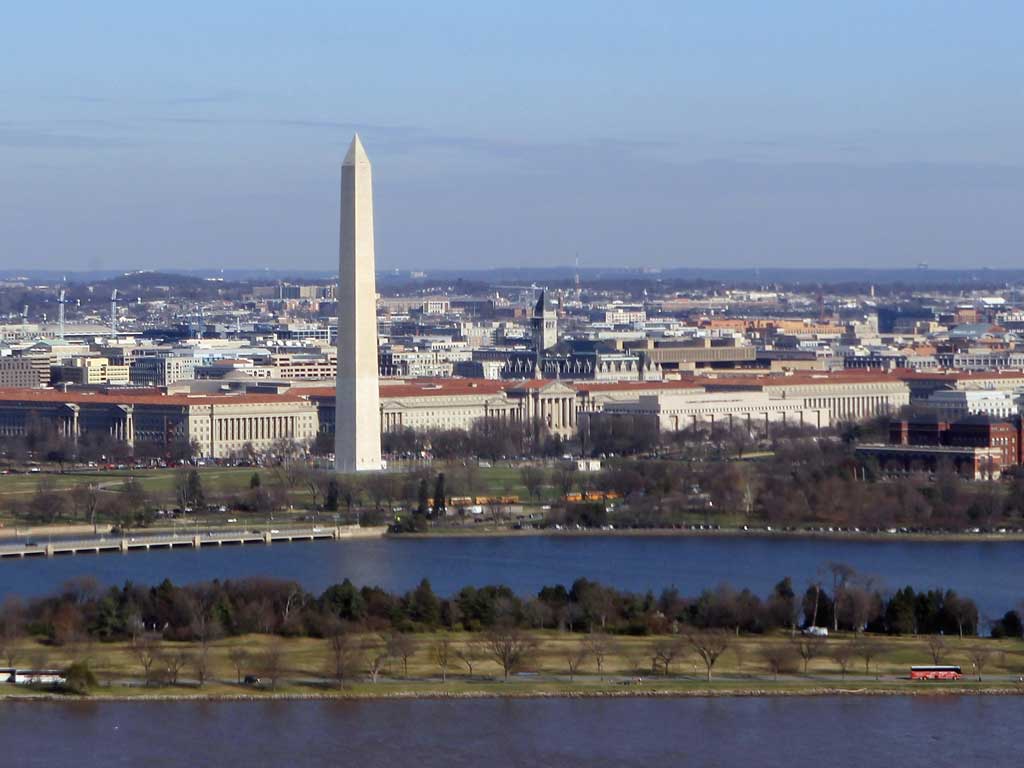
The simple explanation is that Washington was always intended thus. Back at the end of the 18th century, the French-born architect Pierre L'Enfant laid out the country's new capital in four quadrants, coming together at the US Capitol building, on a hill overlooking the Potomac river. He envisaged a city of European feel, with broad vistas, imposing but not overpowering. Thus today's low-slung imperial Washington, its monumental heart clustered around the open space of the Mall, punctuated by the 555ft obelisk of the Washington Monument, the city's one skyscraping edifice.
Street legend has been that the ban on tall buildings was imposed by Congress, to ensure that nothing should overshadow that now tarnished symbol of national unity. The truth, however, is more mundane. Back in 1894, the Cairo Hotel went up on Q Street, a mile or so north of the White House. The owners billed it as a "residential skyscraper", but locals were horrified by its height – all of 160ft, or 12 storeys. To prevent a repeat, Congress passed a law five years later that, in effect, put a 130ft cap on new buildings in the city. Love it or hate it, that's where we are today. But the times may be changing. For Washington is starting to run out of room.
At this point, another legend must be dispelled. Long gone are the days when Mayor Marion Barry was caught smoking crack cocaine in 1990, the city was the unofficial drug and murder capital of the US, and swathes of the population took flight to the suburbs. The country may be struggling with recession but, in 2012, Washington DC is boomsville.
New residents are swarming into a city whose metro area now represents the biggest concentration of money and brains in the country. Of the wealthiest 20 counties in America, half are to be found in the capital area, which has a greater proportion of people with graduate and postgraduate degrees than anywhere else in the land. On a less exalted level, we've even got back our major league baseball team, after a three-decade absence.
The boom in turn reflects the growth of government, the city's main industry – especially since 9/11, and the subsequent vast expansion of the national security state, and legions of new private "contractors" umbilically linked to central government, not to mention an entire new federal bureaucracy, the Department of Homeland Security. Americans are supposed to hate big government. In fact, government spending, as measured by the federal budget, has jumped 60 per cent in 10 years. And that means not just more federal employees, but more consultants, more lawyers, more lobbyists. The rest of the US may be suffering. Not Washington and its well-heeled suburbs.
The Barry-era exodus has been reversed, and over the last decade the city's population jumped by 30,000 to more than 600,000. Young people, especially young white and Hispanic people, are moving into DC, to the point that the District, once site of one of America's first experiments with black self-rule, no longer even has a black majority. But the new people have to live somewhere – which brings me back to the Cairo Hotel and the limits on the size of buildings.
If you can't build upwards, logic dictates, you build sideways. And that's exactly what's happened. The downtown business district is full of vistas – but all drearily similar, of squat and monotonous office blocks, at best lacking architectural interest, at worst downright eyesores. (Exhibit A is the truly hideous FBI headquarters building on Pennsylvania Avenue, just seven blocks from the White House.) Meanwhile, Washington has sprawled outwards into a ring of new "edge cities" where skyscrapers, or at least mini-skyscrapers, are permitted. One result has been ghastly traffic. Congestion in the DC region is now officially worse than in Los Angeles.
But the price of a European feel is not only to be measured in commuter misery. The ban on tall buildings curbs the supply of space when demand is soaring; the result, naturally, is higher prices, across the board. DC has a chronic hotel shortage, while the cost of office space has hit Manhattan levels, and Washington's poorer (mostly black) residents find it ever tougher to make ends meet as white gentrification pushes rents remorselessly higher. The city, meanwhile, loses much potential tax revenue.
Taller buildings, by contrast, mean more room, more people, more jobs, more amenities – in other words, a livelier and more stimulating urban environment. That, after all, is why people choose to live in cities in the first place. For decades, received bourgeois wisdom here has been that the lack of skyscrapers is a good thing, keeping L'Enfant's vistas unsullied and making Washington more liveable and "civilised". But maybe not for much longer.
The skyscraper argument has produced an unlikely alliance, between Vince Gray, the latest in a line of Washington mayors who have pressed for regulations to be eased, and Darrell Issa, the conservative Republican in charge of the House committee that oversees DC affairs. There will be powerful objections from the Nimby lobby, and well-meaning citizens will issue dire warnings of rapacious developers putting up a 100-storey reflecting glass monster across the road from the White House. But no one wants that. And it's worth remembering that, a century on, the Cairo, today converted into flats, is one of the city's best-loved buildings. Even in Washington, things change.
Join our commenting forum
Join thought-provoking conversations, follow other Independent readers and see their replies