The price is (really) right: 'Dynamic ticketing' could transform the way we pay to see live events
Is it fair for music or football fans to pay twice as much as the person sitting right next to them?
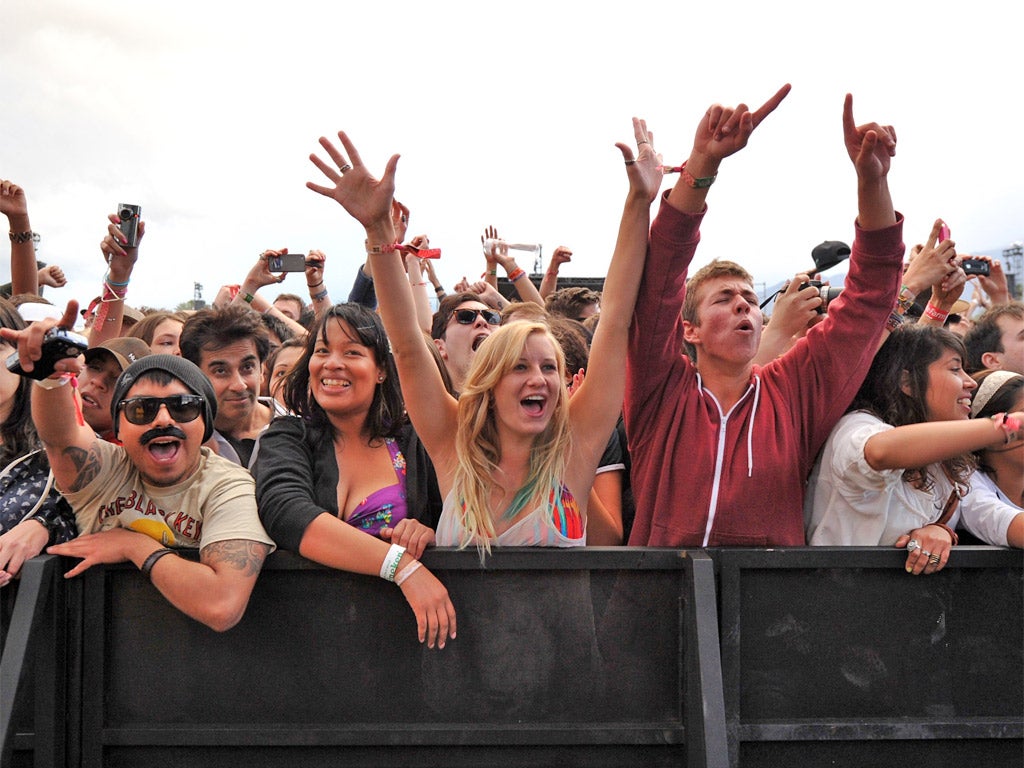
It’s a grating quirk of travel we’ve come to accept — that the guy across the aisle with the cough may have paid tens if not hundreds of pounds less for his ticket (or we’re the smug ones with the crazy deal). But in the theatre, concert hall or sports arena, we rest assured, touts notwithstanding, that we’ve paid the same as our neighbours. Stalls? That’ll be £70, please. Dress circle? £55. Balcony, restricted view? Don’t bother. It’s simple.
Not for long. Dynamic pricing, a system used widely by airlines, is revolutionising the British box office. It’s already happening in sport. When Derby County play Blackburn Rovers on Saturday, the price of thousands of tickets will have been determined by computer servers in Indiana, and may go up or down in the days before the game according to demand — or even the weather forecast (not great, as it happens).
The system, which is being touted in Britain this week by one of the biggest players in a booming US market, also promises to transform ticketing in music and theatreland. There, drama offstage concerns diminishing returns and online “legalised touting”, or the secondary market. “Dynamic pricing in real time is,” one theatre executive says, “the Holy Grail”.
How does it work? Back to Derby. Tickets there had been priced according to a simple model. “We split our games into categories,” John Vicars, the club’s head of operations, explains from Pride Park. “Platinum for a Nottingham Forest game, down to bronze for an unfashionable team on a wet and windy night in January.” The ground’s 33,000 seats, meanwhile, are divided into five fixed areas, from A to E.
This is basic, variable pricing and applies to ticketing beyond sport. From bronze E, to platinum A, prices range according to seat location and the quality of the gig, be it football or opera, but ignore everything else. It’s not rocket science — and that’s the problem.
In common with many clubs and venues, Derby County are finding it an increasingly tough time to sell tickets. Average attendance has dropped from more than 32,000 in the 2007-08 season to 26,000 before the start of this season (and to a low of 22,000). That’s a lot of empty seats.
The team’s relegation from the Premier League in that time coincided with the recession and Vicars was convinced pricing was the problem, not popularity. To prove it, he halved the price of 3,000 tickets for the game against Southampton last season, and offered them on Groupon, the vouchers website, for £10. “They sold out in 12 hours,” he says. He did the same a month later, upping the price slightly to £12.50 for 2,500 tickets to watch the Hull City game. This time, they sold out in 17 hours.
“We looked at the data and found 75 per cent of these buyers were either new customers or people who had not come to Pride Park for at least two years,” Vicars says. Not only did new people want to watch Derby, but old fans were prepared to reach for their scarves again — for the right price.
But Vicars faced three common problems for people seeking to change the way they price tickets: the grievances of loyal customers paying full whack (season-ticket holders complained); rules (the Football League allows only four price promotions per season); and the potential for even greater loss through discounting. He needed a way to optimise prices that would take into account these challenges and more. A guessing game needed to become a science.

Enjoy unlimited access to 100 million ad-free songs and podcasts with Amazon Music
Sign up now for a 30-day free trial. Terms apply.
ADVERTISEMENT. If you sign up to this service we will earn commission. This revenue helps to fund journalism across The Independent.
Enjoy unlimited access to 100 million ad-free songs and podcasts with Amazon Music
Sign up now for a 30-day free trial. Terms apply.
ADVERTISEMENT. If you sign up to this service we will earn commission. This revenue helps to fund journalism across The Independent.
Jan Alan Eglen is an American psychologist enjoying a second career as a professor of dynamic pricing. More than a decade ago, he co-founded Music Rebellion, which, in the post-Napster era, “combined behaviourism and economics to come up with a legal way to sell music”. Essentially a way of setting prices for download websites according to demand and other factors, it later inspired Eglen to enter other arenas.
Digonex is now one of the world’s biggest names in dynamic pricing. It’s already big business in the US, where Eglen and his team use patented software at their Indianapolis HQ to crunch numbers and suggest prices for more than a dozen sports teams. Digonex, and its competitors, who include Texas-based Qcue, have clients in the entertainment industry, too, but the San Francisco Giants team have led the way. From 2009, the baseball team have adjusted ticket prices according to details as minute as, say, a crowd-pleasing face-off between two big pitchers. Ticket revenues have risen by 7 to 10 per cent each year since, a financial home run for the team’s investors. Chief among them is Jeff Mallett, the Canadian former president of Yahoo!, and one of Derby County’s biggest shareholders. Mallett met Vicars, Vicars met Eglen, and the Rams went dynamic.
Now, after tickets first go on sale, typically at low prices, “the algorithm analyses every purchase for every seat in every area,” Vicars says. “Twice a week it reports to us with suggestions. It might say, you’ve sold x seats in that area, we suggest prices go up for y seats from £20 to £22.” Vicars says prices typically vary in the run-up to a game only by as much as £10 as the system responds to, for example, a run of victories or losses, or a bad-weather forecast.
Cardiff City have also signed up with Digonex and Eglen is in Britain this week meeting several teams in rugby, cricket and football, as well as figures from the entertainment industry. Dynamic systems are already in demand there. The Ambassador Theatre Group, Britain’s largest theatre owner, has used one for more than a year. Its chief executive, Howard Panter, of the “Holy Grail” quote, told The Stage magazine that dynamic pricing “will be one of the biggest single changes in theatre in my lifetime”.
If the future is dynamic, as all signs suggest, why now, when it’s old hat in the travel industry? “I think 2008 changed everything,” Eglen says. “On top of a challenging marketplace there are also so many more ways to spend a dollar.” Eglen also concedes trust and expectation are more of an issue at Pride Park, say, than on an easyJet flight to Malaga; as Vicars discovered, football or music fans are more inclined to feel short-changed because their ticket represents something they care about.
Across ticketing, there is already a growing sense of distrust about how rocketing prices are decided. Witness the outrage this week among Rolling Stones fans about the price of tickets to their 50-anniversary gig (up to £375 for standard tickets). Dynamic pricing wouldn’t work here — the biggest gigs sell out faster than any algorithm could respond — but in theatre, for example, where empty seats are as challenging as they are in football, box offices must tread carefully.
Eglen says transparency is key, and sometimes suggests visible “dynamic-pricing” areas in stands as a way of testing the water. Vicars, too, is aware of the problem of perception, and has placated season-ticket holders by displaying the “value” of each game they see, rather than assuming a consistent average. This reduces the chance of diehard fans being seated alongside deal grabbers. Moreover, he reserves the right to say no to the computer. “Sometimes it will recommend a ticket should be £50 but I don’t think the market would stand it so I impose an unofficial cap of £40,” he says.
John Pinchbeck, a tickets-industry veteran, is the co-founder and chair of the Ticketing Technology Forum. Dynamic pricing will be high on the agenda when it meets in London next March. Pinchbeck, who has also worked in the United States, points to cultural differences between US and UK audiences. “It’s accepted more readily there and even secondary-market scalpers are tolerated, yet frowned upon here.”
Pinchbeck sees “dynamic price breaks” as a possible solution, rather than the infinitely flexible model used at Derby. Sections or rows of seats within traditionally priced areas (the A-E model) could be held back from sale initially, and their price adjusted later if necessary. “It would be less noticeable, less apparent,” he says. Whatever the model, he adds, pricing will become more scientific, and could help venue owners to claw back some of the control over ticket prices from online touts, economic vagaries, or sporting chance.
At Pride Park, Derby have played only five home games since Vicars introduced dynamic pricing. Attendance remains a challenge, dipping to 20,000 at the Charlton Athletic game last month, but in spite of a recession that won’t shift, Vicars says that yield in pounds per seat, his bottom line, is already rising thanks to dynamic pricing. “We’re facing a tidal wave,” he says. “You can either bury your head in the sand and blame the economy, or you do something about it.”
Join our commenting forum
Join thought-provoking conversations, follow other Independent readers and see their replies
Comments
Bookmark popover
Removed from bookmarks