Monday 06 February 1995
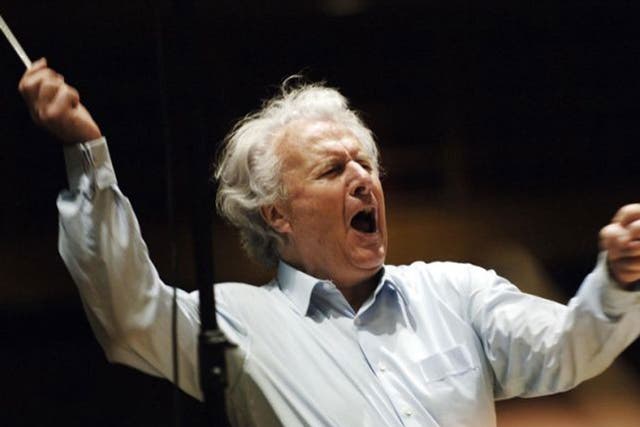
Bruckner's symphonies demand absolute concentration; if there's any sign of shuffling during the rests, you can safely assume that the performance isn't working. However, Thursday's Royal Festival Hall audience took Bruckner to their hearts. Come the quieter sections of the Eighth Symphony's half-hour Adagio, and stillness reigned. This was Bernard Haitink at his incomparable best: a sensitive, intelligent and deeply intuitive Brucknarian whose inspired charting of the symphony's vast structure made 80 minutes seem like 18. The Vienna Philharmonic gave their all, whether in the intimate chamber music at the Adagio's peaceful core, or in the finale's raging climaxes. The violins were silken but never over sweet (their tremolandos positively shim mered),while the lower strings combined for a dark but finely tapered sonority. The brass rang loud without hardening in tone and the unmistakably baleful woodwinds blended beautifully into the overall texture. Haitink himself proved a master of transit ions: his timing was beyond reproach, his rubato wholly natural and his sense of musical continuity unmatched in my experience - certainly in the concert hall. Excitement was plentiful, excitability totally absent. The first movement emerged as measured but finely tensed, the Scherzo as wildly visceral (with a particularly eloquent trio) and the long Adagio masterfully sustained, with each successive climax awarded precisely the right level of dramatic emphasis. The finale bolted in at top speed, its su bsequent episodes held tightly in check so that when the coda finally approached and the first movement's principal theme roared its desperate protest, the impact was positively hair-raising. The sum effect was of a great, dignified and spiritually edify ing masterpiece, magnificently interpreted. I can't imagine that London audiences have heard a finer Bruckner Eighth, at least not during the last 30 years.