Adam Kay: ‘Not many doctors can say their career highlight was meeting Matt Hancock’
The junior doctor turned bestselling author talks to Fiona Sturges about his move from medicine to comedy writing and how his latest book, ‘A Particularly Nasty Case’, highlights the NHS’s problem with stigmatising mental illness


When Adam Kay walked away from his job as a junior doctor 15 years ago, he was in a bad way. He had left his position in obstetrics and gynaecology after a woman he was treating lost her baby during a caesarean delivery owing to an undiagnosed condition, and then had to have an emergency hysterectomy. Kay wasn’t to blame, but the case affected him profoundly. After “a long period of lying in bed and being totally useless”, he began writing about his experiences, drawing on the diaries he had kept during his years in medicine.
Kay had few expectations for the resulting memoir: “I knew that when your book comes out, you go to a local bookshop and read some of it out, you drink some warm white wine and then go home and no one ever mentions it again.” But 2017’s This Is Going to Hurt, a tragicomedy documenting the hell of 97-hour working weeks in a chronically under-resourced NHS, went on to sell 3 million copies and was turned into a Bafta-winning comedy drama starring Ben Whishaw, for which Kay also wrote the screenplay.
That Kay also embarks on sporadic stand-up tours where he performs material about his medical career means he is required to keep on reliving these experiences, which, he says, “is good and bad. It’s good primarily because I hadn’t had any therapy, so it meant I was, and still am, addressing and acknowledging [what happened].” And the bad part? “I think the fact that it’s mostly with me. But it’s my decision that it’s mostly with me because I choose to keep talking about it, and to remind people that doctors are human beings who need support.”
Kay, 45, is talking over Zoom from an outhouse at his home in Oxfordshire that he calls “the barn”, though that underplays the massiveness of the building, which has a vaulted timber ceiling and is strewn with Chesterfield sofas. He is good company: open, thoughtful and happy to keep talking after our allotted hour is up. He does an amusing line in self-mockery, too, which is his way of talking about past difficulties. The barn is where he works and gets peace and quiet away from his young family. He and his husband James Farrell, a television executive, have two young children, Ruby and Ziggy, born via two surrogates four months apart. They had planned to have them at the same time, since friends with children had warned them against “having a toddler careening around while having a baby that needs 24/7 attention”. But, he adds, “the vagaries of IVF mean things don’t always happen first time, and Ruby was born early, which is why we ended up with a gap”.
There have been more books since This Is Going to Hurt: 2019’s Twas the Nightshift Before Christmas, containing diarised dispatches from A&E over the festive season; 2022’s Undoctored, an account of the author’s life outside of the wards, including his time as a medical student during which he hid an eating disorder; plus a clutch of children’s books including Kay’s Incredible Inventions and Dexter Procter the 10-Year-Old Doctor. This month brings the release of the darkly funny A Particularly Nasty Case, Kay’s first foray into adult crime fiction. It follows the fortunes of Eitan Rose, a wildly dysfunctional consultant rheumatologist who has recently returned from a break after a mental health crisis, and who gets through the working day by ingesting liquid cocaine through a nasal inhaler. Rose turns sleuth when one of his supervisors dies at work in suspicious circumstances.
The setting is, of course, one that Kay knows inside out. “You could say that I’m really lazy and I didn’t want to do the research required to set it, say, in a zoo,” he grins. “But I know what a morgue smells like, and what rheumatology outpatients is like. I spend a lot of the book talking about hospital porters, which isn’t traditionally where the thriller writer goes.”
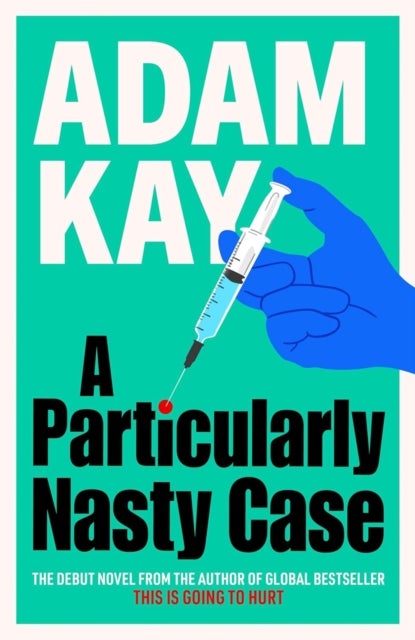
When Kay told his publishers of his plans, they were initially perplexed. “They said, ‘We don’t know where that fits within crime genres.’ And it’s true that it isn’t cosy, it isn’t gritty, and it’s not procedural. There was no existing category for it, and this initially stressed me out. I thought, ‘Oh God, they’ve just noticed that I don’t know what I’m doing.’ But then I came to terms with it, because when This Is Going to Hurt came out, it wasn’t a traditional autobiography either.”
While much of A Particularly Nasty Case is played for laughs, there’s a serious seam examining prejudice around mental illness. Eitan is bipolar, a diagnosis that his medically trained colleagues view with a combination of disdain and alarm. “It is a paradox that the way mental health is treated in the NHS’s own ranks is at least a decade behind the rest of society in terms of stigma,” says Kay. “There are now two types of mental illness. There’s the socially acceptable kind that we’re prepared to talk about at dinner parties: anxiety, depression, OCD. And then there’s the ‘scary’ kind, where there’s a thought disorder, and it’s bipolar or schizophrenia. That [fear] is absolutely shared in the NHS. I know people, some closely, who have these conditions and who would never mention it because they know how it will go down in their workplace.”
Kay’s move from medicine to comedy writing may seem an unlikely leap, though the foundations were laid at medical school, where he and his peers would perform songs and sketches as part of an annual event called The Soirée every Christmas at Imperial College, London. It was an ideal place for stressed students to let off steam. After Kay packed in medicine, alongside writing his memoir, he began doing bits of live comedy, opening for other comics, even though “the maths didn’t work. The petrol to get to the gigs usually cost as much as the fee.”
If the runaway success of Kay’s memoir took him by surprise, so did the backlash that erupted after the TV version aired in 2022. Some commentators took exception to the show’s depiction of women going through childbirth as figures of fun, deeming it disrespectful and misogynistic. Others criticised it for its negative depiction of medicine – the stress of the job leads one character, Shruti, to take her own life – and claimed that it could put would-be doctors off the profession. Did the naysayers have a point? “It was deliberately provocative,” Kay replies. “There could have been a version of this show where the character who is based on me – but who obviously isn’t me – is this superhero who’s an amazing doctor. But instead, I made him complicated and a bit of an arsehole. He is struggling badly with all these external pressures and is therefore behaving badly and doing inexcusable things. This was a production with a female director and a female producer, so it wasn’t just a man’s-eye view. Also, if that show is going to put you off medicine, then medicine is really going to put you off medicine. So I am proud of it and what it was able to do, which was get people talking about suicide rates among healthcare staff, which are still unacceptably high.”
Kay’s success has led to him becoming a de facto spokesperson on the iniquities of the NHS. Though uncomfortable with this at first, he came to realise he “had a responsibility to use my platform, though I’m not about to run for office”. He recalls being backstage at the Garrick Theatre in London several years ago, rehearsing for a stand-up show, and being surprised to see a poster on the wall of his dressing room with details of a free helpline for workers dealing with stress or financial difficulties. Not long afterwards, the then health secretary Matt Hancock got in touch. He had read This Is Going to Hurt and wanted to chat.
“There’s not many who can say their career highlight was meeting Matt Hancock,” Kay notes, sardonically. “But we met and he asked what single thing would make life better for doctors. So I told him about the poster at the theatre and how there is no such poster in any hospital in the UK. He said that didn’t sound right. But then a spad got in touch a week later to say, ‘Yeah, it turns out you’re right.’ So Hancock chucked loads of money into a nationwide practitioner [support] programme and namechecked my book at the announcement. And that has been, by far and away, my biggest achievement so far.”
When Labour was elected in 2024, Kay was hopeful that things would improve for the NHS, which by then was in a far worse state than when he was an employee. How does he feel a year on? He sighs. “I mean, it’s tough because the country is skint and there’s no cheap answer. But it’s hard not to be disillusioned by the lack of any meaningful change. I always thought the laziest thing that people can say about politicians is, ‘They’re all the same, aren’t they?’ But we’ve got this new administration that, in theory, is 180 degrees from the last one, but you wouldn’t know it. The 10-year plan was announced, which was like every other 10-year plan – full of gaps and vague [pledges] that we know aren’t going to make any difference.”
Though the horrors of Kay’s old job are never far away, he says he is better at looking after himself. When he feels life getting too busy or overwhelming, he immediately seeks help from a therapist. The eating disorder he wrote about in Undoctored, triggered after a one-night stand referred to him as a “big lad” but symptomatic of his broader distress, is under control “inasmuch as it ever can be”.
Kay loves the life of a writer, not least because “it means I can hide out in my weird barn”. One of his great pleasures is going out for lunch by himself – “Table for one, please!” he says, delightedly. “You can see people looking at you and thinking, ‘Does he not have friends?’” He has adapted well to the sleep deprivation of early parenthood, largely because the hours are not so different to working in medicine. “My brain was going, ‘Oh, we’re doing this again, are we?’ Although the big difference is that, however bad your shift is on the labour ward, and however much it overruns, it still ends. But the parental shift never ends.”
This is a job he’s happy to stick with, however. “The hours are terrible, but I’m in a good place now, so I can live with it.”
‘A Particularly Nasty Case’ by Adam Kay is published by Orion
Join our commenting forum
Join thought-provoking conversations, follow other Independent readers and see their replies
Comments
Bookmark popover
Removed from bookmarks