Chinese takeaway, a flatulent rottweiler, and a hammer to the head: The unlikely story behind Oasis’s Supersonic
Three decades ago, the Britpop band piled into a studio to record their debut single ‘Bring It on Down’ but instead they wrote ‘Supersonic’ in a last-minute U-turn that has gone down in music history. Hamish MacBain tells the story

Speculation is currently rife about which songs might be played when the Oasis reunion kicks off this Friday in Cardiff. People are making fake videos of soundchecks that are being reported as actual news. “I’ve been in my pool all day doing underwater farts,” Liam Gallagher replied to a fan enquiry on X this week about the legitimacy of one viral clip.
Even “Wonderwall” was dropped from the setlist for a time in the early noughties. But one thing is for certain: their debut single is making the cut. “Supersonic” remains one of their most enduring songs, as loved by both Gallagher brothers as it is by their ever-expanding audience. (The Gen Z end of that audience are infatuated with a live version from Chicago in 1998, which features an elongated Noel Gallagher intro.)
Spontaneity has always played a huge part in Oasis, and never more so than when they first entered a studio to record the song that ended up being “Supersonic”. Everything went wrong… until suddenly it didn’t. Extracted from A Sound So Very Loud: The Inside Story of Every Song Oasis Recorded, below is one of the best ever tales surrounding a band who are not exactly short on good tales.
 Drummer Zak Starkey on whether he’s really been sacked by The Who: ‘I don’t know what the f*** is happening’
 The Oasis effect: Bucket hats and Adidas are as ubiquitous at Glastonbury as an unsolicited cover of ‘Wonderwall’
 ‘He’s a control freak’: 12 bandmates who hate each other, from Oasis to Pink Floyd
For a damp little island in the north Atlantic, Britain has an enviable history of culture-defining debut singles recorded by photogenic groups of disaffected youths. “Anarchy in the UK”. “Relax”. “I Can’t Explain”. “Hand in Glove”. “Transmission”. “Virginia Plain”. “Gangsters”. “I Bet You Look Good on the Dancefloor” was pretty good, too, and as for “Hong Kong Garden”... The list goes on.
Has any debut single ever, though, so accurately predicted the entire decades-long career of an artist quite like the opening 50 seconds of Oasis’s “Supersonic”?
A rudimentary drumbeat. Fingers slide dramatically down the neck of a guitar. A riff circles menacingly twice around the block, then twice more, before a second guitar rhythmically joins forces with it and kicks through the door. We’re in. A voice: true like a vow, hard as a diamond. “I need to be myself”. And why is that? “I can’t be no one else.” Ain’t that the truth, as it turns out. “I’m feeling supersonic, give me gin and tonic.” No more moping, no more navel-gazing. ‘“You can have it all, but how much do you want it?” Small time is over. We’re shooting for the moon. “You make me laugh...”
Now that’s a promise. Give me your autograph, Liam Gallagher, the funniest rock star who’s ever been adored, pawed, mimicked, fancied by millions around the world. Just an average lad from Burnage who grew up playing conkers, the lot, not listening to music, not being remotely interested in singing songs or hearing tunes before a hooded-up lad from another school bopped him on the head with a small hammer on the streets of south Manchester, outside St Mark’s Secondary, aged 15.
“I was having a cig when someone came running down saying some lad from another school has slapped a girl,” Liam told me. “We come out, four of us, about 15 of them. Bit of a dust-up. I see one coming towards me with a hood up. As I go in for a bit of a ding, he’s gone, ‘F*** off’, pulled out a hammer, bopped me on the head. I woke up in hospital with my head bashed up.” Bosh. Everything changed.
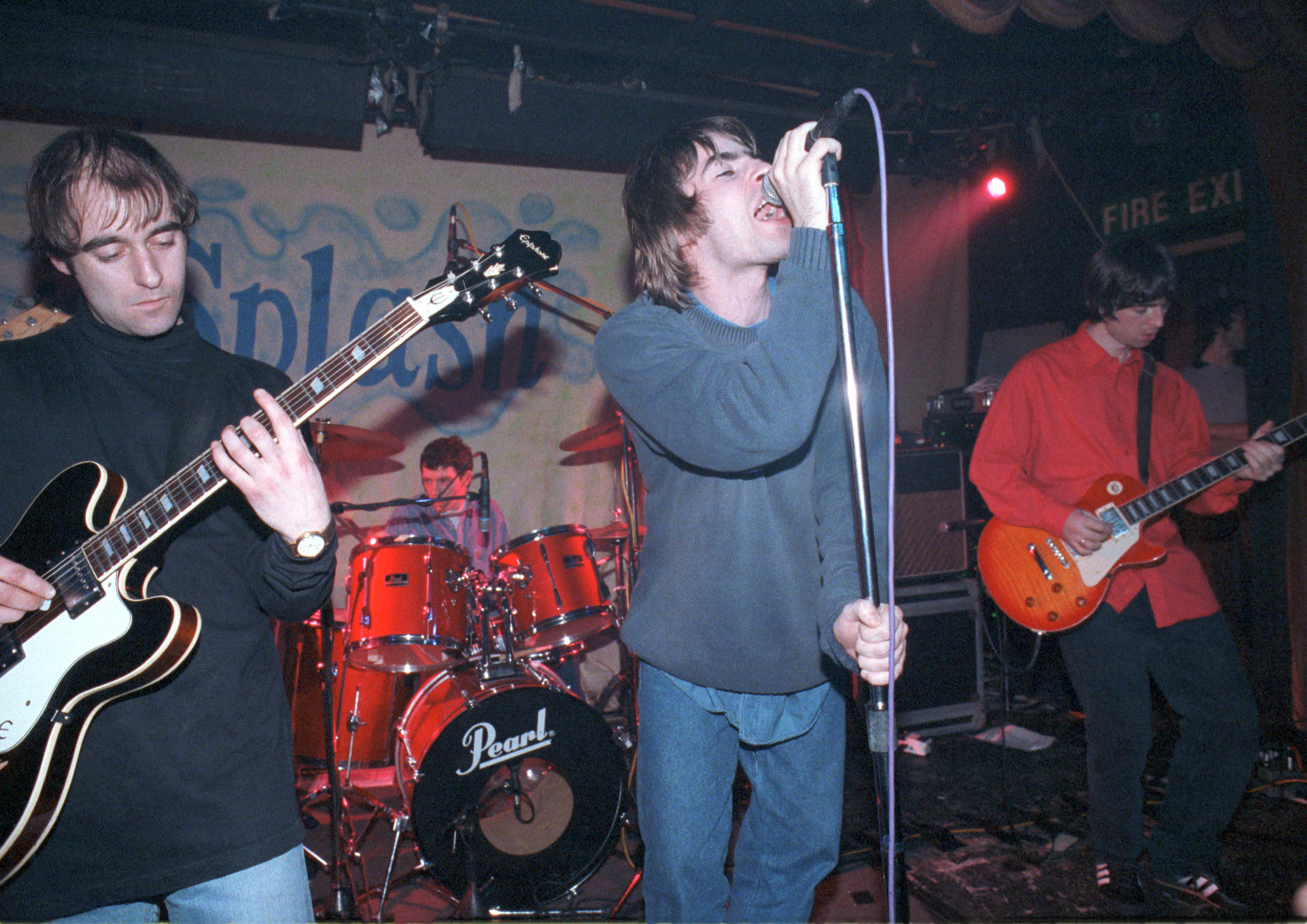
“Not instantly,” Liam said, but very soon after he got out of hospital. “Until then I was just into football, smoking weed, getting into scrapes. I wasn’t into guitars at all.” Before he’d been whacked on the head with that little hammer, Liam thought “music was for weirdos”. One week before the hammer attack, he regarded “Like a Virgin” by Madonna as revolting nonsense. “It’s like when people come out of comas and start speaking Japanese or Russian. All of a sudden, I heard ‘Like a Virgin’ by Madonna and I was going, ‘That’s a f***ing tune!’ A few weeks after that, he heard The Stone Roses properly for the first time. “It was like the Bisto kid. Got a whiff of the Roses and that was that. The rest is history.”
“Somebody hammered the music into him, he’s got a lot to answer for,” reflected Noel Gallagher. “I’ve got the perfect alibi, so it’s nowt to do with me.”
What is to do with Noel is the music – the songs, usually – and that’s where we initially meet our hero, Liam Gallagher, on “Supersonic”. Maybe you saw him in the song’s video for the first time doing his soon-to-be-famous and much-copied feet-out shuffle through the puddles on a roof by King’s Cross St Pancras, followed by the closest he’ll ever come to a smile on film. “’Cos my friend said to take you home . . .”

Or maybe you were transfixed by the face, the hair, the suede coat buttoned up to the top. The eyes. “I looked like a rock star even when I was digging holes in Manchester,” Liam has said. “I was cool then. People would clock my head even when I was wearing overalls and had a f***ing shovel in my hand. Full of s*** with a pneumatic drill, I still looked cool.”
It hadn’t been long between digging holes, repairing roads in Manchester, and appearing in the “Supersonic” video – a couple of years or so. The Liam Gallagher who first sang in Bonehead’s house before they formed a band was pretty much the same Liam you meet in “Supersonic”.
“He looked like Liam’s always looked,” remembered Bonehead. “He had a great topcoat and great haircut, a great walk, a great voice. His voice was just, like, woah . . .”
Girls want to be with him, boys want to be him (apart from those who wish to bop him on the head with little hammers). But without Noel writing songs like “Supersonic” for Liam to sing, he’d just be the best-looking rock star road digger in Manchester. And where would Noel be without his little brother?
There’s a great deal of odd lines that have real, proper relevance to my life, to growing up, but I’m not interested in telling anyone
“We wouldn’t have been what we were without him, that’s for sure,” Noel admitted. “As important and as vital as those songs still are, I think the two elements that made Oasis was his thing and them songs. If it wasn’t for him, we might just have been another band. I couldn’t imagine anybody else being the singer.”
So they need each other, they believe in one another. Our introduction to the pair, however, would’ve been very different if the first official single had been the nihilistic, punky “Bring It on Down”, as suggested by Alan McGee, who’d signed them to his Creation label. “I love that song, it’s like the Pistols, like The Stooges,” says Noel.

But when they booked into Liverpool’s Pink Museum studio – owned by Andy McCluskey of Orchestral Manoeuvres in the Dark – for three days in December 1993 to record it as their debut single, they discovered they couldn’t play “Bring It on Down” well enough. “Whatever we had in the rehearsal room and on stage wasn’t translating in the studio,” remembers Noel.
Mark Coyle, who was producing alongside Noel, agreed. “We were all very inexperienced. The first day is horrible and it just gets worse and worse. The whole session starts degenerating.” Noel identified that Tony McCarroll couldn’t keep the beat consistently well enough to record it, and the mood quickly became poisonous. Noting that Noel seemed panicked by the prospect of returning from the session without a first single, Tony and Chris Griffiths suggested they try a different song.
“Noel had a riff, but that’s all,” said Coyle. Nevertheless, the band jammed around that riff for a good while, the beat an easy-paced lollop that McCarroll could comfortably nail. After a while, someone in the band complained they were hungry, so a takeaway was sent for. Noel, meanwhile, thought there was something in the jam they’d been having.
“I went in the back room,” Noel told the Supersonic filmmakers, “and, as bizarre as it sounds, wrote ‘Supersonic’ in about however long it takes six other guys to eat a Chinese meal. It was a brilliant moment in time.”
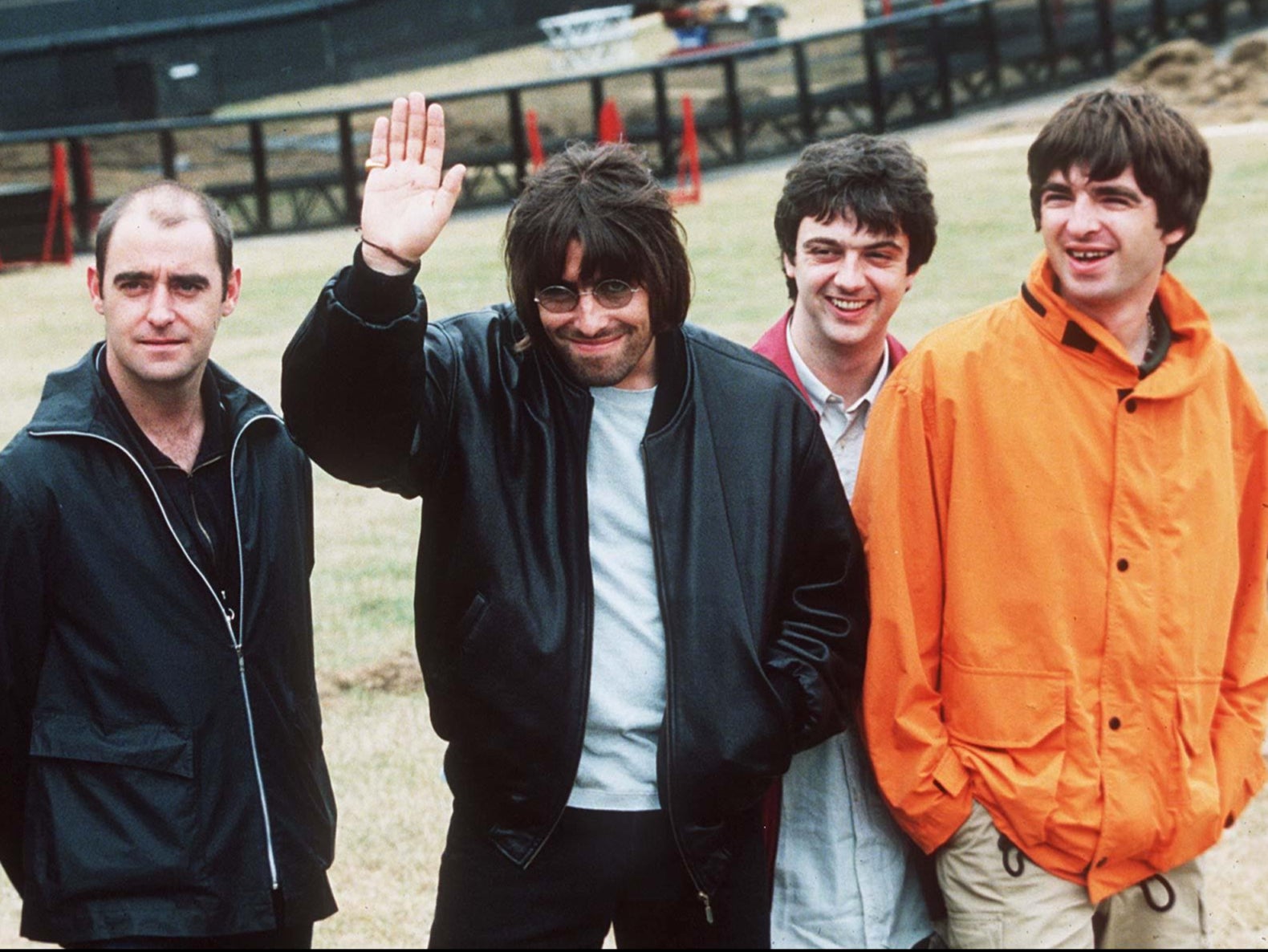
Noel returned to the main room where the band were finishing their food and told them he’d written the first single, then performed it to them. Astonished, they then all played it together in the studio, “really slow”, watching each other for the changes. They recorded and mixed “Supersonic” within eight to 11 hours of Noel writing it, depending on which eyewitness relates the tale.
“It sounded massive, absolutely massive,” says Bonehead.
Listening on a cassette in Mark Coyle’s Renault back to Manchester, Noel agreed. In fact, he thought it at least the equal to “Bring It on Down” or any of the other songs he had up his sleeve. Everyone’s playing was perfect, he noted, but what really set it apart were the layers of backing vocal “aaahs” that Tony Griffiths had added to the bridge, a hat-tip to The Beatles that elevates “Supersonic”.
He liked the lyrics, too, which he’d written in just a few moments. In times to come, when the single made its way into the world, the psychedelic declarations contained in “Supersonic” would be dismissed as nonsense, and there are elements that were just thrown on the page. Like “a girl called Elsa, she’s into Alka-Seltzer”, whose inclusion was inspired by the massive, flatulent studio Rottweiler called Elsa that Noel could not escape when writing. But within the rhymes and riddles of “Supersonic” are also declarations of intent that map out Oasis’s philosophy, attitude, and hidden biography.
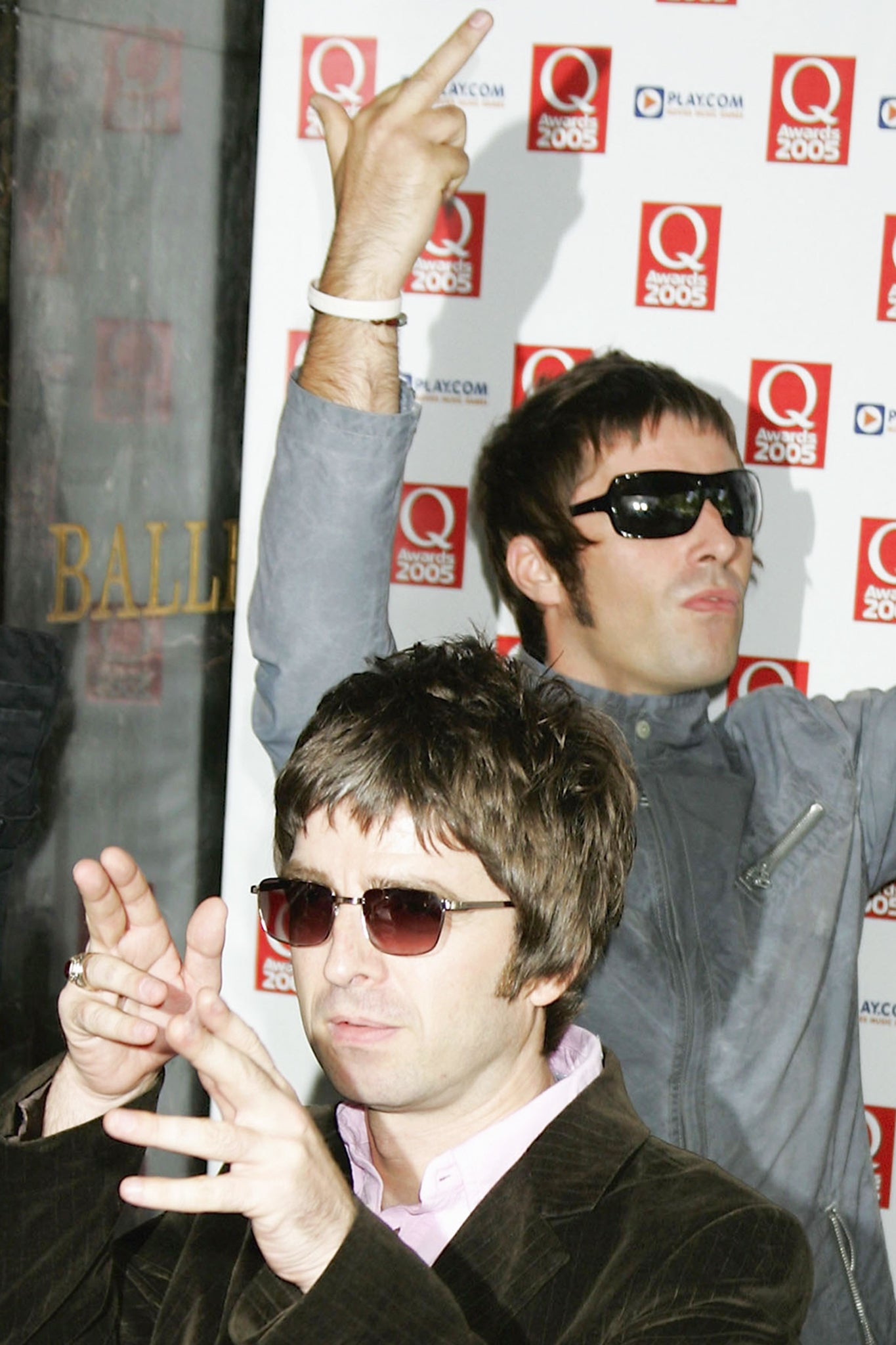
“The way I write is the first few lines will form a story,” said Noel of it, “and then it gets kind of confused and muddled up. I’m not writing novels here, I’m writing pop songs. I like to think all my favourite songs are somehow about me, which is why I love them. I leave it up to others to interpret them. There’s a great deal of odd lines that have real, proper relevance to my life, to growing up, but I’m not interested in telling anyone. It’s always about the melody. There’s something magical going on there.” When the band played Alan McGee “Supersonic” through speakers at the BBC’s Maida Vale studio shortly after, he could hear that magic too. He was quite surprised it wasn’t “Bring It on Down” as agreed, though.
“Noel came in and said, ‘The recording session was rubbish, it never worked out,’” McGee told the Supersonic documentary makers, “‘but I’ve written a smash.’” Most people would’ve gone, wait a minute... but “he went f***ing mental”, recalls Noel. “He loved it.”
Victory snatched from the jaws of humiliating defeat. For how it came to be, what it represents, the sound and mood it defines, “Supersonic” remains Noel Gallagher’s favourite Oasis song. Mine, too.
A Sound So Very Loud: The Inside Story of Every Song Oasis Recorded’ by Ted Kessler and Hamish MacBain is published by Pan Macmillan on 3 July (£25, hardback – ebook and audiobook also available)
Join our commenting forum
Join thought-provoking conversations, follow other Independent readers and see their replies
Comments
Bookmark popover
Removed from bookmarks