Paterson Joseph: ‘I’m very proud to be woke – it might give me baggy eyes, but I’m awake’
He may be known as the zealous boss of ‘Peep Show’, but the actor’s comedic chops belie his vast interest in writing, history and beyond. Publishing his first children’s book, he speaks with Micha Frazer-Carroll about racist stereotypes, standing up for himself, and the ‘inchoate’ anger fuelling Tommy Robinson’s far-right protests


I meet Paterson Joseph at an exceedingly fancy hotel in Central London – with grey-suited doormen, plunging chandeliers, and squeaky marble floors. “It’s very nice,” he tells me, having been put up here once before, while shooting a film. “But I just hate these places. You know, it’s set up to look [he gestures around us]... so that people wouldn’t just wander in.”
This feels apt, considering that the actor and I look to be the only two Black people in the vast hotel bar. “Why shouldn’t they wander in?” he asks me, as the waiter fusses with ice and lemon. “They can freely wander in and wander out.”
The 61-year-old, who is best known for his portrayal of Mark’s devilish boss in Peep Show, is alert to what it’s like to feel unwelcome. When he was growing up in Willesden Green in the Sixties and Seventies, racist intimidation was the norm. “All you’d see was ‘w**s out’, ‘n*****s go home’, ‘keep Britain white’, painted in whitewash on brick walls,” he recalls. “It felt like that everywhere. Hostile.”
This sense of exclusion followed him at school – something he’s shared previously in interviews about his theatrical work, which has included a long-running one-man show, a trio of operas, and numerous National Theatre and Royal Shakespeare Company credits. The only Black child in his class, Joseph was written off by his teachers as “thick”. Instead of pushing through in a racist school system, he decided to take his education into his own hands, by bunking off and reading voraciously down at the local library. There were no Black kids in those books, but he remembers seeing one in a book his auntie brought over from New York.
This is one of the reasons, Joseph tells me, that he’s written the children’s book that is the premise for our interview today: TEN: Children Who Changed the World. The book takes 10 Black figures who grew up in the era of the transatlantic slave trade, and depicts each of them during their childhood, describing the things they’d go on to do. “If I was 10 and somebody handed a book like that to me – even a cover – I’d have just gone, ‘What?’ in excitement,” he beams.
Among these stories are some staggering ones that many Black British adults wouldn’t be aware of, like that of “William Brown”, a Grenadan who joined the Royal Navy in the 19th century and was discharged when she was revealed to be a woman, and the British actor Ira Frederick Aldridge, who, in the same century, became the first Black man to portray Othello. Joseph sees storytelling as a more intimate way into Black history: “I wouldn’t just remember dates myself.”
Rewinding these Black figures’ lives, and situating them in childhood, gave Joseph a creative challenge: “I tried to see the world through their eyes. What would they do? How would they move? If they were in this situation, what would be their reaction?” He focuses also on the theme of potential. “These 10 inspiring children grew up in a time when ... people who looked like them weren’t expected to become important. But they did!” the blurb reads, in what is perhaps an echo of Joseph’s own experience.
I get the impression that within the industry, people continue to put Joseph in a box. When he went to drama school, his sister had warned him that, as a Black actor, he would only end up playing “slaves and servants”. And today, he tells me that when he acted in an adaptation of Ibsen’s A Doll’s House on the West End in 2000, one director suggested he shouldn’t be playing a character living in early-20th-century Norway. “They said, ‘You wouldn’t be in Norway. Why don’t you do things where you would be?’” he recalls. “But I don’t want to play kids from Willesden Green. I know what that’s like. I want to play other people. Ralph [Fiennes], who I did Hamlet with, is definitely not Danish, and nobody baulks at that.”
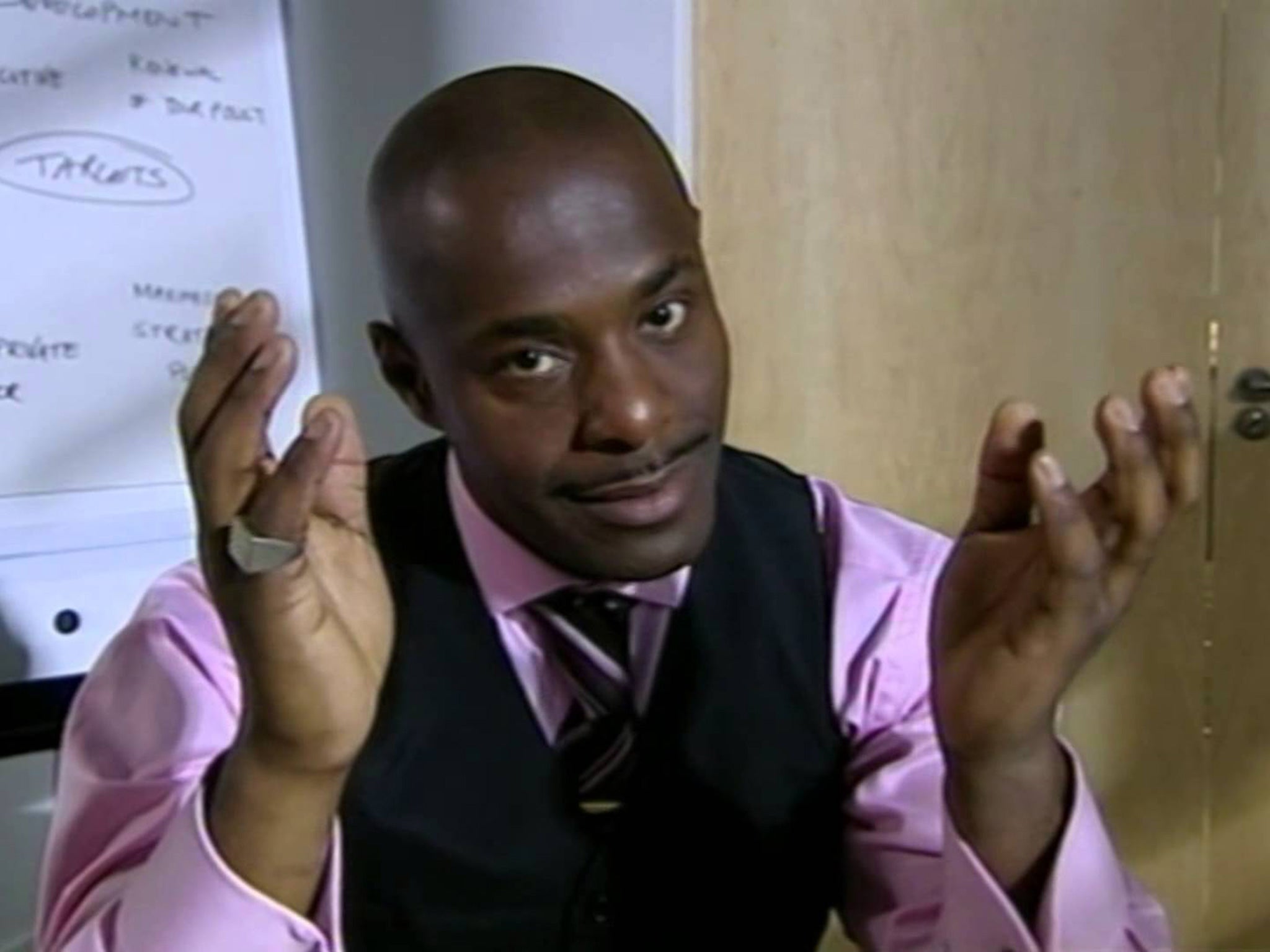
I think it’s not only Joseph’s ethnicity, but also his status as a comedic character actor, that might lead people to underestimate him. When he speaks, he energetically orates, affords certain words dramatic emphasis, sometimes does impressions, and widens his eyes. It’s not hard to see why a casting director identified early on in his career that he had “comedy bones”, leading him to get the part in Peep Show. More recently, he hit the big screen as the cunning rival chocolatier Slugworth in 2023’s Wonka, alongside Timothée Chalamet.
But the more we chat, the clearer it becomes that Joseph is a somewhat formidable polymath. He describes himself as having four jobs: acting, writing, serving as the chancellor of Oxford Brookes University, and teaching. He’s written both fiction and non-fiction, and references projects he’s taken on with art galleries, too.
Joseph’s zest for history is a common thread between many of these projects. It is also something that has seemingly provided him with corrective ammunition against the ignorance he encountered in earlier life. He met the director he had a spat with once again in 2021, this time having studied Black history for a couple of decades. “I just put 20 years of history on him – including Norway and Sweden – because Black people are absolutely everywhere,” Joseph recalls. “There’s amazing portraits of extraordinary Black people in Scandinavia.”
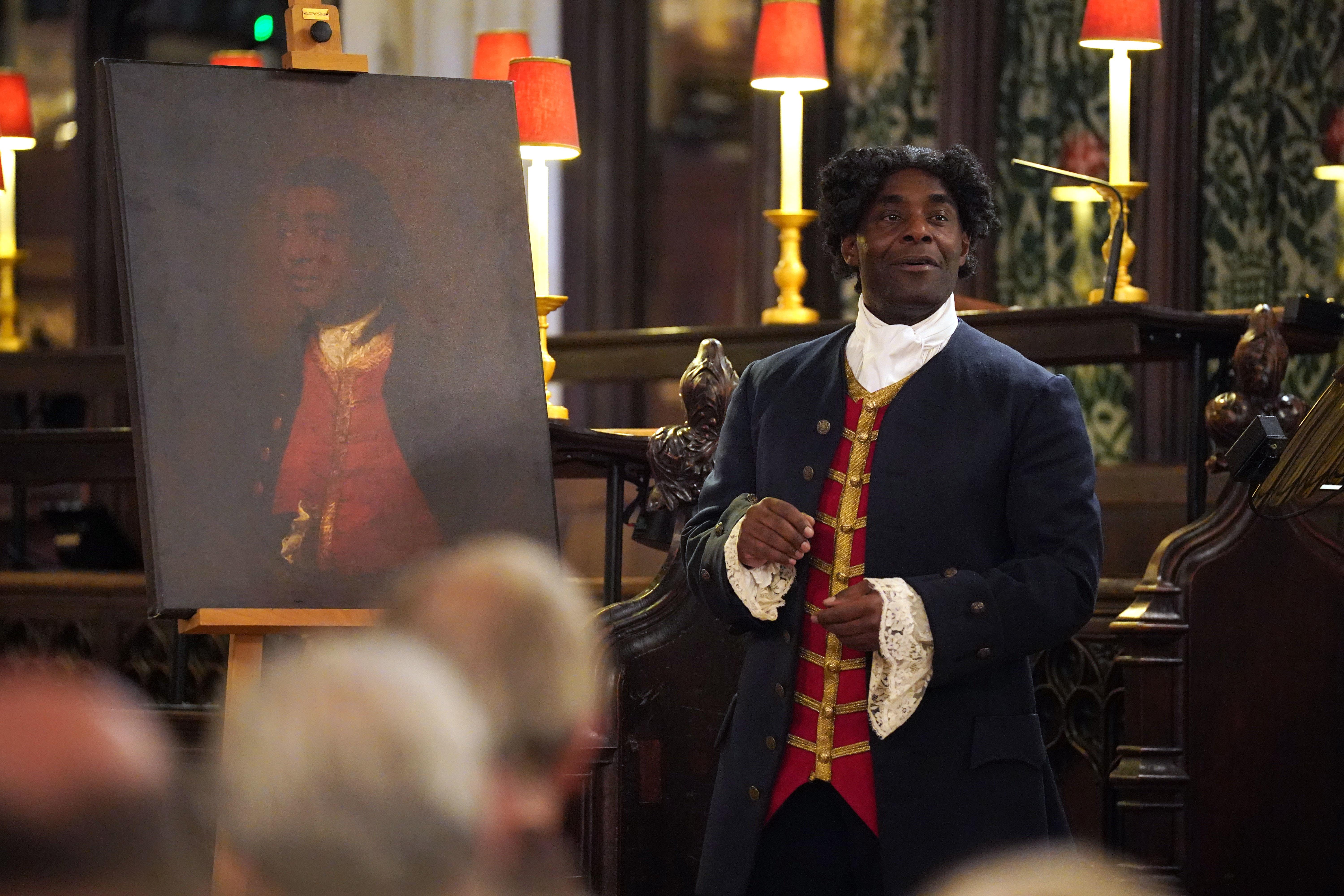
One figure in particular looms over Joseph’s historical work: Charles Ignatius Sancho, who in 1774 became the first Black man to vote in Britain. You’ve probably seen his portrait without realising; in 2007, his image was printed on a Royal Mail postage stamp. In 2011, Joseph starred in Sancho: An Act of Remembrance, a self-authored one-man play about the abolitionist, writer and composer, who was born in 1729 on board a slave ship. That production, which he later took to the US, evolved into his debut 2022 novel, The Secret Diaries of Charles Ignatius Sancho, which followed Sancho from his childhood in Britain to an adulthood evading slave-catchers and attempting to tread the boards as Othello.
Joseph now gives talks from the US to the Caribbean, educating people on Sancho’s life story, splicing its narrative twists and turns with his own unlikely trajectory. Billy Sancho, Charles’s son, whom Joseph describes as the first Black librarian, also features in TEN: Children Who Changed the World.
The presence of the Sanchos, in his fiction as well as his children’s book, feels like a specific retort to the anti-immigration sentiment that has spanned Joseph’s lifetime in Britain. “If I was 10 and I was reading [TEN: Children Who Changed the World], my confidence would grow,” he tells me. “Because if somebody said, ‘You don’t belong here’, or ‘Keep Britain white’, I’d go, ‘Britain’s never been just white. I’ve got all this history that I can tell you about.’”
I see Joseph as someone who is carefully contained. He wants to find the best spot on the hotel’s ground floor for privacy, but then shares like we’re old friends. He tells me that he tries not to hold on to anger – “It’s an engine that I switched off” – but he exorcises it on stage, finding catharsis in roles like Brutus in Julius Caesar. He didn’t bother looking at the news during the recent 100,000-strong Tommy Robinson march – “I’m not going to watch some angry, ignorant people painting roundabouts” – but in the few clips he did see, he found it curious how incomprehensible the crowd’s anger – which he describes as “inchoate” – seemed to be.
I’ve got no political beef – I just want people to be a bit less stupid
“I didn’t really know what they were angry about,” says Joseph. “I’d love to hear a specific reason that the most reasonable person could give, for why they needed to demonstrate.”
There are moments when his emotional candour, combined with our shared cultural experience, gives me the confidence to dig a little deeper. I’m keen to hear more about his childhood; the nuance beyond the racism. His politics, too – his attitude towards Reform and Donald Trump. I’m immediately unsure if this is a misstep, however, as he interrupts: “This interview is the most extraordinary one I’ve ever had. I don’t know what we’re doing – I feel like I’m being therapised.” He refers to me as Dr Freud, adopts a mock-German accent, and jokes about lying down on the couch like a patient. I pull back a bit with the personal questions.
Joseph has been travelling to the US since 1995, but last year faced new bureaucratic hurdles while planning a trip to perform his show Sancho and Me at Allen University in South Carolina – for which he now needed an endorsement from the Screen Actors Guild, for some unknown reason. He worries deeply about Trump’s attacks on the arts – which include changing grant criteria, dissolving government arts committees, and revoking funding for art that focuses on queer and transgender themes. “If it’s done well, art bypasses intellect, bypasses ethnicity and bypasses political opinion, because it can just seep in and get you,” Joseph says of its importance. “And those that know, know.”
He identifies the same threat to the documentation of history, having encountered the historical erasure of Black achievements in his studies. “It’s never going to happen,” he reassures us both. “It’s like King Cnut trying to push the tide back” – another of Joseph’s references that I need to google.
Regardless, he feels that people should be more aware of the attacks on our culture. He tells me that, when he asked students why one of Trump’s first symbolic moves after re-election was to take over the Kennedy Center for the Performing Arts, they stared at him blank-faced.
“It’s curious to me that the world sleeps. I’m woke as f***,” he tells me. “I’m very proud to be woke – all the way awake. And it might give me baggy eyes, but I’m awake. And I’d rather be awake than be a somnambulist.”
This alertness has provided Joseph with an investigative lens that follows him through virtually every part of his life. It’s one that he’s keen to share with others – but also almost certainly takes its toll. I venture one more question, couched in reassurance that I’m not psychoanalysing him, about the confidence it takes to fight these institutional battles, which have followed him throughout his career.
He sighs: “I want to be under a tree somewhere in St Lucia writing lovely poetry. That’s what I want to do. I don’t enjoy wrestling with people. I don’t enjoy the back and forth. I’m not a polemicist.” There’s a tiredness in his voice, and I’m not quite sure who it’s directed towards. “I’ve got no political beef,” he goes on. “I just want people to be a bit less stupid, and actually do a bit more work and wake up.”
But that’s enough big talk for today. “Leave me alone now, Micha,” he says, I suspect only half-jokingly.
‘TEN: Children Who Changed the World’ by Paterson Joseph is published by Hachette Children’s Group
Join our commenting forum
Join thought-provoking conversations, follow other Independent readers and see their replies
Comments
Bookmark popover
Removed from bookmarks