How millennial darling Sally Rooney became the most daring political writer of her generation
After pledging her support and royalties to Palestine Action, the author is now at risk of arrest. It’s a bold move, says Zoë Beaty, who looks at how the writer refuses to separate her generation’s love lives from controversial politics

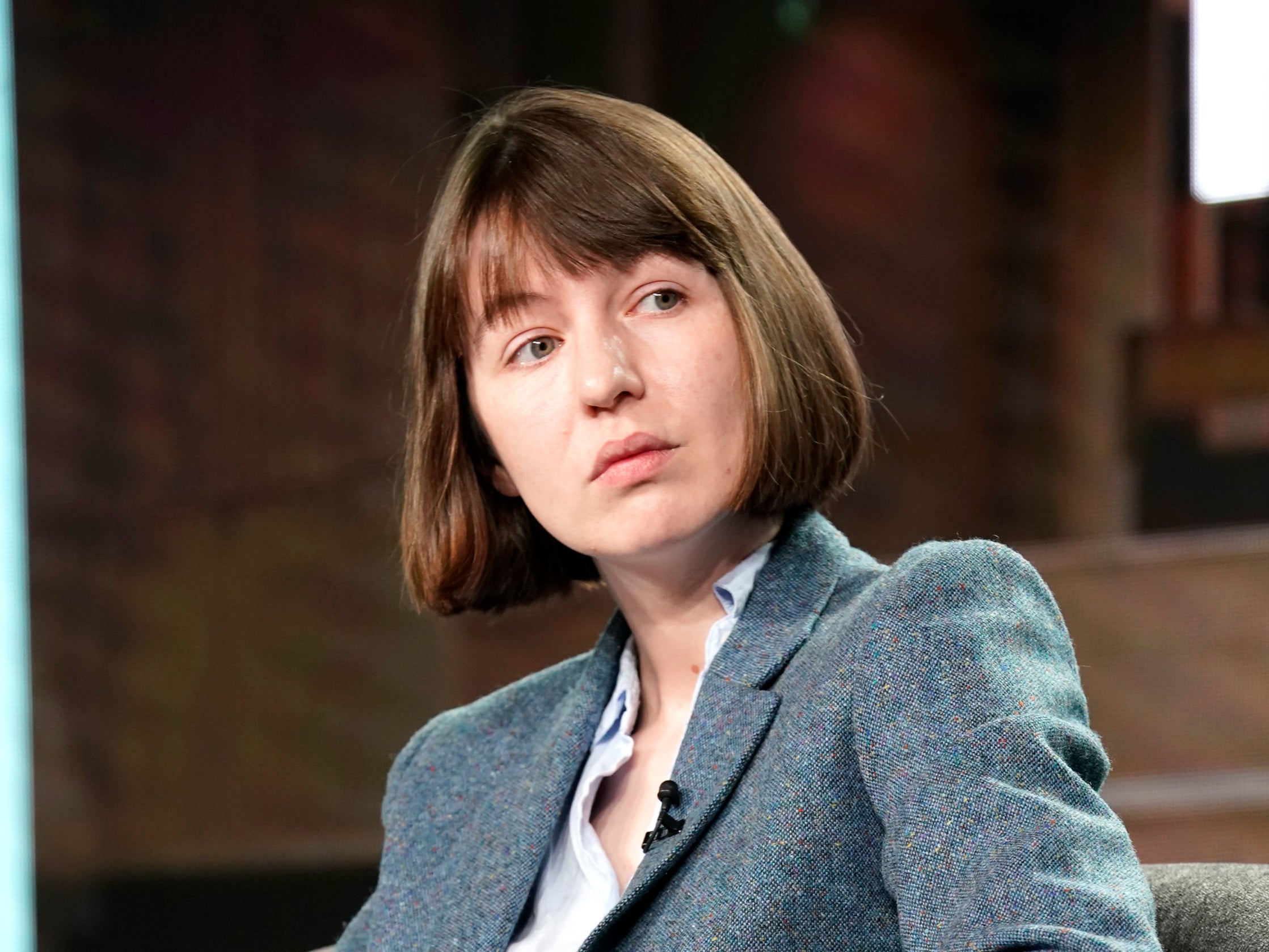
Sally Rooney has never occupied a typical space in the literary world. Rooney is famous for her tight prose, pathologically self-aware characters and novel ability to capture the nuances of millennial anxieties and relationships – all under the lens of late capitalism. She’s not quite radical, and not the type to be easily absorbed by mainstream acclaim either, despite long having achieved it. In the most basic terms, she’s traded on quiet observations that say something about big ideas. But last weekend, she dropped the quiet part entirely.
In a widely read op-ed for The Irish Times, Rooney pledged her support and book royalties to Palestine Action, a British protest group deemed a terrorist organisation by the UK government in July. “If this makes me a supporter of terror under UK law,” she wrote, “so be it.”
The British government’s position is clear: showing support for the group is illegal, therefore any donations that she makes to the group would put her at risk of arrest. Refusing to comment specifically on Rooney’s op-ed, the prime minister’s official spokesperson said: “There is a difference between showing support for a proscribed organisation, which is an offence under the 2006 Terrorism Act, and legitimate protest in support of a cause.”
A conviction under the act carries a maximum punishment of 14 years in prison; more than 700 people have been arrested under the act in relation to the group since July, many at a peaceful protest in Parliament Square, London, on 9 August. Rooney maintained in her essay that she will use the proceeds of her work and public platform to “direct action against genocide in whatever way I can”.
The ripple-effect was instant, of course – supporters took to social media to applaud her moral clarity and courage; critics quickly called her irresponsible and entitled. The BBC, which produced adaptations of two of Rooney’s novels, Conversations With Friends and Normal People, found itself drawn into the controversy too.


“From the suffragettes to the gay rights movement to the anti-apartheid struggle, genuine political resistance has always involved intentional law-breaking,” Rooney wrote of Palestine Action activists’ decision to break into an RAF base in Oxfordshire and spray paint two planes in June. Political pushback has also always included writing and literature and, for almost the last decade, Rooney.
Since her debut novel, Conversations With Friends, was released in 2017 to rave reviews and a legion of ready-made fans, Rooney’s name quickly became associated with a very particular type of millennial and cultural aesthetic.
The so-called “cult of Sally Rooney” – or the literary it girl – gained a reputation for being for hessian-wrapped, white pseudo-socialism; for student-politic “thinkers” who want to dismantle capitalism but also want their ex to see their latest Instagram story. To date, she has published four novels – Normal People a year later, followed by Beautiful World, Where Are You in 2021 and, last year, Intermezzo – selling millions of books, all of which, at first glance, seem to be doing something that is the opposite of politically daring.
Rooney is often called the voice of a generation (which she reportedly hates) for her writing mostly about love – people in their twenties sending humiliating texts, trying to sleep together without making each other miserable (spoiler: no chance).
The worlds she depicts are achingly ordinary but intimate – dialogue can feel like eavesdropping. They also tell half-acknowledged truths that Rooney makes whole about how power really operates, especially when it comes to class and money.
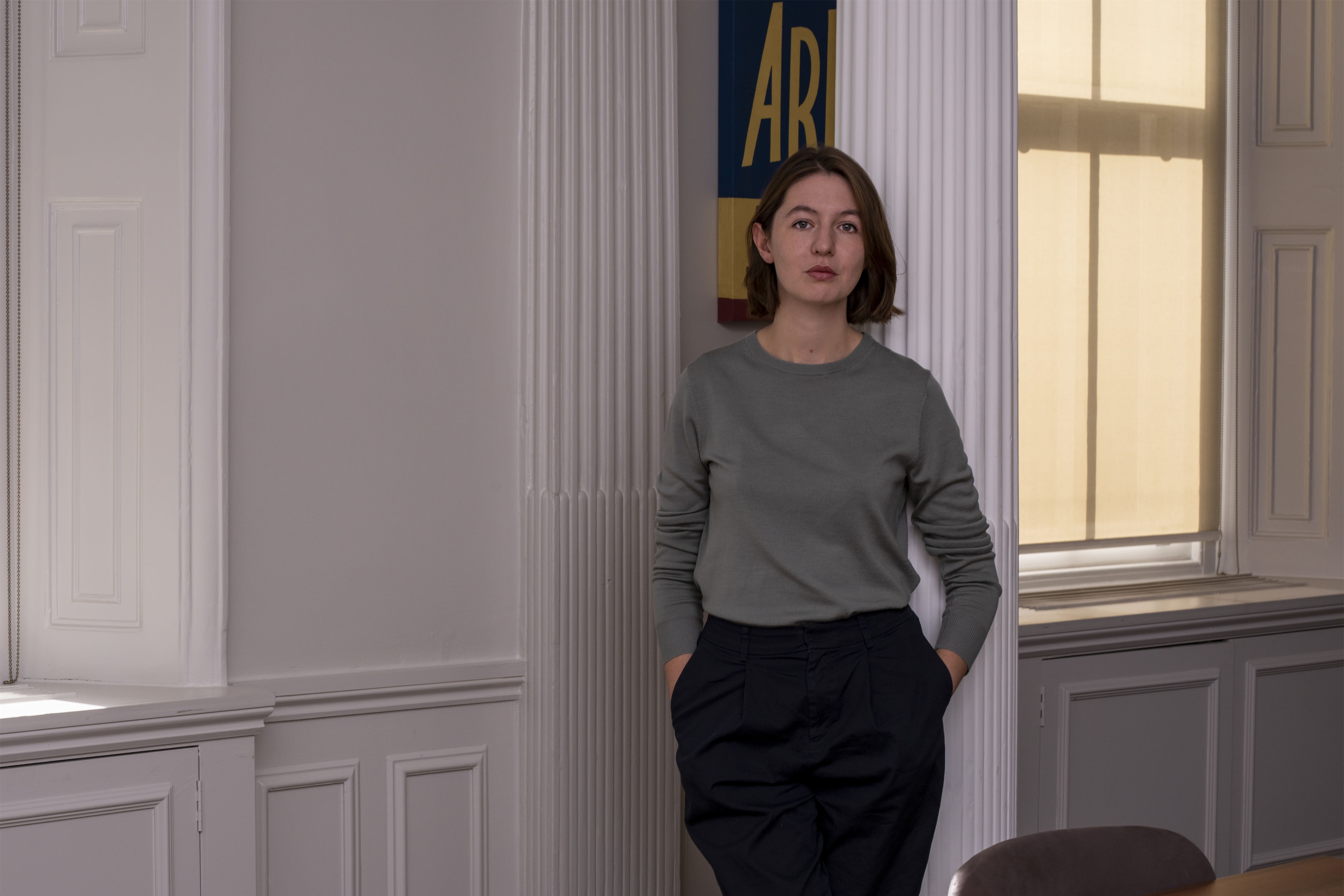
Her protagonists are a scholarship student second-guessing himself in a rich girl’s kitchen or a young woman minimising how smart she is to help make a man feel less small. Marxism is a central theme (and Rooney herself identifies as a Marxist feminist, inspired by her socialist parents). As her characters find in Normal People, you cannot disentangle love from status nor can you pretend that millennial life is immune to money, class and authority. In and out of her books, it’s Rooney’s refusal to accept that art should stand apart from politics that makes her bold.
In Beautiful World, Where Are You, Rooney made her most political statement – in long, rambling emails about politics, art and the collapse of civilisation. Some people loved it, of course; others found it insufferably meta. And, really, it was: the novel dealt with huge, sweeping themes regarding the nature of happiness, the connection – or disconnect – between individual lives and global events, the impact of fame on her main character, Alice, a successful novelist; even the role of the novel itself in face of all of these things.
It was absolutely – definitely – not based on Rooney’s own life and feelings, she’s since clarified in interviews. But nonetheless it fitted very neatly with Rooney’s own push-pull of public and private persona – someone often described as shy who chooses her interviews carefully and admits she’s “very uncomfortable in public”.
She comes across as oppressively serious, speaking deliberately and thoughtfully at all times – “Part of why Rooney drives a particular kind of news columnist insane is that she refuses to take her literary success as a means of enjoyment and luxury,” wrote Vulture columnist Fran Hoepfner this week. She’s bound by seriousness. Her work takes on the daily struggles of ordinary, often working-class people, but Rooney has never really inhabited that world – rather, she began her career well-educated and safely middle-class, and graduated to a position of global literary celebrity.

The question has always been about how she uses that. Before she was a famous novelist she went (sort of) viral for an essay published in The Dublin Review in 2015, in which she wrote about her career as a very successful college debater – the number one competitive debater in Europe, no less – before quitting, “disgusted by the amorality of the whole process”, declaring she found it “depressing and vaguely immoral” to put so much effort into finding “ways in which capitalism benefits the poor, or things oppressed people should do about their oppression”.
In the past she’s taken several stands from her position – writing about the right to choose and legalising abortion for the London Review of Books in 2018, urging Ireland to Repeal the 8th, and twice before this weekend she’s written for The Irish Times to make her thoughts known once on the depravity of housing inequality and later on the climate crisis and capitalism. Last year, she told The Guardian that she despairs at a global system that is "facilitating and enabling” the war in Gaza.
In the same year that Beautiful World, Where Are You was released, Rooney refused a translation deal for the novel with an Israeli publisher, Modan, on political grounds and in support of the Boycott, Divestment and Sanctions (BDS) movement. She would happily publish a Hebrew version, she said – but only with a non-Israeli press in line with the boycott guidelines. Activists supported her refusal to accept injustice wholeheartedly. A senior Israeli minister at the time branded her antisemitic. Today, she’s facing similar criticism from The Campaign Against Antisemitism, who have said that Rooney’s actions over the weekend were “utterly indefensible”.
And yet, for all her moral punch – and for all the many, many headlines she generates – Rooney’s reach as a political writer isn’t as broad or far-reaching as it often appears. Her novels face criticism for their limitations; they revolve around people who unironically believe the world revolves around them.
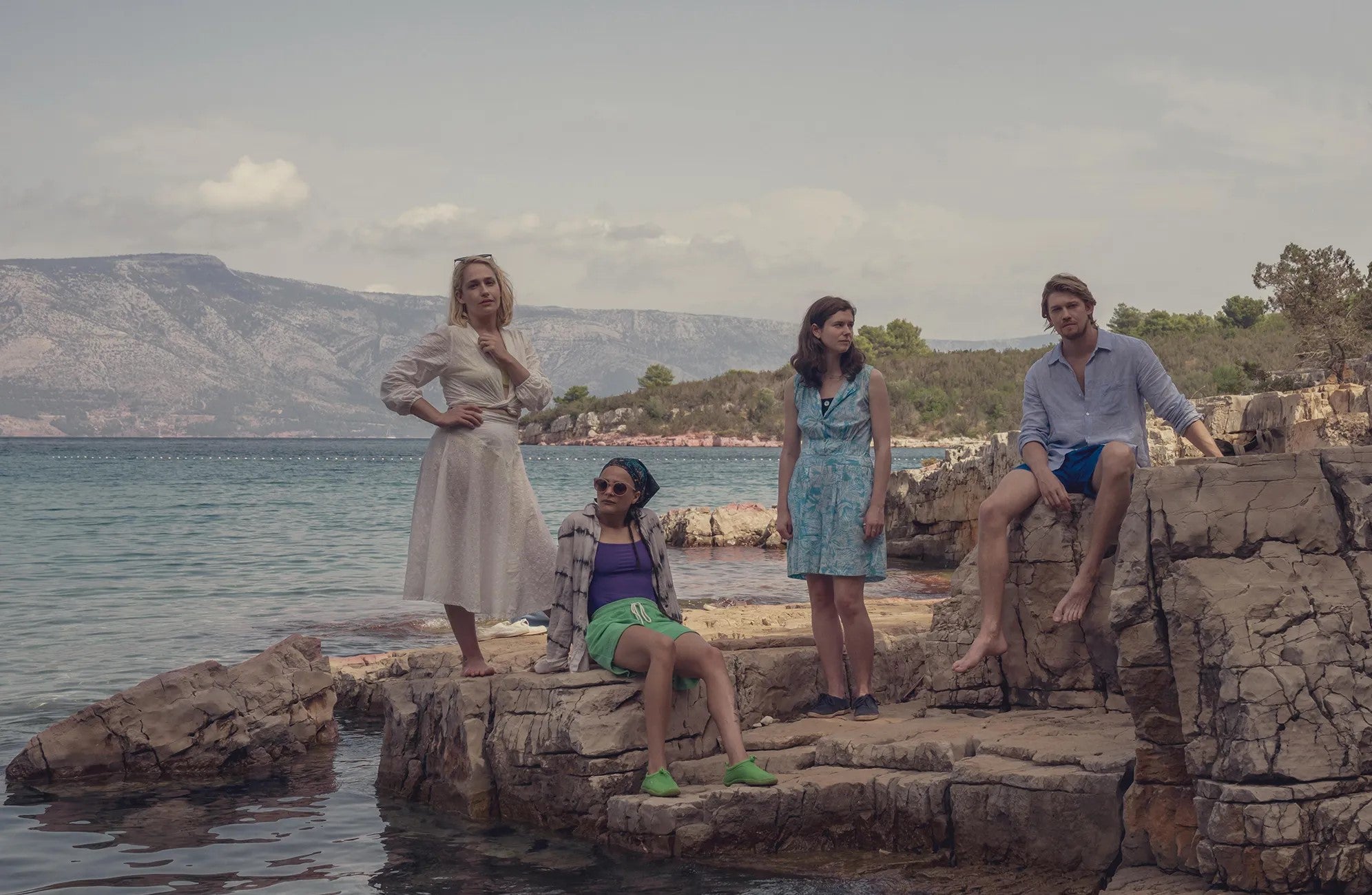
Her young, educated, overwhelmingly white characters reflect the broader literary world, where non-white authors whose political engagement is just as daring (Akwaeke Emezi, for one) but whose work is rarely celebrated so much in the mainstream, despite others often confronting issues that come with far more professional and personal risk than Rooney will ever face.
Until now, perhaps. Could Rooney really be arrested under the Terrorism Act for donating royalties? It might be a surreal idea, but it’s also eerily fitting with the ideas she’s spent years communicating about the world – where rules are enforced unevenly, moral clarity can clash uncomfortably with the law and where a young writer becomes one of the loudest political voices in the UK and Ireland today.
In a celebrity-driven culture where politics is often reduced to performative outrage, or where it’s commissioned and paid for (here’s looking at you, Sydney Sweeney), Rooney slices through merely because she’s doing what she does: provoking debate, insisting that art and ethics simply can’t be separated.
Rooney once suggested that fiction can’t be the right instrument for revolution – the form is too slow and too solitary, she implied. Another time she remarked about novels that, “even if they’re really good, they’re not going to save the planet”. But it hasn’t stopped her trying yet.
Join our commenting forum
Join thought-provoking conversations, follow other Independent readers and see their replies
Comments
Bookmark popover
Removed from bookmarks