BBC backs decision to let Israel join Eurovision as four countries boycott event
Ireland, Spain, Netherlands and Slovenia lead action protesting against Israeli conduct in Gaza war
The BBC is backing a decision to let Israel take part in next year’s Eurovision song contest after a string of countries and their broadcasters pledged to boycott the event.
Ireland, Spain, the Netherlands and Slovenia say they will not take part in the 2026 competition because the European Broadcasting Union (EBU) cleared the way for the country to compete.
A row had blown up over whether Israel should be allowed to join the contest amid its conduct in the war in Gaza.
The EBU backed away from calling a vote on Israeli participation, and instead passed rules aimed at discouraging governments from influencing the contest.
A BBC spokesperson said: “We support the collective decision made by members of the EBU. This is about enforcing the rules of the EBU and being inclusive.”
The Conservatives said it was “absolutely right” for Israel to be part of Eurovision.
Shadow culture secretary Nigel Huddleston said: “It is deeply concerning to see so many countries choosing to boycott the event because of Israel’s inclusion. Music should be a uniting force, not a tool to be weaponised for political ends.
“We trust the government will clearly rule out joining or legitimising this boycott in any capacity.”

Government minister Alison McGovern said it will be “really sad” if Eurovision is not a “joyful occasion”.
She told Times Radio: “Eurovision is run by an independent organisation, the European Broadcasting Union, so this is really one for them, sure. It is not an issue that the government would normally interfere in.
“I’m personally not a massive Eurovision fan, but when Eurovision came to Liverpool, it was wonderful for everybody.
“So I think it’s really sad if we’re in this position where Eurovision can’t just be this joyful occasion, but it’s for the European Broadcasting Union to take decisions over in the first instance.”
By contrast, Irish national broadcaster RTE says it will not broadcast the song contest, describing Israel’s participation as “unconscionable given the appalling loss of lives in Gaza”.
The RTE statement said: “Following today’s EBU winter general assembly in Geneva at which Israel’s participation in the 2026 Eurovision Song Contest was confirmed, RTE’s position remains unchanged.
“RTE will not participate in the 2026 Eurovision Song Contest, nor will RTE broadcast the competition.
“RTE feels that Ireland’s participation remains unconscionable given the appalling loss of lives in Gaza and the humanitarian crisis there, which continues to put the lives of so many civilians at risk.
“RTE remains deeply concerned by the targeted killing of journalists in Gaza during the conflict and the continued denial of access to international journalists to the territory.”
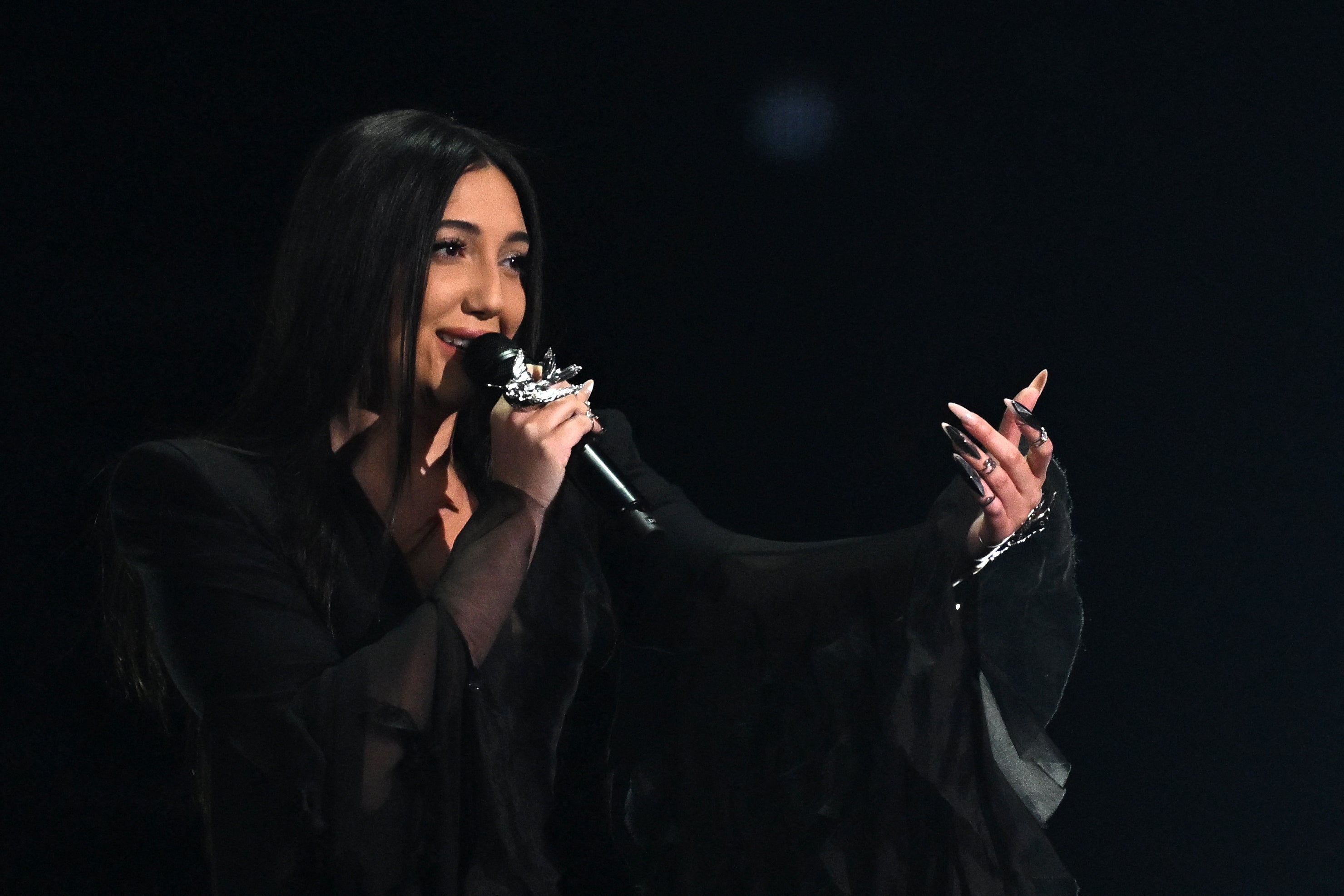
The 2026 contest will be held in Vienna after a narrow victory by Austria’s act, JJ, with “Wasted Love”, beat Israeli singer Yuval Raphael, who was runner-up after receiving the largest number of votes from the public combined with the jury votes.
After the decision to allow Israel to compete, the country’s president, Isaac Herzog, wrote on social media: “Israel deserves to be represented on every stage around the world, a cause to which I am fully and actively committed.”

In September, Ireland, Spain, the Netherlands and Slovenia all threatened to withdraw unless Israel was excluded.
Russia was banned from Eurovision after its invasion of Ukraine in 2022 but Israel has continued to compete for the past two years despite disputes.
Dutch broadcaster Avrotros also announced that it would not broadcast the competition, saying it would be “incompatible with the public values that are essential to us”.
Taco Zimmerman, chief executive, said: “This was not an easy decision, and we didn’t make it lightly.
“The Eurovision Song Contest is incredibly valuable to us. Culture unites, but not at all costs. What happened last year touches our boundaries.
“Universal values like humanity and a free press have been seriously violated and are non-negotiable for us. Furthermore, last year’s political interference demonstrated that the independence and unifying nature of the Eurovision Song Contest can no longer be taken for granted.
“We choose the core values of Avrotros and, as a public broadcaster, have the responsibility to remain true to these values, even when that is complicated or vulnerable.”

The Dutch public broadcasting organisation NPO will continue to ensure that next year’s Eurovision Song Contest will remain available for Dutch viewers and fans.
Slovenian broadcaster RTV said it was pulling out of the competition “on behalf of the 20,000 children who died in Gaza”.
In her address to members before the decision, Natalija Gorscak, RTV Slovenia board chair, said: “For the third year in a row, the public has demanded that we say no to the participation of any country that attacks another country. We must follow European standards for peace and understanding.
“Eurovision has been a place for joy and happiness from the very beginning, performers and audiences have been united by music, and it should remain that way.
“Our journalists were not and still are not allowed to enter Gaza, where more than 200 journalists were killed. Last year, we saw that the Israeli performance was political. Don’t forget that we banned a similar performance by a Russian singer in Ukraine.
“Our message is: we will not participate in the European Song Contest if Israel is there. On behalf of the 20,000 children who died in Gaza.”
Pro-Palestinian protesters demonstrated against Israel’s inclusion near a free concert in the centre of Basel when the 2025 competition took place.
Germany, a major Eurovision backer, had said it would not take part if Israel were barred.
Bookmark popover
Removed from bookmarks