Robert Redford refused to be a Hollywood pretty-boy – and shaped modern cinema in the process
The legendary movie star, producer, filmmaker and activist, who has died at the age of 89, used his fame wisely and spent his career demonstrating his versatility on screen. But while his loss is great, writes Charlotte O’Sullivan, his fingerprints are all over the industry today


In 1972, the fabulously caustic film critic Pauline Kael compared Robert Redford to Lassie. She felt he’d wasted his early potential and become too sunny by half. But the joke’s on Pauline. If the actor-turned-activist/producer/Oscar-winning director did occasionally flirt with blandness, he never went all the way. He was embraced by edgy, new wave directors, as well as old-school Hollywood; his best performances helped galvanise the cinematic landscape. As the co-founder of the Sundance Film Festival, he also brought independent movies to the masses. Meryl Streep, his co-star in the hit 1985 romance Out of Africa, said “he was the golden boy of American cinema, but he always made room for others to shine”. Directors whose careers were boosted by Sundance include Quentin Tarantino, Steven Soderbergh, Nicole Holofcener and Ryan Coogler. Yep, we owe Redford – who died early on Tuesday morning at his home in Utah, aged 89 – a huge debt.
He didn’t lead a charmed life; born in a poor neighbourhood of Los Angeles, Redford lost his Texan mother (“the strong member of the family”) in his teens. Still, once he started acting, he definitely got lucky, with a string of juicy parts in star-studded if somewhat febrile melodramas. In the 1965 Natalie Wood vehicle Inside Daisy Clover (the film that brought him to the attention of producer Alan J Pakula, with whom he later worked on All the President’s Men), Redford is magnetic as bisexual movie idol Wade Lewis, nailing the character’s white-toothed glamour and flibbertigibbet charm. In 1966’s This Property Is Condemned (again with Wood) he’s Owen, a jaded railway official, full of impatience and chilly angst. When he says, “I have no dream”, we can’t help but shiver. Beautiful and brittle, Owen is a proper mystery, even to himself.
Then came a small but crucial role in The Chase (1966), with Redford eye-catching as Bubber Reeves, the decent-ish Texan prison escapee drawn back to his corrupt home town, where Marlon Brando’s Sheriff Calder tries to uphold the law. Redford and Brando’s one scene together, right at the end, is tantalisingly charged; instead of the two men interacting, it’s Bubber’s disdain for his weeping mama (Miriam Hopkins) that all but burns a hole in the screen.
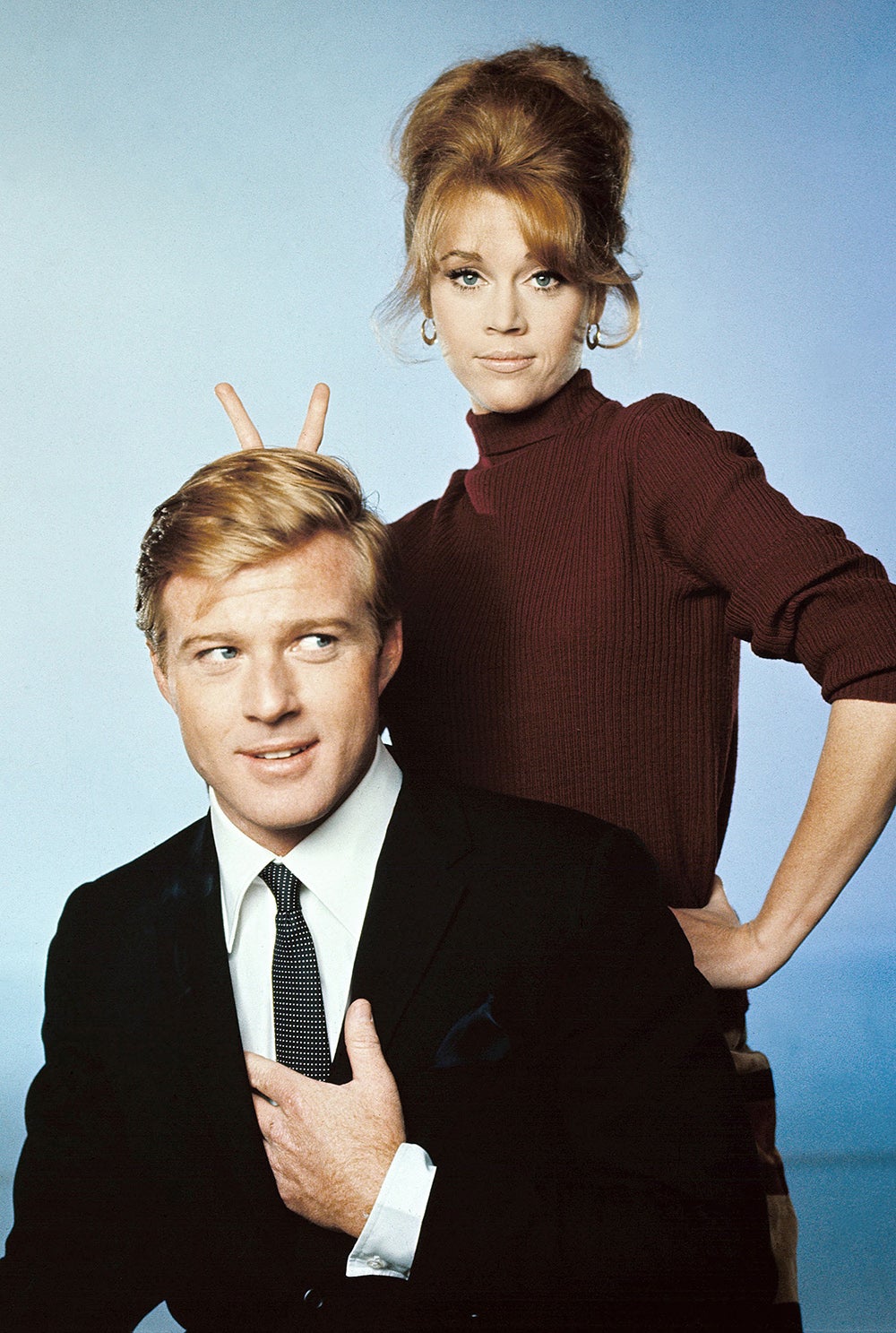
After that, Redford got the lead in Neil Simon’s 1967 comedy Barefoot in the Park (opposite a bright-eyed Jane Fonda). Redford had played the part of self-regarding Paul Bratter on Broadway and, in the film, seems comfortable making a twit of himself. He’s especially nifty in the bit where Paul gets sloshed in Washington Square Park. Like Grace Kelly in High Society, Redford is in his element playing an uptight if gorgeous square who seriously needs to loosen up. To put it another way: Redford’s comic timing is ace.
Butch Cassidy and the Sundance Kid, of course, was the game-changer in 1969. The studios didn’t want Redford, by now in his early thirties, but his co-star Paul Newman insisted he was just right for this insouciant and brainy western. And he was. Redford’s gun-toting outlaw acts like a man who’s stoned. Almost always wry and sporadically ratty, the “Kid” lives in the moment. Yet beneath his blithe exterior there’s a streak of melancholy. His ever-growing dependence on Butch and the woman they adore (Katharine Ross) is stirring. There are “classic” films that, on closer inspection, turn out to be deeply regressive (see Once Upon a Time in the West). This bromance, by contrast, stands up to scrutiny. Ross’s Etta Place says, “I won’t watch you die. I’ll miss that scene if you don’t mind.” The freeze-frame at the end was always poignant. With both leading men now gone, it’s devastating.
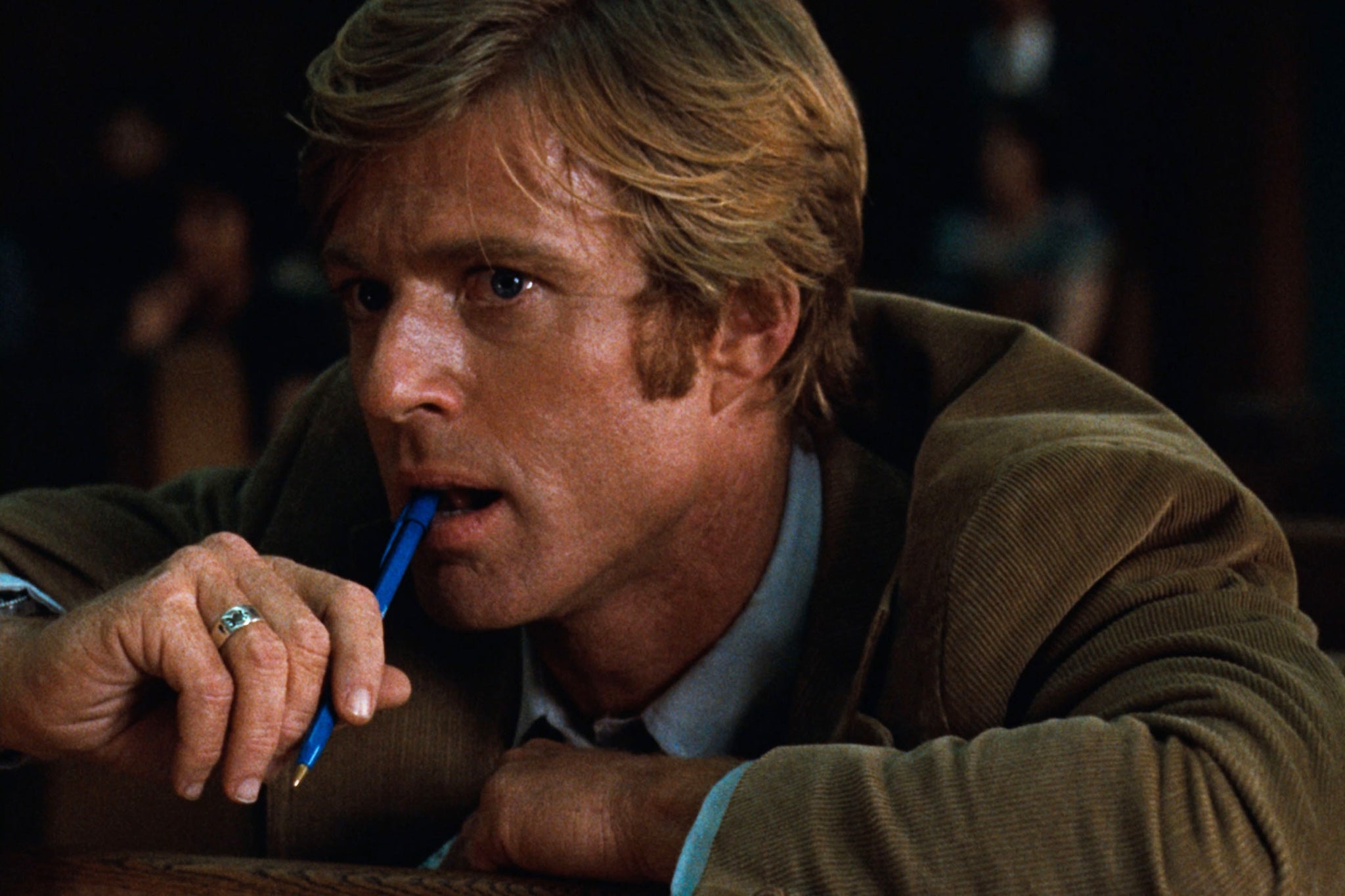
As well as making a ton of money, Butch Cassidy and the Sundance Kid won four Oscars. Redford used his newfound fame wisely, demonstrating his versatility – and growing interest in politics – via The Candidate (1972), The Sting (1973), The Way We Were (1973), Three Days of the Condor (1975) and All the President’s Men (1976). Note how often his performances feel almost disconcertingly naturalistic. It’s as if he’s forgotten the cameras are rolling and is just experimenting with how to play in the scene, whether by letting his lips flap with exasperation and spewing gibberish (as a radical lefty who gets embroiled in a political campaign run by cynical Democrats, in Michael Ritchie’s satirical gem The Candidate) or by emitting a little growl of excitement, while sitting at a typewriter (as poised journalist Bob Woodward in the sweaty, impressively lo-fi Watergate drama All the President’s Men).
In terms of their morals, Redford’s characters tend to be wayward. Many of them are conmen who’ve perfected the insincere smile. More than a few are over-confident opportunists and/or narcissists. In 1969’s Downhill Racer, wannabe Olympic ski champion Dave Chappellet is fascinatingly ruthless and self-involved. You keep expecting him to be punished. Or redeemed. Uh-uh. Like a shark, Dave just keeps on moving. In period romance The Way We Were, Redford’s ambitious writer cheats on Barbra Streisand’s impassioned Jewish radical and walks out on her, as well as their baby daughter. What a swine! Loyal Lassie, if you remember, always saved the day. That simply isn’t true of the vast majority of men Redford chose to inhabit.
His filmography, as already hinted, is hardly blemish-free. The Great Gatsby (1974) is a tepid mess and Redford is rubbish in it. Why? Because he doesn’t convince as a hopeless romantic. F Scott Fitzgerald’s self-made millionaire is meant to be gaga about Daisy Buchanan (Mia Farrow), but it seems preposterous that Redford’s Jay Gatsby would risk everything to protect this posh party girl. She barely seems to raise his pulse. Jane Fonda once said that Redford didn’t like kissing her on set and had “a problem with women”. All one can say for sure: the heat generated by Redford, here, wouldn’t boil a hummingbird’s egg.
Films like 1985’s Out of Africa were massively successful, but didn’t exactly stretch him. As elegant lion-killer Denys, he woos Meryl Streep’s sensitive Danish toff and is entirely seductive – particularly when languorously washing her hair – but also looks bored. He’s playing a fantasy figure and knows it. Meanwhile, in the tosh that is Adrian Lyne’s Indecent Proposal (1993), he has the air of a sleepwalker who has no wish to be woken up.
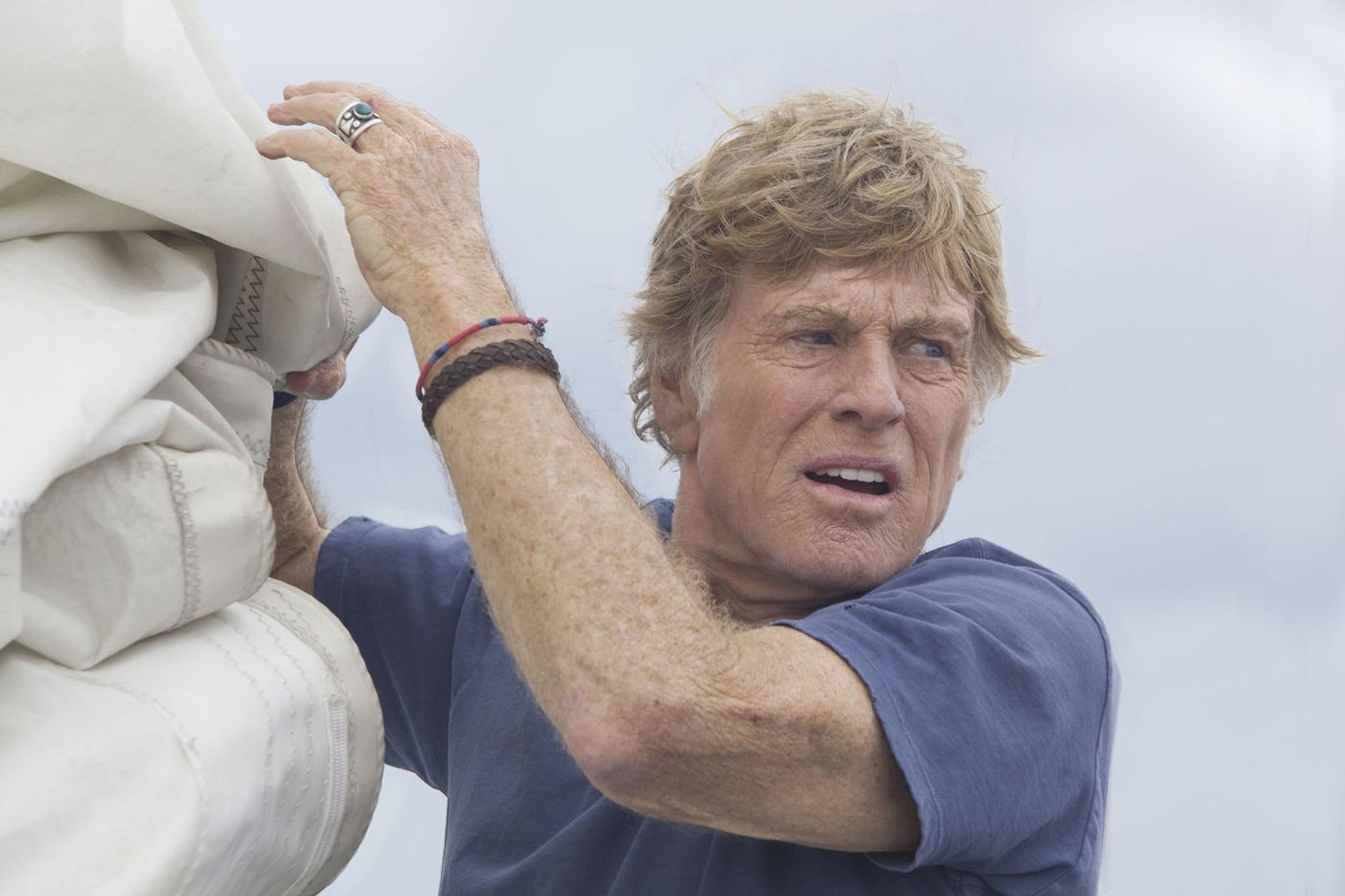
He’s fully engaged, however, in 2013’s All Is Lost, in which he barely has a word to say. Made for $8.5m by JC Chandor, the film cast 77-year-old Redford as an imperilled sailor, trying not to be swallowed by the sea. All the old intensity is there, as his nameless character gets that sinking feeling in the Indian Ocean. He’s almost as compelling in what would prove his last significant turn in a feature film, David Lowery’s The Old Man & the Gun (2018). He plays a dapper and sedate bank robber, alternately wearied and thrilled by his own self-serving lies. His Forrest Tucker, who sports a sad clump of golden-hued hair, is running out of time. When the film uses a clip from The Chase, as a “flashback” of the young Tucker, it really does feel as if Redford the man and Redford the myth have merged.
Redford complained, on a number of occasions, that his blond good looks got in the way of him being taken seriously. It’s true that the darker-haired Warren Beatty and Paul Newman, though equally pulchritudinous, didn’t face nearly as much carping – legend has it that a studio executive once said of Redford, “He’s just another Hollywood blond. Throw a stick out of a window in Malibu, you’ll hit six like him.” Yet Redford proved, over and over again, that he was anything but pretty vacant. He did this, in part, by going behind the camera. Ordinary People (1980) won four Oscars in all, including Best Picture. Redford probably shouldn’t have won the Best Director Oscar (for God’s sake, he was up against Scorsese, for Raging Bull!), but his film spills over with impressively murky emotions and boasts a beautiful performance from Mary Tyler Moore, as a helplessly icy mother who can’t connect with her anguished teenage son.
What will Redford’s ultimate legacy be? Audiences rightly swerved his more clunkily earnest directing efforts (even the most ardent liberals and/or Tom Cruise fans may be tempted to have a cheeky nap during Lions for Lambs, his 2007 Afghan War “thriller”), and it’s possible very young viewers only know Redford as the craggy dude from Captain America: The Winter Soldier (2014). Still, so many pretty actors have learnt from his example, from Brad Pitt to George Clooney. By sniffing out smart scripts, and appearing to be amused by their own good looks, these icons have kept their careers going, just as Redford did.
Redford, a committed environmentalist, also took political and economic risks that paid off. In Butch Cassidy and the Sundance Kid, Butch says of the “Kid”: “He goes his own way.” Those five words seem equally true of the canny pioneer born Charles Robert Redford Jr.
Join our commenting forum
Join thought-provoking conversations, follow other Independent readers and see their replies
Comments
Bookmark popover
Removed from bookmarks