‘I’m not a politician, I’m a filmmaker’: One Battle After Another director Paul Thomas Anderson wades in on political art debate
‘I have significantly more confidence in myself communicating my feelings about the world through the film,’ director said after ‘One Battle After Another’ was named Best Film
Paul Thomas Anderson has offered his thoughts on the ongoing debate surrounding whether artists have a duty to talk about political issues.
One week after stars at the Berlin Film Festival were told to “stay out of politics” by the festival’s president, director Anderson faced his own line of questioning while attending the Bafta Film Awards on Sunday night (22 February).
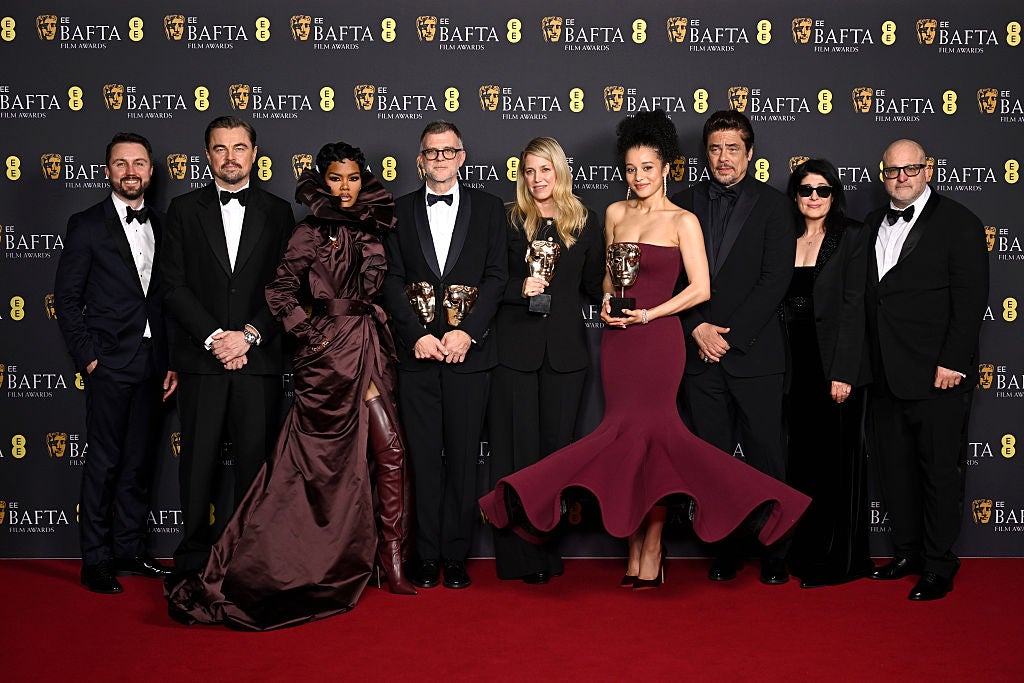
Asked whether high-profile film figures should speak on politics after taking home the Bafta for Best Director and Best Film for One Battle After Another, Anderson dodged making a statement, telling the press room: “I’ll ultimately fail here, in this situation.”
He added: “Where I have confidence that I won’t fail is by making a film. I have significantly more confidence in myself communicating my feelings about the world through the film, and I think that’s what we’ve done with this film.
“Trying to find intelligent things to say in this form wouldn’t be – I’m not a politician, but I’m a filmmaker, so [I] try to do it through the work.”
Inspired by Thomas Pynchon’s 1990 novel, One Battle After Another was interpreted by many critics and viewers as a satirisation and criticism of Trump’s America. The film, which stars Leonardo DiCaprio, Teyana Taylor and Chase Infiniti, follows a revolutionary group battling the military, led by Sean Penn’s corrupt white-supremacist officer.
The film created backlash amongst right-wing commentators in the US, who branded Anderson’s creation “reckless ode to radical terrorism”, while Ben Shapiro called it “an apologia for radical left-wing terrorism”.
His comments come weeks after the Berlin Film Festival, which saw actors from Rupert Grint to Neil Patrick Harris asked about the rise of the far-right and president Wim Wenders subsequently calling out what he branded a “media storm that has swept over the Berlinale”.
Wenders said that filmmakers “have to stay out of politics”, adding that while “movies can change the world”, they can only do this “not in a political way”.

Watch Apple TV+ free for 7 day
New subscribers only. £9.99/mo. after free trial. Plan auto-renews until cancelled.
ADVERTISEMENT. If you sign up to this service we will earn commission. This revenue helps to fund journalism across The Independent.
Watch Apple TV+ free for 7 day
New subscribers only. £9.99/mo. after free trial. Plan auto-renews until cancelled.
ADVERTISEMENT. If you sign up to this service we will earn commission. This revenue helps to fund journalism across The Independent.
As a result, author Arundhati Roy withdrew from the Berlinale as she called the comments “unconscionable”. Meanwhile, an open letter was signed by 81 artists – including Javier Bardem, Tilda Swinton and Brian Cox – questioning the “institutional silence on the genocide of Palestinians”.
The Independent has contacted Anderson’s representative for comment.
Join our commenting forum
Join thought-provoking conversations, follow other Independent readers and see their replies
Comments
Bookmark popover
Removed from bookmarks