Wuthering Heights review – Emerald Fennell’s astonishingly bad adaptation is like a limp Mills & Boon
Margot Robbie and Jacob Elordi’s performances are almost pushed to the border of pantomime, while Fennell’s provocations seem to define the poor as sexual deviants and the rich as clueless prudes
Our modern literacy crisis has found a new figurehead in Emerald Fennell’s “Wuthering Heights”. It’s Emily Brontë’s 1847 classic for a culture that’s denigrated literature to the point where it’s no longer intended to expand the mind but to distract it.
With its title stylised in quotation marks, and a director’s statement that it’s intended to capture her experience of reading the book aged 14, it uses the guise of interpretation to gut one of the most impassioned, emotionally violent novels ever written, and then toss its flayed skin over whatever romance tropes seem most marketable. Adaptation or not, it’s an astonishingly hollow work.
Some of this, it can be argued, was already signalled by the film’s casting and the choice to obliterate any mention of race, colonialism, or ostracisation in the telling of pseudo-siblings Cathy and Heathcliff’s destructive codependence. Heathcliff, whose ethnically ambiguous appearance is of great concern to every other character in the book, is played by white Australian actor Jacob Elordi.
A blonde-and-blue-eyed Margot Robbie plays Cathy, who, while far more accepted than Heathcliff, still exhibits in the source material a desperation to fit a social ideal represented by the wealthier, blonde-and-blue-eyed Lintons, Edgar and Isabella (here played by Shazad Latif and Alison Oliver).
Fennell has no interest in such narrative tensions, or really in any of the emotional drive of Brontë’s novel – a naked rage so extreme that a contemporary critic wondered how anyone could write such “vulgar depravity and unnatural horrors” and not kill themselves after a few chapters.
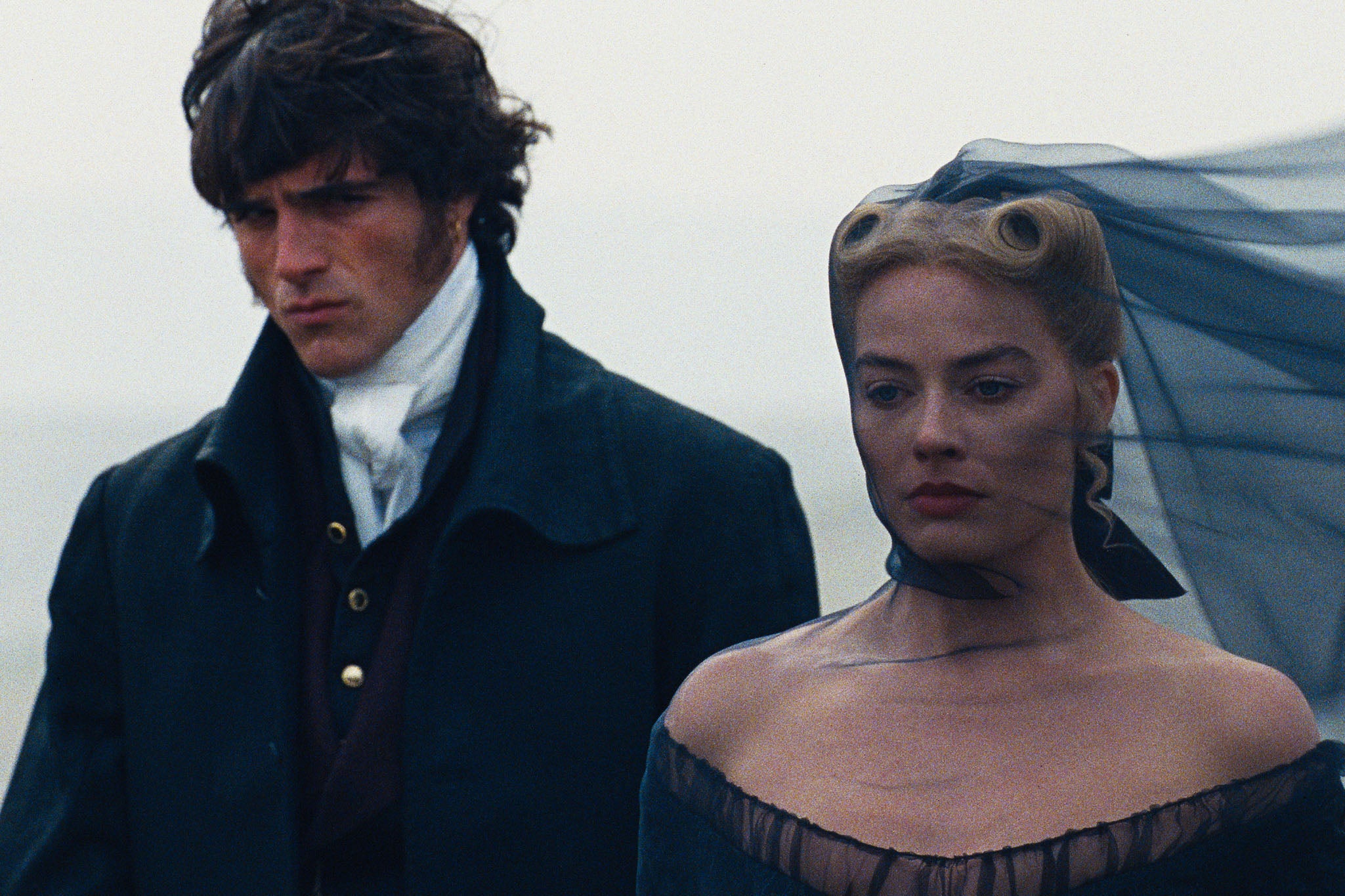
Fennell only adapts the first half of the novel – a tradition since the 1939 film (the earliest extant version) that carried through to Andrea Arnold’s 2011 iteration, the most spiritually faithful take. Accuracy, then, isn’t the primary issue – tone is. And “Wuthering Heights” is whimperingly tame compared even with Fennell’s own work. There’s a hell of a lot more Cathy and Heathcliff in the messy, self-destructive, self-loathing characters of Promising Young Woman (2020) or Saltburn (2023) than there is here.
Heathcliff, for one, has become a wet-eyed, Mills & Boon mirage created entirely to induce swooning, always on standby to shield Cathy from the cold and rain. How infinitely dull he is compared to the complicated, challenging figure we meet in the book: a victim of abuse so dead-set on vengeance that he becomes as monstrous as those who harmed him.
Fennell, in her script, has conflated Heathcliff’s chief abuser, Hindley, with Cathy’s father Mr Earnshaw (Martin Clunes), and made Cathy and Heathcliff equal targets of his violence. This, in turn, flattens the entire story into that of a poor maiden who escapes her dire circumstances by marrying a wealthy man, Edgar, who loves her but is dull, all while she yearns for her soulmate who has not a penny to his name. When Heathcliff leaves, only to come back rich, it’s presented here as a romcom makeover and not a man’s mission to acquire enough financial power to ruin the lives of everyone he hates.
“Wuthering Heights” is so affronted by the notion that Heathcliff might be anything other than a dreamboat that it builds a world around him that’s more suited to a fairytale than a Gothic masterwork. Jacqueline Durran’s costumes and Suzie Davies’ sets quote cinephile classics like Jacques Demy’s Peau d’âne (1970) and Jean Cocteau’s La Belle et la Bête (1946), while paired with Linus Sandgren’s soft-as-butter cinematography.

Watch Apple TV+ free for 7 day
New subscribers only. £9.99/mo. after free trial. Plan auto-renews until cancelled.
ADVERTISEMENT. If you sign up to this service we will earn commission. This revenue helps to fund journalism across The Independent.
Watch Apple TV+ free for 7 day
New subscribers only. £9.99/mo. after free trial. Plan auto-renews until cancelled.
ADVERTISEMENT. If you sign up to this service we will earn commission. This revenue helps to fund journalism across The Independent.
But when faced with Brontë’s own vivid, thorny language, all those fantastical red riding hoods and arm-shaped candle holders look as garish as a live-action Disney film. If there’s an exception, it’s Charli xcx’s and Anthony Willis’s musical contributions, which offer a dread that’s missing from everywhere else.
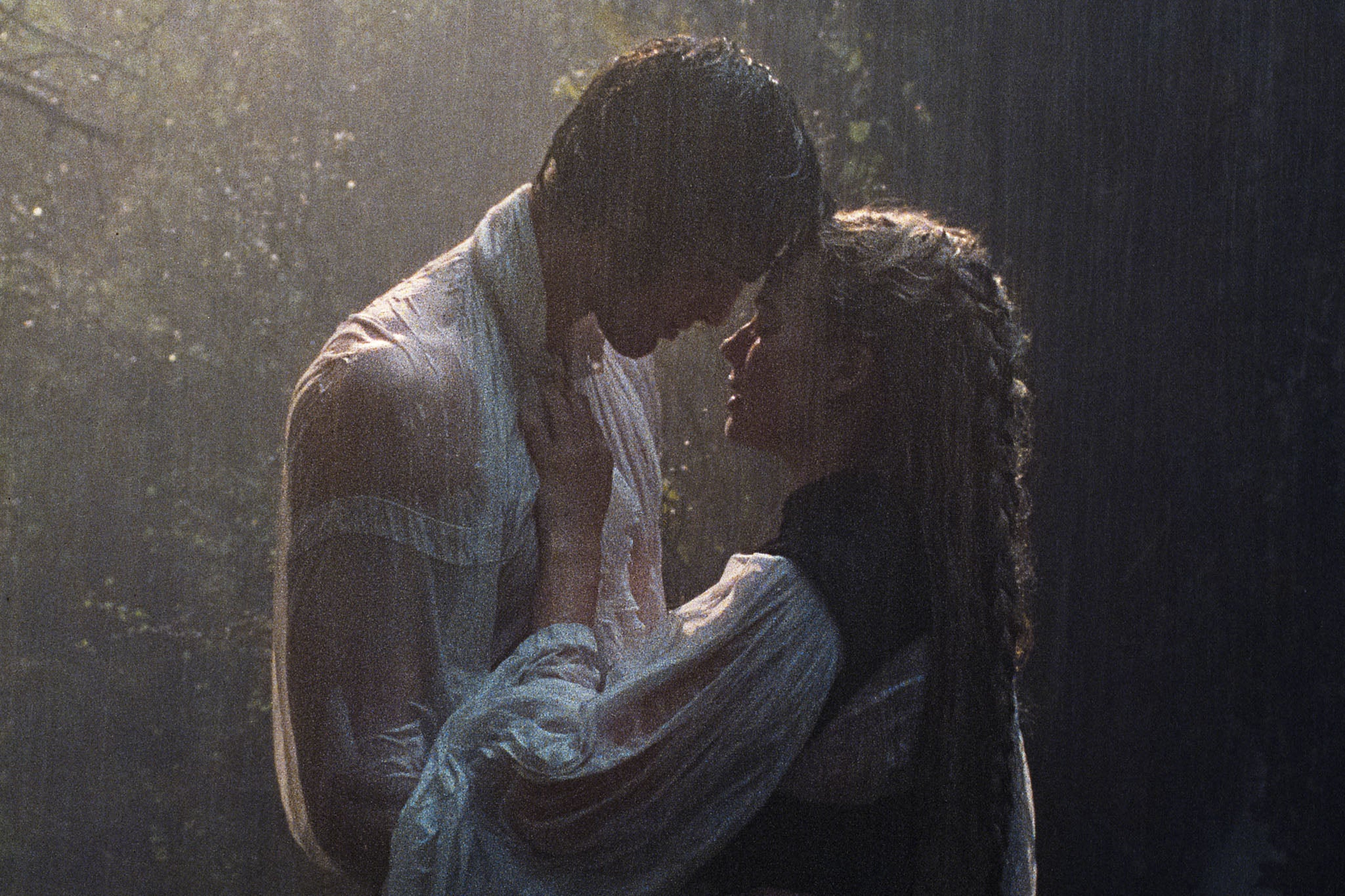
As a sadomasochistic provocation – another of the film’s stated intents – it’s equally limp. A hanged man with an erection drives a village into a Bacchanalian frenzy. A woman wears a dog collar and barks. But these scenes aren’t provocative when they’re so expressly played as a joke, mostly with a fetishistic view of class that categorises poor people as sexual deviants and rich people as clueless prudes.
And the supposedly “wild” Heathcliff never does anything to Cathy that couldn’t be spotted in the average Bridgerton episode. Mostly, he sticks his fingers in her mouth. Robbie and Elordi don’t entirely lack chemistry, but their characters do feel so thinned out that their performances are pushed almost to the border of pantomime. She’s wilful and spiky. He’s rough but gentle. That’s about it.
Perhaps there’s a more graceful takeaway from all this. If “Wuthering Heights” were true to the spirit of what it feels like to read Wuthering Heights, at any age, it wouldn’t be a film you could market with brand tie-ins and Valentine’s Day screenings. It would disturb people. So, what is Fennell’s loss is only Brontë’s gain. She remains singular.
Dir: Emerald Fennell. Starring: Margot Robbie, Jacob Elordi, Hong Chau, Shazad Latif, Alison Oliver, Martin Clunes, Ewan Mitchell. Cert 15, 136 minutes.
‘Wuthering Heights’ is in cinemas from 13 February
Join our commenting forum
Join thought-provoking conversations, follow other Independent readers and see their replies
Comments
Bookmark popover
Removed from bookmarks