The late Chris Rea on the ‘warmth and hope’ of ‘Driving Home for Christmas’
The British rock singer spoke with Roisin O’Connor, just days before his death aged 74, about the story behind one of the UK’s most popular festive songs
Chris Rea was the unmistakeable voice behind one of the world’s most popular Christmas songs, but he wrote it at a time when he was hardly in the holiday spirit.
His record contract was almost done, and his manager had just informed him he was quitting. Rea was keen to get home from London’s Abbey Road studios to Middlesbrough, but he’d been banned from driving, and his label refused to pay for a train ticket.
So, his wife picked him up in their battered Austin Mini and they set off for Middlesbrough. The snow set in, as did the traffic, prompting Rea to look across at the other drivers, who looked equally miserable. Jokingly singing that now-famous line, he started to scrawl down lyrics in a notepad on his lap.
Originally released as the B-side to his single “Hello Friend” in 1986, the re-recorded version of “Driving Home for Christmas” (1988) has appeared in the UK singles chart almost every year for the past two decades, reaching a new peak of No 10 in 2021. Both versions feature on Rea’s new record, The Christmas Album, which is out now, including as a limited-edition vinyl.
Its cheerful, jangling tune and wistful theme of travelling home for the Christmas holidays struck a chord with his fans, and it has since gone on to become one of the UK’s best-loved festive songs.
“It has that hope and warmth to it, like all the classic Christmas songs,” Rea told The Independent, just days before his death aged 74. “That and the frustration of being stuck in the motorway traffic – that’s what people relate to.
“What’s funny is that I’d been banned from driving just before I wrote it, and we originally thought we’d give it to Van Morrison. It was a Fifties jazz thing, like he used to do. Then the record label put it out as a B-side of mine, and a DJ started playing it. And here we are today.”

First released in 1986, “Driving Home for Christmas” features in this year’s M&S Food Christmas advert, which sees comedian and actor Dawn French singing along to the single in her car. The track also features in a Christmas-themed album Rea released in October this year, which contains songs including “Footsteps in the Snow” and “Joys of Christmas”.
Before his death, Rea told The Independent he had been revisiting his love of blues and jazz, and recording “some instrumental pieces”. He was also looking forward to Christmas, and reflected on his pride in making his own film, La Passione, which was released 29 years ago.

Enjoy unlimited access to 100 million ad-free songs and podcasts with Amazon Music
Sign up now for a 30-day free trial. Terms apply.
ADVERTISEMENT. If you sign up to this service we will earn commission. This revenue helps to fund journalism across The Independent.
Enjoy unlimited access to 100 million ad-free songs and podcasts with Amazon Music
Sign up now for a 30-day free trial. Terms apply.
ADVERTISEMENT. If you sign up to this service we will earn commission. This revenue helps to fund journalism across The Independent.
“If I’m ever stuck on the M25 – the Road to Hell – I’ll wind the window down and start singing, ‘I’m driving home for Christmas’ at people in cars alongside,” he told The Guardian in a previous interview. “They love it. It’s like giving them a present.”
He continued: “I’d never played it live until one year at Hammersmith Odeon: the gig was on 21 December, so the road crew kept badgering me to do it. I went, ‘If I’m going to sing this f***ing song, we’re gonna do it properly.’ So we hired 12 snow cannons. When we started the song, you couldn’t hear it for the noise of the crowd, and we let go with the machines. We put 3ft of artificial snow in the stalls. The venue charged me £12,000 to clean it up.”
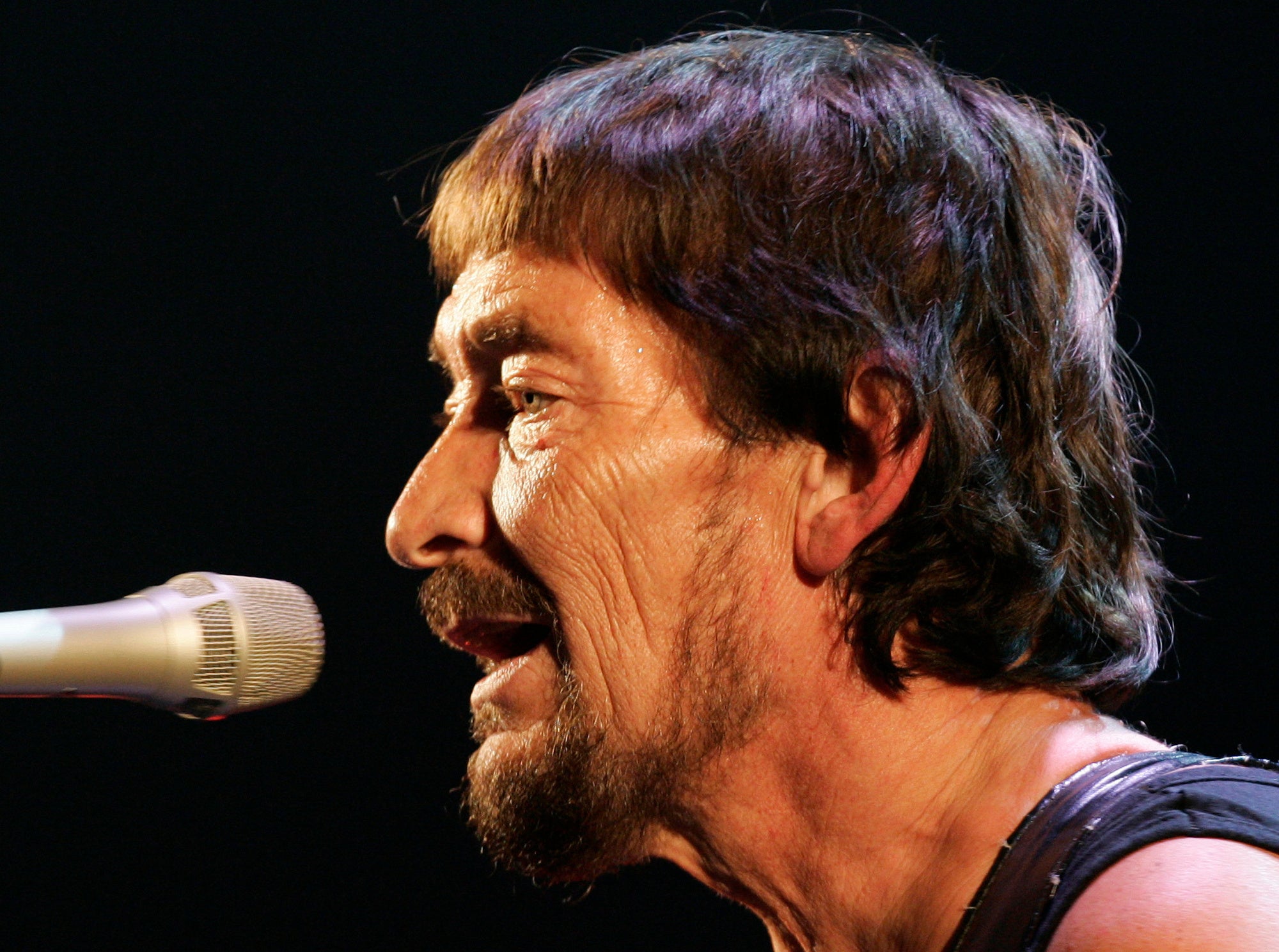
The news of Rea’s death on Monday was shared by his family, who said he had died in hospital following a short illness.
A statement on behalf of his wife and two children said: “It is with immense sadness that we announce the death of our beloved Chris. He passed away peacefully in hospital earlier today following a short illness, surrounded by his family.”
Rea’s success was somewhat sporadic, beginning with his debut album, Whatever Happened to Benny Santini?, a reference to the stage name his record label wanted him to adopt, which was was released in 1978. The album track “Fool (If You Think It’s Over)” went on to be nominated for a Grammy.
It wasn’t until his eighth album, Onthe Beach, that he experienced major success in the UK and Europe thanks to the title track, which became a hit single. He followed this up with 1989’s The Road to Hell, which turned him into one of the UK’s biggest solo stars and a favourite among (mostly male) rock fans.
“I do have this big weakness,” he told The Independent ina candid 2004 interview. “I over-cooperate with people. People say it’s because I’m an Irish-Italian from Middlesbrough, and me dad was always like that, y’know – ‘Get the job done.’ So when a record-company man would say, ‘For the Swedish version we need to sweeten that up,’ I’d say, ‘OK. You can do that.’ Then the Swedish version would become the UK version. Millions of weird things like that happened.”
The Road to Hell was also his first No 1 album, followed by 1991’s Auberge, which also topped the charts in the UK. But it wasn’t until he was in hospital being treated for pancreatic cancer, aged 33, that he experienced what he called a “musical epiphany” when a friend brought him the Miles Davis album Kind of Blue.
When he received his cancer diagnosis, his career ground to a halt, and he had to have part of his pancreas, his duodenum, his gallbladder and part of his liver removed. Addressing his illness in an interview, he said he wasn’t afraid of dying and that it was his health battles, along with his passion for the blues, that had inspired him to make a triumphant return to music.
“I probably wouldn’t have played it, but I was just like, nothing: incapable,” he recalled. “And I put it on and paid attention. Then I started to really like it, then I got a book on modulation... I became quite obsessed with that record. I could even hear them moving in to the microphone to play.”
That music stayed with him after his recovery; he rejected the “duets” album idea his record label was pestering him about, and returned to his own musical roots, releasing the blues-influenced record Dancing Down the Stony Road.
“If the heads of all the music companies had known about music and about Chris Rea fans, they wouldn’t have worried about Stony Road,” he said. “My regular fans have always known that side of me... I knew they wouldn’t have a problem with it. So I made Stony Road anyway. All the record companies rejected it. I was very pleased when it eventually went gold.”
He is survived by his wife, Joan, and two children.
Join our commenting forum
Join thought-provoking conversations, follow other Independent readers and see their replies
Comments
Bookmark popover
Removed from bookmarks