The wrenching beauty of Jean-Baptiste Lully at the Palace of Versailles
Simon Mundy attends a weekend of Baroque opera from the Italian-French composer, including a revival of Chateau de Versailles Spectacles’ new staging of ‘Atys’
The Palace of Versailles has always been about artifice. Nothing is quite true, its spectacle invented and reinvented for its age. Ironically, in our days of access and equality, it is probably far more a successful part of Parisian life than at any time since the great days of Louis XIV and the end of the 17th century. It hosts balls and garden parties, firework and fountain displays, and a fine series of concerts and opera performances. Once again, it has its own orchestra, choir, and now a recording label. There is still something awe-inspiring and slightly magical about walking through the gates of the palace in the evening and crossing the vast courtyard to the theatre’s entrance in the east wing.
The opera house in the palace is as artificial as any of Louis’s propaganda. It was added shortly before the revolution, not for royalty to watch opera but for the middle classes to pay to experience the aristocrats having dinner on stage: the equivalent today of food videos on celebrity Instagrams. It was only decades later, as Versailles was restored gradually under France’s subsequent emperors, that the intimate theatre with its huge stage began to be used properly.
These days, it presents a mixture of its own productions and others from around Europe that chime with the historical context, the emphasis naturally being on Baroque opera and dance. On Saturday (24 January), the theatre is given over to Jean-Baptiste Lully’s Atys, first performed in 1676 before Versailles was finished, so mounted originally in the huge Ballet Hall of Louis’s older palace across the River Seine in St Germain-en-Laye. When Lully staged it, he had 50 singers, 40 dancers and a huge orchestra for those days. Now the forces for Versailles are smaller, by about half, but then the theatre here does not need enormous casts to make its dramatic point.
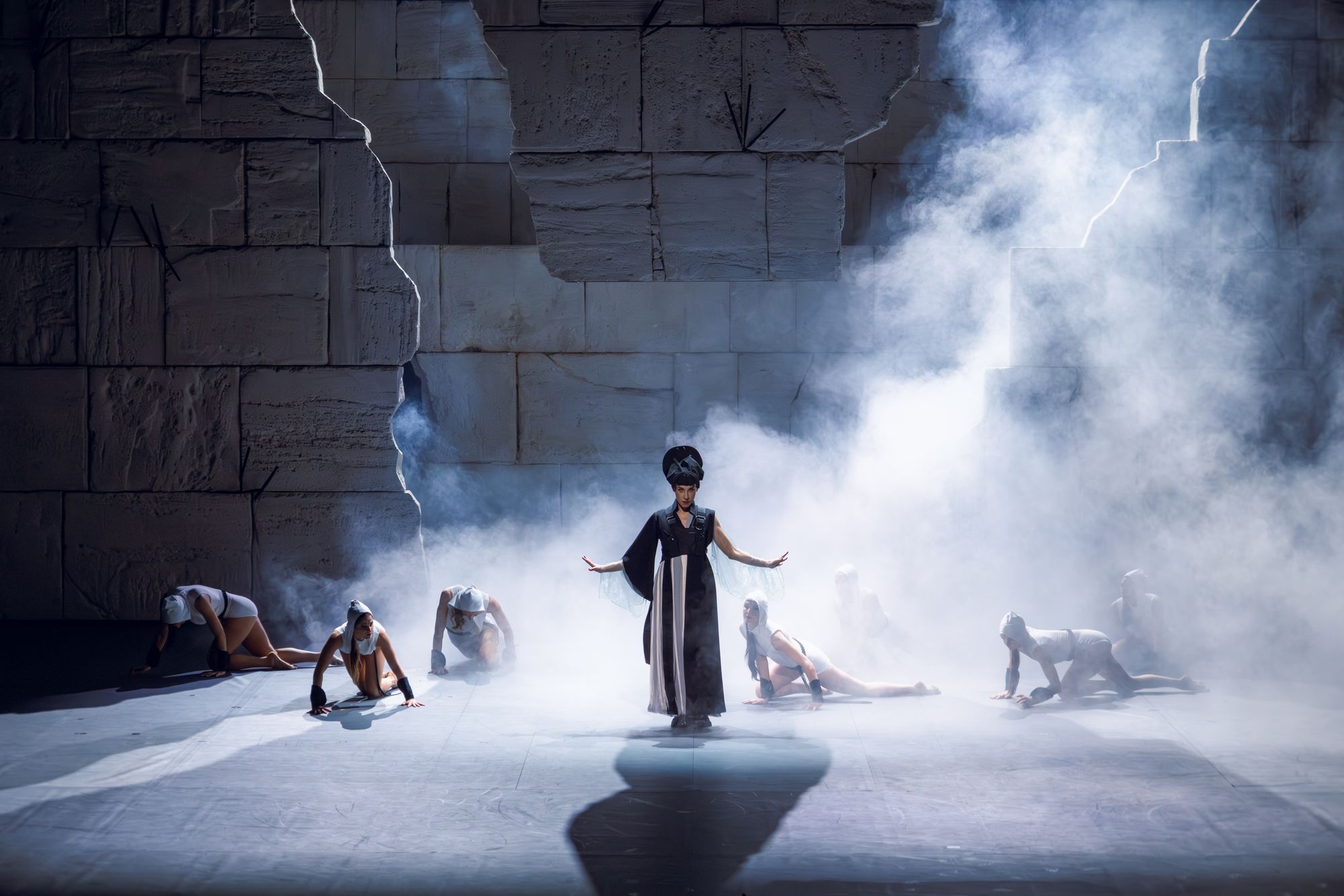
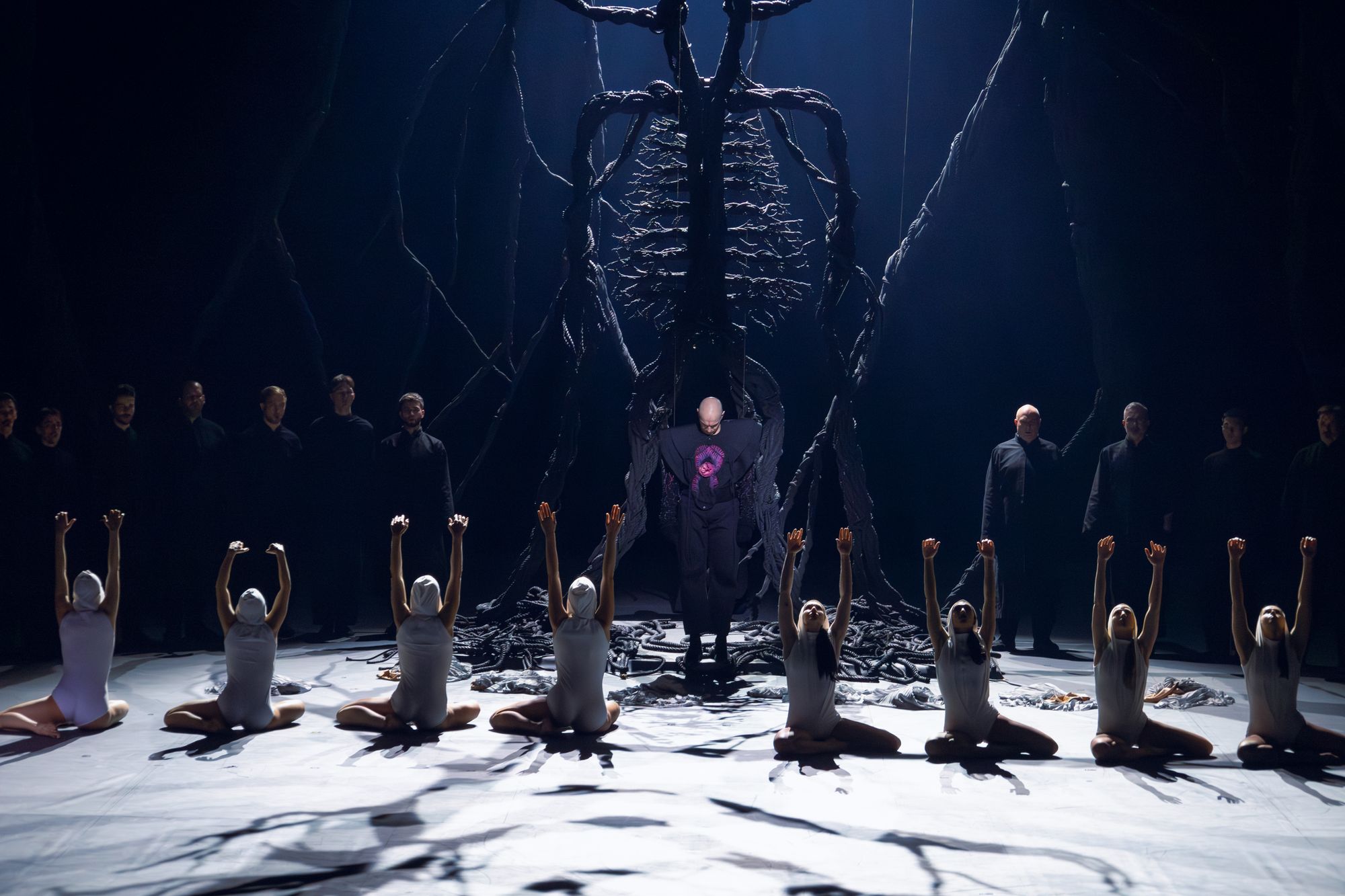
Atys is an opera that shows Lully at his best, a long flow of wrenchingly beautiful music that carries the story along without breaking it up into obvious arias and recitatives, as his fellow Italian composers (Jean-Baptiste was born Giovanni Lulli) would have done. Lully was inventing his own form of through-sung drama in which dance was every bit as important as singing but elegantly matched the emotional tribulations of the sung characters. In Atys, he had a storyline that was classic A-loves-B and B-loves-A, but C-loves-A and D-loves-B. When C is the goddess Cybèle and D is the King of Phrygia, it is clear that Atys and Sangaride’s affair is not going to end happily.
This production premiered in Geneva in 2022, directed and choreographed by the immensely experienced and imaginative Angelin Preljocaj. Unlike in Geneva, though, in the current version he uses his own troop of 15 hand-picked dancers. Their movement accompanies, comments on, and often joins the singers so that both are integrated seamlessly. The effect is often bold and surprising, but never distracting. The scenery and costumes, by Prune Nourry and Jeanne Vicérial respectively, refer back to Assyrian reliefs and black-figure Greek ceramics, as well as the dance gear of our own time – all leotards and flowing dresses worn without reference to gender. The main quartet of singers – Matthew Newlin as Atys, Giuseppina Bridelli as Cybèle, Ana Quintans as Sangaride and Andreas Wolff as the King of Phrygia – carry their roles with conviction, musically striking just the right balance between lyricism and dramatic ornamentation.
The real joy, though, is in the continuo group of the orchestra, Cappella Mediterranea, especially the lutenists Monica Pustilnik and Quito Gato, who play almost every bar of the three-hour score with endless subtlety. The same is true of Leonardo García Alarcón’s conducting, keeping the stream of Lully’s aching music gliding effortlessly.
The following evening, Sunday 25th, there is more Lully, this time in the modern sterility of the Philharmonie at La Villette. Christophe Rousset directs a concert performance of Lully’s first attempt at his new form of lyric tragedy, Cadmus et Hermione, originally staged four years before Atys. For Rousset and his forces from Les Talens Lyriques, this is the culmination of their complete set of performances and recordings of all Lully’s operas. It has been an immense and rewarding project, and while the Philharmonie has acoustic idiosyncrasies that render the concert less rewarding than the previous night in Versailles, it feels good to be part of this gentle landmark in French music that has taken an enormous amount of research. Lully wrote better and more compelling scores later in his career, but Cadmus has one standout moment – the gorgeous Chaconne for three male voices in Act 1: a hymn to sweet love.
Join our commenting forum
Join thought-provoking conversations, follow other Independent readers and see their replies
Comments
Bookmark popover
Removed from bookmarks