Stereophonic is a compelling, stylish portrait of 1970s rock in the making
West End welcomes the Tony-winning musical after a banging Broadway run
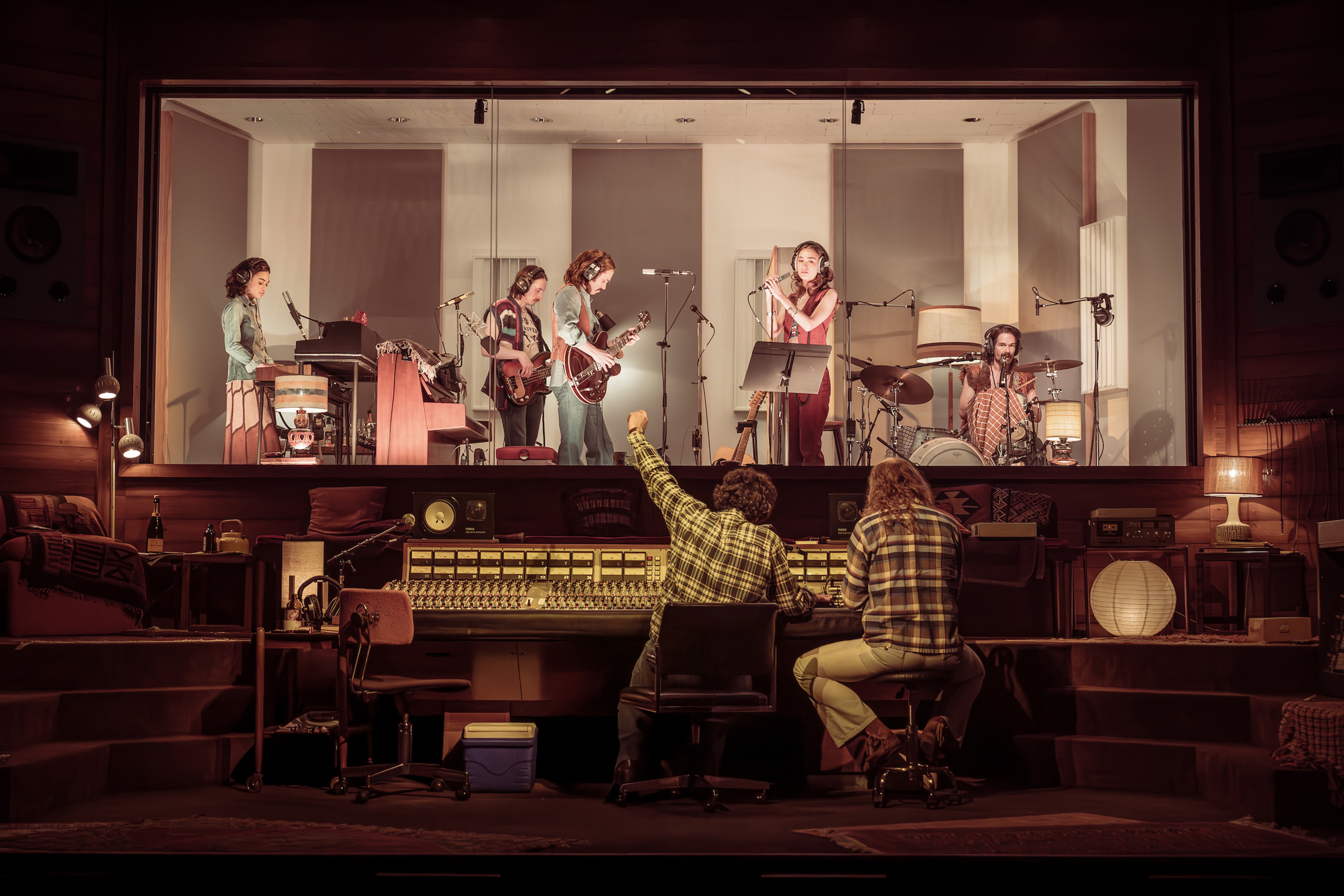
There’s a distinct, unhurried fascination that comes with watching a band thrash out a new album in the recording studio – as anyone who’s ploughed through Peter Jackson’s epic eight-hour 2021 Beatles documentary Get Back will testify. Boredom and beauty coexist as riffs are hammered out, rows erupt, and gems glimmer amid sonic rubble. David Adjmi’s multi-award-winning Broadway hit Stereophonic trains its gaze on a fictional, Fleetwood Mac-inspired group as they spend a year in the studio in 1970s California, shooting for perfection. It’s slow-moving and intense, the stasis only broken by carefully rationed bursts of music by Arcade Fire’s Will Butler.
The opening scenes drift, as the bandmates drowsily bicker about a broken coffee machine (fortunately, they’ve got enough cocaine to rouse a deep-frozen woolly mammoth). Then, Butler’s first song hits like a morning’s first macchiato. “Seven Roads” is a sweet, if weary love ballad showing that this squabbling bunch of people do actually work together on stage, beautifully framed behind the fishbowl-glass of David Zinn’s lyrically beautiful recording studio set design. But when they creep into the control room in duos or trios, Butler’s authentically folksy harmonies are replaced by something uglier. Diana (Lucy Karczewski) and Peter (Jack Riddiford) are fighting: she’s insecure but, like Stevie Nicks, simultaneously aware of her solo star potential. He’s a control freak who wants both her and the whole album firmly under his thumb. As Diana, Karczewski is full of pleasing contradictions, poised but full of adolescent sulkiness and dependence, too; “What do I do with my hands?” she asks, horrified, when her tambourine is taken away, settling reluctantly on a witchy finger twinkle.
Adjmi’s script has a feminist thrust to it, showing how Peter stifles his girlfriend’s musical talents, selling off her hard-won guitar before she can learn to play it. Maybe it’s sexism, or maybe it’s just a fear of any talent that might overshadow his own. Riddiford’s Peter simmers with competitive energy: he won’t even watch his brother and arch rival swim in the Olympics (Why? “I’ve got to make a f***ing record,” he says, pissing about idly in the studio). He even re-records his bandmates Reg and Simon’s parts for them, toning down their virtuosity.
Too laconic to protest, heartbroken bassist Reg is a “sad man in a blanket”, according to debonair drummer Simon. Zachary Hart and Chris Stack rib each other entertainingly as these two English bandmates, out of step with Sausalito, California. Meanwhile, Reg’s tough-minded ex Holly (Nia Towle) is finding her own path, fed up with cleaning dirty dishes and boozy vomit. And sound engineers Grover (Eli Gelb) and Charlie (Andrew R Butler) can’t look away, their grubby fascination with these dysfunctional couples echoing the audience’s own.
It feels like we’re building to something: this band’s equivalent of The Beatles’ triumphant, notorious gig on the roof of their recording studios when the police swarmed. But like Annie Baker, another avant-garde American playwright, Adjmi shuns conventional plotting. When an 11th-hour row does break out, Peter and Diana’s slanging match feels stagy and overwrought rather than devastating, deliberately muffled behind glass.
Adjmi’s insights into the English character don’t quite land on this side of the pond, either (especially Reg’s monologue about how the British are great at enjoying living in the moment, an odd comment on a country that’s deeply in love with its own past).
Still, Daniel Aukin’s production feels rich and sumptuous enough to be forgiven. It romances its subject, caressing these bandmates with loving washes of golden light, dressing them in a lavish wardrobe of gorgeous 1970s blouses and flares, and letting us in on their intimate moments of silliness. These songs are private things, Adjmi shows us, scrawled in a diary in a moment of pain, trying to reach places ordinary words can’t reach. We shouldn’t really watch – but we can’t look away.
At the Duke of York’s Theatre in London until 20 September
Join our commenting forum
Join thought-provoking conversations, follow other Independent readers and see their replies
Comments
Bookmark popover
Removed from bookmarks