Gilmore Girls at 25: Why we love Lorelai and Rory’s world of Stars Hollow more than ever
A quarter of a century after it arrived on screens, ‘Gilmore Girls’ is more popular than ever, writes Nick Hilton. It’s hardly surprising that the show has thrived – it depicts a liberal, accepting, compassionate community, so distinct from real-life America


You crawl out of bed in the morning, gasping for coffee. Throwing on an eclectic series of mismatched Nineties garments, you drag yourself out of the house. The town is still half asleep: a “CLOSED” sign hangs on Kim’s Antiques, and the bandstand sits silent. Across the square, a few teenage ballerinas are visible, bobbing in uniform pliés, through the open door of the dance studio. But you only have eyes for one thing. No, not Doose’s Market, with its morning shoppers, but the welcoming glow of Luke’s, the diner. That’s where you need to be. You are, after all, a Gilmore.
For a generation of TV watchers, the landscape of Stars Hollow – the fictional Connecticut community at the heart of Gilmore Girls, which turns 25 today – is as familiar as their own birthplace. Home to Lorelai and Rory Gilmore – the iconic mother-daughter duo played by Lauren Graham and Alexis Bledel over seven seasons – this is a manifest fantasy of small-town America. There’s no Walmart, no Home Depot, no manufacturing or industry. There is, however, a bookshop cinema, along with a video arcade, a bakery, a soda shoppe, and assorted quirky restaurants, including the mystically unseen Al’s Pancake World. If David Lynch and Richard Scarry started a town-planning business, they’d come up with somewhere like Stars Hollow.
A quarter of a century after it first appeared on our screens, it is a small miracle that Gilmore Girls has not become insufferably twee. Take, for example, its precocious teenage protagonist, Rory. She is a perfect all-American: a straight-A student, debate champion, and class (vice) president, who also loves classic films, alt-rock, and bingeing junk food while maintaining the BMI of a greyhound. She is somewhere between a Mary Sue (the derogatory label often applied to flawless yet shallow female characters) and a Manic Pixie Dream Girl, another irritating trope, which emerged later in the 2000s but captures something of her indulged kookiness. While people have revised her character (many devotees consider the show to have self-immolated after she dropped out of Yale), Rory has somehow largely survived feminist and Marxist re-readings of the show.
In fact, Gilmore Girls is more popular than ever. When it was released in 2000, it was greeted by positive reviews but indifferent viewing figures. Industry bible Variety said that the show existed in “a Pottery Barn catalogue kind of world”, albeit one where “the too-quaint scope of Stars Hollow” is broadened by “a plethora of diverse characters”. The Hollywood Reporter called it “a genuine gem”, while the San Francisco Chronicle said it was “cross-generational, warm-the-cockles viewing”. Showrunner Amy Sherman-Palladino’s writing was heralded for its wit and its buzzy pop-culture references, yet the first six series, which aired on The WB, underperformed the channel’s teen-focused hits like Dawson’s Creek and Buffy the Vampire Slayer. It averaged about 5 million domestic viewers and seemed destined to become a cult hit with a devoted fanbase rather than a mainstream cultural monolith. Then, in 2014, something changed all that: it was added to Netflix.
Since then, it has become one of Netflix’s core rewatch properties. In 2023, Nielsen data revealed that it was the seventh-most-watched acquired (ie non-original) show on a major streaming network, putting it just ahead of Friends in eighth place. In the first half of 2025, Gilmore Girls’ total watch time, across seven seasons and the Netflix special A Year in the Life, came to 491,400,000 hours. For perspective, Adolescence, Netflix’s biggest new hit of the year, achieved 555,100,000 hours over the same period. It seems that now, 25 years after the show first aired, Gilmore Girls’ status as a major landmark in American television has been secured.
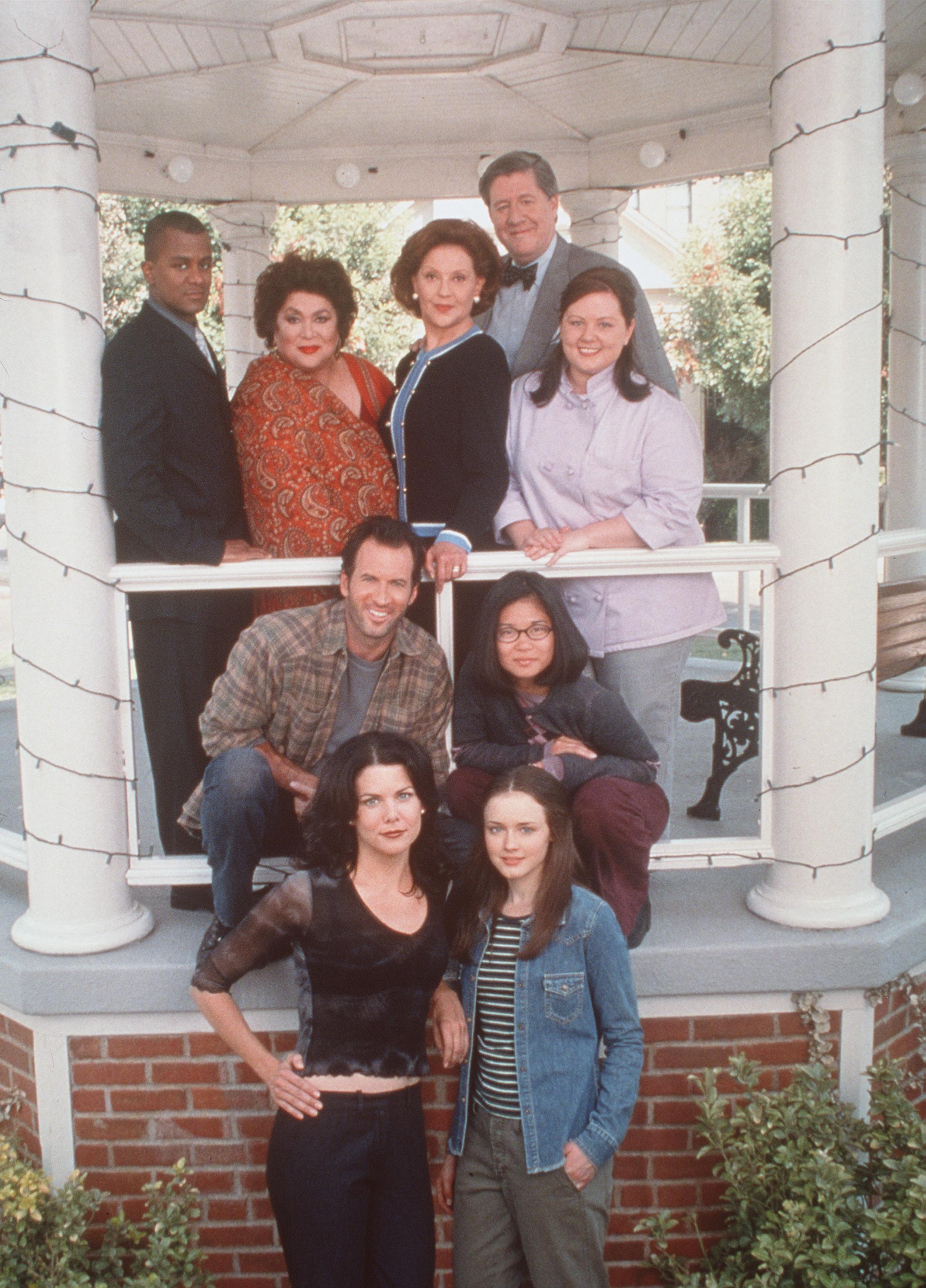
Perhaps the timing of its second act was no coincidence. Gilmore Girls is often described (slightly patronisingly) as a “comfort watch”, associated with the mellow tones of autumn and the grounding sensation of holding a mug of steaming coffee in your hands. For Gen Z, the show’s aesthetic speaks to a simpler time: they describe Lorelai’s fashion sense as iconically “Y2K”, while everything from a Jeep Wrangler to a backwards baseball cap is being reappraised as cool. Rory’s three boyfriends over the course of the show – oafish Dean, hothead Jess, and blueblood Logan – neatly divide the world by personality type, a new astrology for moony romantics.
This sensibility has resurged at a time when America is in permacrisis. The show is, in some ways, a product of the Clinton era of economic expansion, rising employment and home ownership. Despite first airing during the bitter presidential race between Democratic VP Al Gore and his Republican challenger George W Bush, the show felt apolitical and unusually self-content. And though she is a single mother working in the perilous hospitality industry, Lorelai is not vexed by financial concerns beyond funding Rory’s private education. The show is obliquely socially conscious – indeed, Madeleine Albright cameos during a bizarre dream sequence – without being partisan. Stars Hollow is an intensely, vociferously political community; it just happens that the political concerns of its inhabitants are focused on controversial retail designations like “cart”, “kiosk”, and “cart/kiosk”.
Gilmore Girls offers a vision of Ivy League, blue-state America: a land of civic responsibility, limitless tolerance, and flourishing small businesses. It isn’t realistic – it’s better
Eight months after Gilmore Girls was added to Netflix, Donald Trump announced his candidacy for president. Two Trump administrations have provided the bread for an unappetising sandwich, with the Covid pandemic as the filling. Through this, television has tried to prove itself topical. Shows like Grey’s Anatomy and The Good Doctor incorporated major Covid plotlines, while others, like The Last of Us and Upload, have addressed pandemic anxiety more metaphorically. Meanwhile, comedy shows have been obsessed with the Trump premiership, and prestige dramas like The Handmaid’s Tale and The Plot Against America have highlighted the country’s slip into authoritarianism.
In this American nightmare, Gilmore Girls remains an American fantasy. The show is a resolute antidote to the miserabilism of much of the media. It has thrived because it depicts a liberal, accepting, compassionate community, so distinct from the America playing out on cable news or in – you know – real life. This is Ivy League, blue-state America: a land of civic responsibility, limitless tolerance, and flourishing small businesses. It isn’t realistic – it’s better.
And for a younger generation of viewers, who grew up attending school on Zoom and now live smartphone-addicted lives in a cauldron of cyberbullying, it is also a chimerical vision of fading IRL (as the kids say) small-town life. Writers like Thornton Wilder and Garrison Keillor have captured it before; now Gilmore Girls provides this sofa-based comfort. Town meetings with Taylor, Kirk ushering at the movie theatre, Miss Patty emceeing a barn dance: this is a playable universe drawing inspiration from visions of sleepy Americana that placate the American soul.
Sherman-Palladino’s America and Trump’s America are starkly different. And so, the lure of Stars Hollow lies not in prescience or polemic, but in its fantastical vision of an America that endures only in the imagination.
Join our commenting forum
Join thought-provoking conversations, follow other Independent readers and see their replies
Comments
Bookmark popover
Removed from bookmarks