China executes four members of mafia family involved in Myanmar scam centres
Among the five Bai mafia family members sentenced to death, clan's patriarch already died of illness
China has executed four members of a notorious mafia family accused of running scam centres in Myanmar and linked to the deaths of six Chinese nationals.
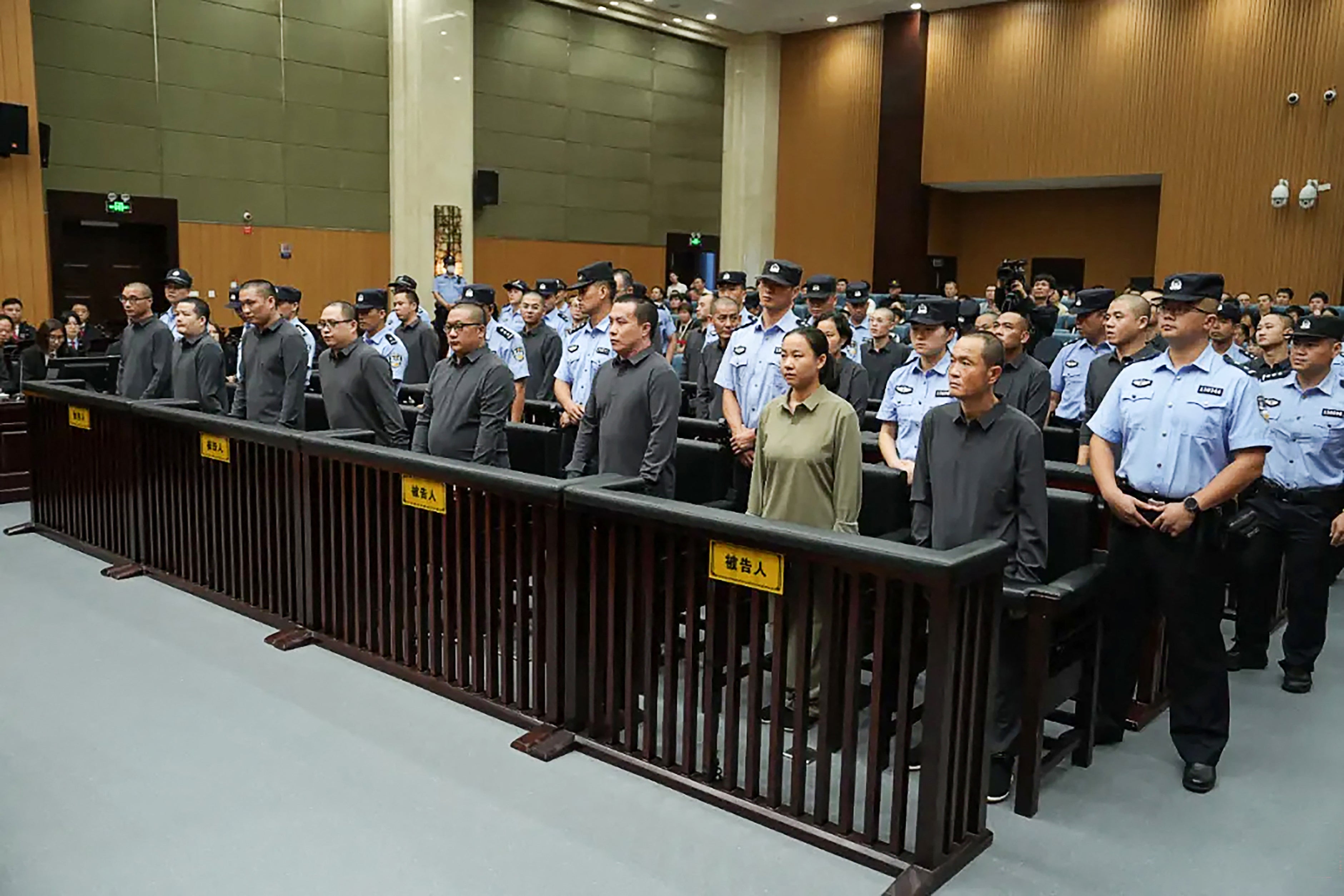
The Shenzhen court in November sentenced five members of the Bai mafia family to death for running a network of scam centres and casinos in Myanmar after convicting them of homicide, intentional injury, fraud, drug trafficking, and kidnapping.
The executions were carried out in Shenzhen, in southern China’s Guangdong province, after receiving approval from the Supreme People’s Court, state-media Xinhua reported.
One of the accused – group leader Bai Suocheng – had already died of illness after his conviction.
The Shenzhen Intermediate People’s Court in south China announced the executions on Monday but it was not clear when the executions had been carried out.
It comes after China executed 11 members of the notorious Ming family criminal gang for running scam centres in Myanmar last week.
For years, Laukkaing, a border town in Myanmar’s northern Shan State, was dominated by the Bais, the Mings and several other powerful families, who oversaw sprawling casino complexes, red light districts, and large-scale cyber-scam operations.
Operating in a grey zone along the China-Myanmar border, these networks flourished amid weak law enforcement and longstanding ties to local militias, turning Laukkaing into a hub for illicit gambling and online fraud targeting victims across the region.
The Bai clan, which was called the "number one" by its members, established industrial parks in Myanmar's Kokang region bordering China, from where they were accused of running gambling and telecom scam operations involving kidnappings, extortion, forced prostitution and drug manufacturing and trafficking.
They defrauded victims of more than 29bn yuan ($4.2bn) and caused the death of six Chinese citizens and injuries to others, the court said.
The court said their crimes “were exceptionally heinous, with particularly serious circumstances and consequences, posing a tremendous threat to society”.
China’s executions were part of the wider crackdown on scam centres operating in Southeast Asia, which has emerged as the world’s epicentre for online scams, especially in Myanmar, Cambodia and Laos.
Hundreds of thousands of people are believed to have been lured to work in these scam centres, with many forced to perpetrate global scams involving false romances, fraudulent investments, and illegal gambling.
Human trafficking is another major criminal aspect of such operations as many of the workers were recruited under false pretences, offering legitimate jobs, only to find themselves trapped in virtual slavery.
Join our commenting forum
Join thought-provoking conversations, follow other Independent readers and see their replies
Comments
Bookmark popover
Removed from bookmarks