Mating ‘lovebugs’ swarm city, plaguing residents
The bugs stick to car windows, the walls of houses, restaurants, and even trains

Swarms of "lovebugs" have descended upon South Korea, blanketing a mountain peak, infiltrating homes, and sticking to car windows, prompting a surge in public complaints.
These insects, scientifically known as Plecia nearctica, are distinctive for flying attached to one another while mating, earning them monikers such as united bugs, double-headed bugs, or honeymoon flies.
First detected in parts of Seoul in 2022, the lovebugs have since proliferated, with large groups now appearing throughout the capital and surrounding areas, primarily between late June and early July each year.
While the insects pose no health risk, as they do not transmit diseases or sting humans, their sheer numbers have become a significant nuisance.
Public grievances have mounted over the bugs sticking to car windows, the walls of houses, restaurants, and even subway trains.
The scale of the infestation was vividly illustrated recently on Gyeyang Mountain in Incheon city, just west of Seoul, where clouds of lovebugs hovered over the peak. One man told local media how the mountain was "covered with bugs" that formed a "thick carpet".
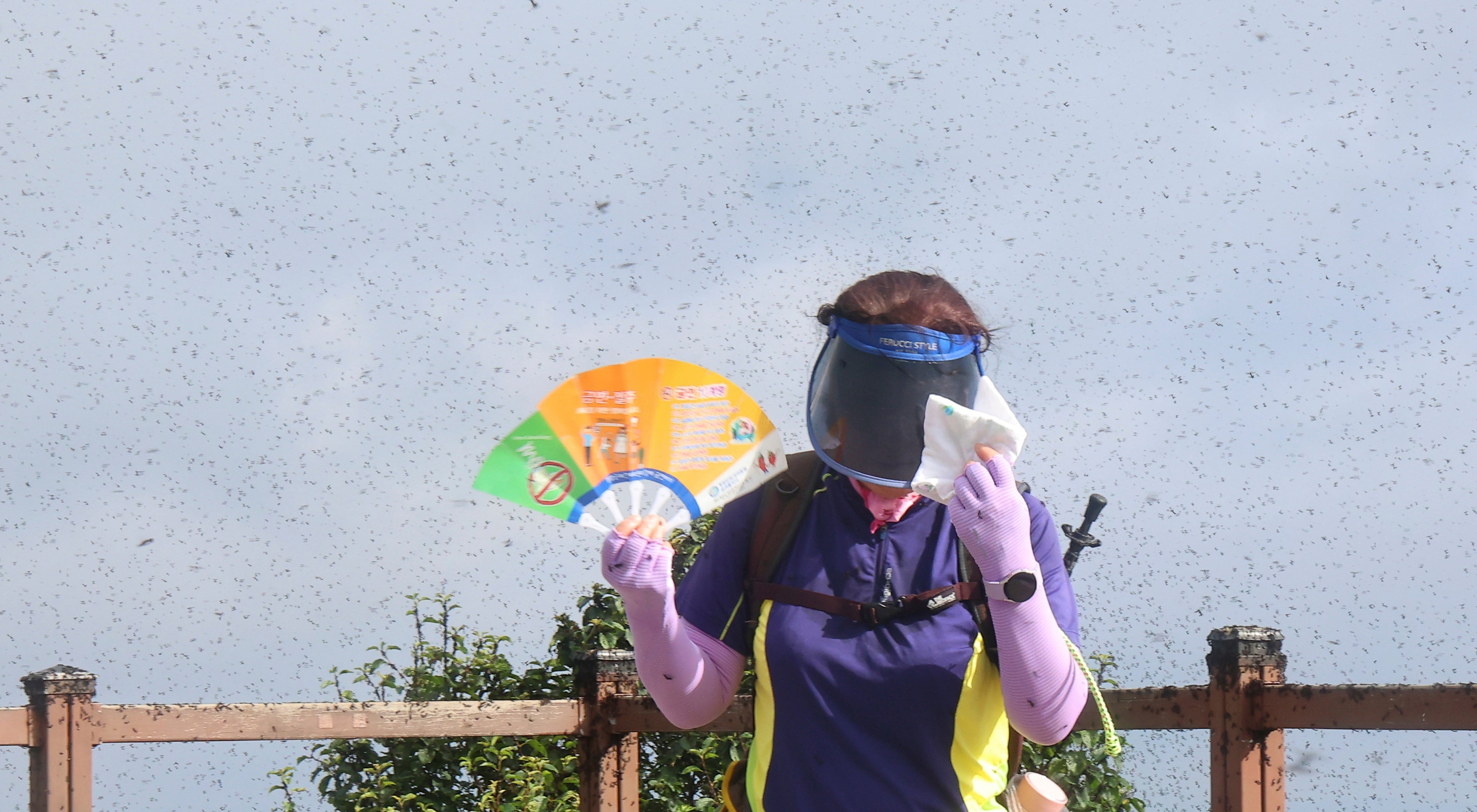
Local television stations showed scenes of observation decks swarming with the insects, with workers constantly shovelling dead bugs from the ground.
Wang Hyeon-jeong, an official from the Gyeyang district, confirmed the dramatic increase, stating on Tuesday: "Compared with the past two years, the number of lovebugs sharply surged last weekend at the mountain."
The 395-meter (1,295-feet) mountain provides the type of hot, humid weather conditions in which lovebugs typically thrive, the Environment Ministry said, possibly leading to the insect population surge.
In Seoul and other areas, it is not yet clear whether there have been more lovebugs than in previous years. The ministry said it will review the seriousness of this year's case after the insects disappear, likely by mid-July.
South Korean officials view lovebugs as beneficial insects, saying they help pollinate flowers as their larvae convert plant materials into organic components. Officials are avoiding chemical pesticides by using sticky pads and spraying water to cope with the large insect population.
Many experts say the flow of lovebugs to South Korea, likely from China, is associated with the country's warming temperature and is linked to climate change.
Join our commenting forum
Join thought-provoking conversations, follow other Independent readers and see their replies
Comments
Bookmark popover
Removed from bookmarks