India and EU agree landmark trade deal after almost two decades of talks
Agreement removes almost all trade barriers for bloc of 2bn people representing a quarter of global economy
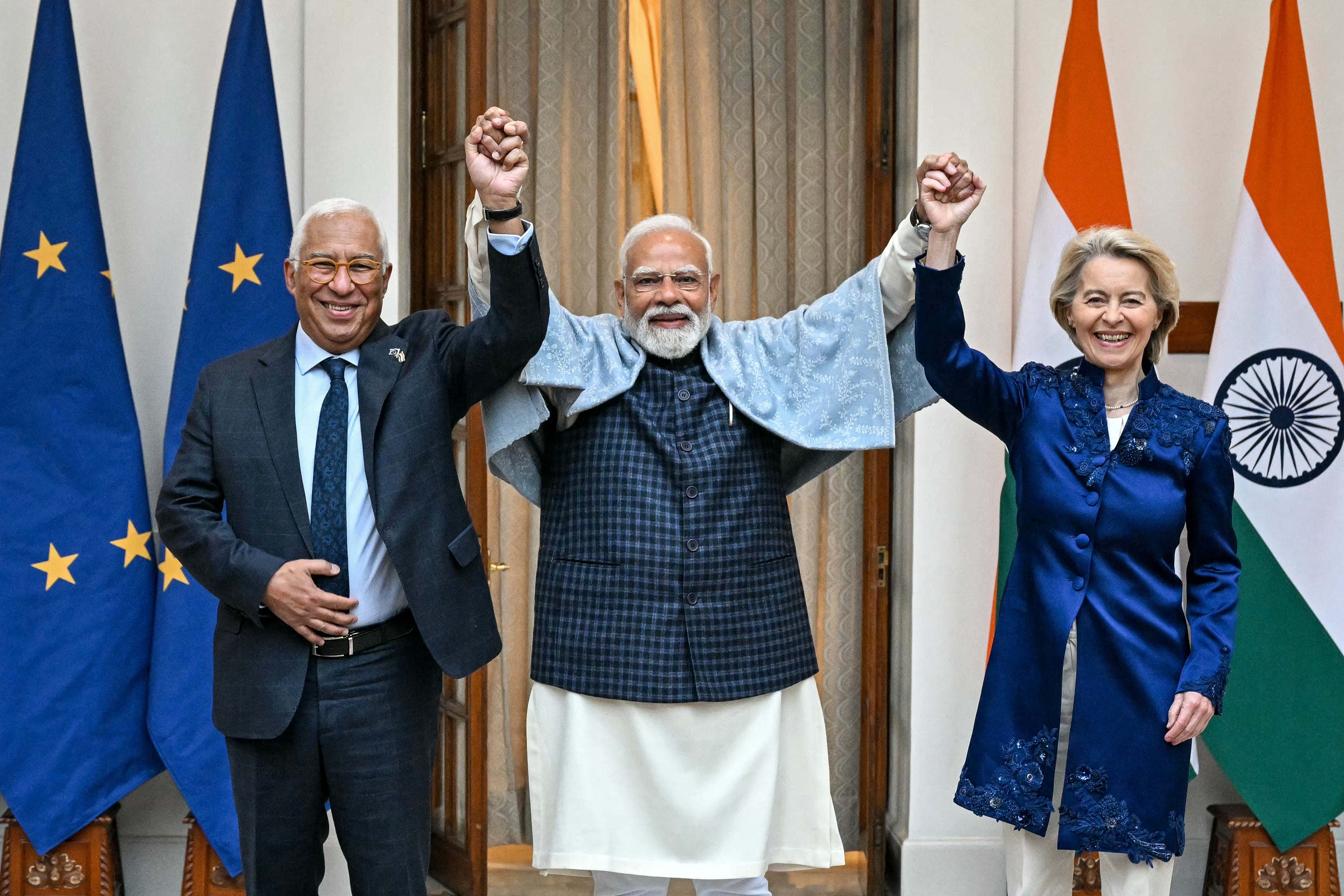
India and the European Union have finalised a landmark free trade agreement after concluding negotiations that have dragged on for two decades.
The deal was announced at a summit in Delhi between Indian prime minister Narendra Modi and the EU's two highest-ranking officials, European Commission president Ursula von der Leyen and European Council president Antonio Costa.
Both sides have referred to the agreement as "the mother of all trade deals", creating a free trade bloc of more than two billion people accounting for a quarter of the global economy.
Talks in the final stages focused on a few small but important sticking points – access for European carmakers to India's automobile sector, sensitive agricultural products and a European scheme to place carbon-linked climate tariffs on imports.
The deal opens up India’s vast and guarded market to its largest trading partner. Talks first began in 2007, but soon ran into repeated hurdles as both sides struggled to bridge deep differences over market access, regulation and political sensitivities.
The talks were formally restarted in July 2022 after Russia’s war in Ukraine gave fresh impetus to the deal as the EU sought to reduce economic dependence on Russia and China and diversify supply chains in Asia.
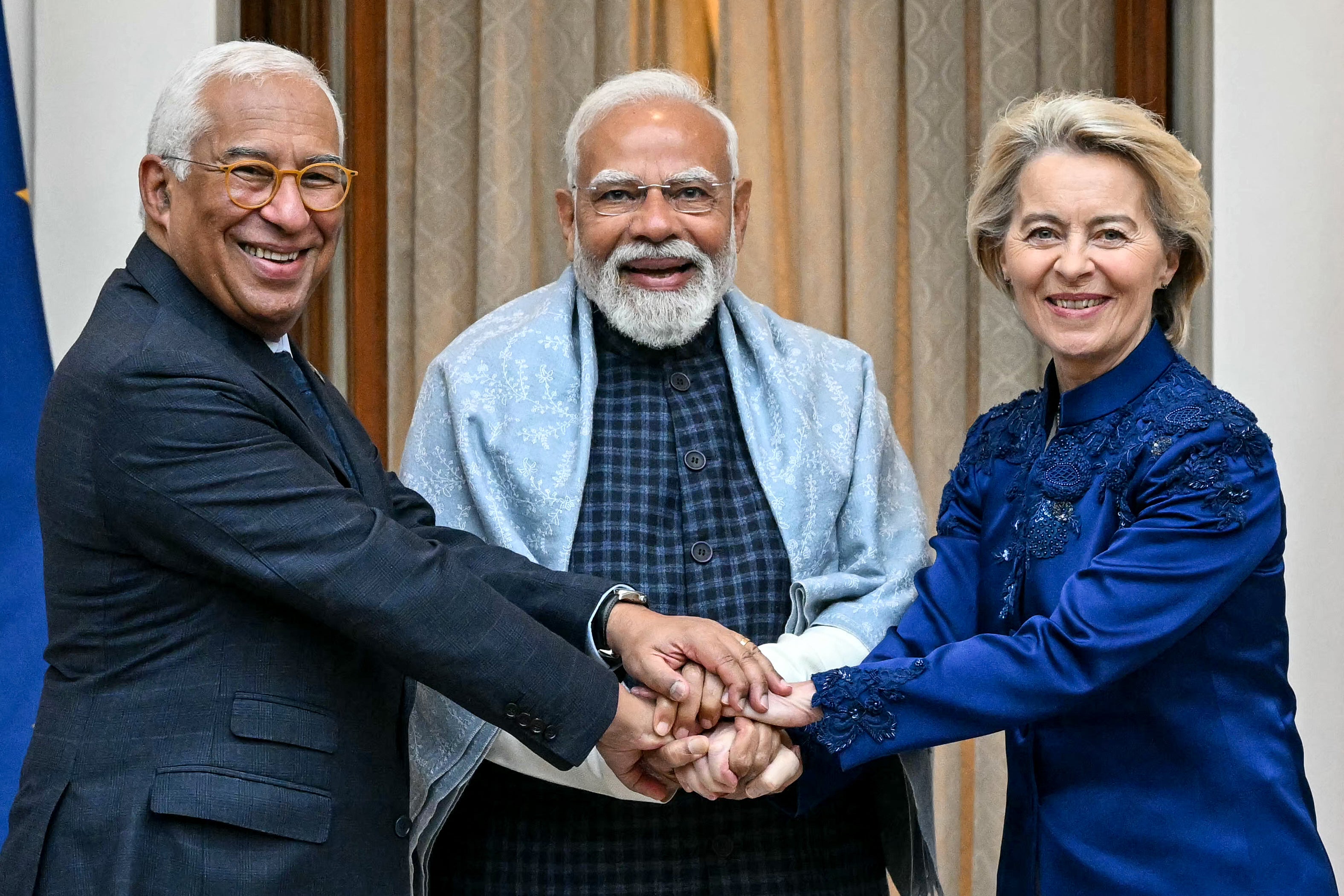
While the terms of the deal were finalised on Tuesday, the formal signing of the agreement will not take place until after a legal vetting process expected to last five to six months, an Indian government official familiar with the matter said.
"Yesterday, a big agreement was signed between the European Union and India," Mr Modi said on X. "People around the world are calling this the mother of all deals. This agreement will bring major opportunities for the 1.4 billion people of India and the millions of people in Europe.”
“The EU and India make history today, deepening the partnership between the world's biggest democracies,” Ms von der Leyen said, adding: “We have sent a signal to the world that rules-based cooperation still delivers great outcomes.”
Addressing the India and EU FTA summit on Tuesday, Mr Modi said closer cooperation between the two sides would help strengthen the global order at a time of geopolitical uncertainty.
"Today is another historic occasion, when two of the world's greatest democratic powers are writing a decisive chapter in their relations. In recent years, relations between India and the European Union have seen significant progress. Our partnership is reaching new heights based on shared democratic values, economic synergy, and strong people-to-people ties,” he said.
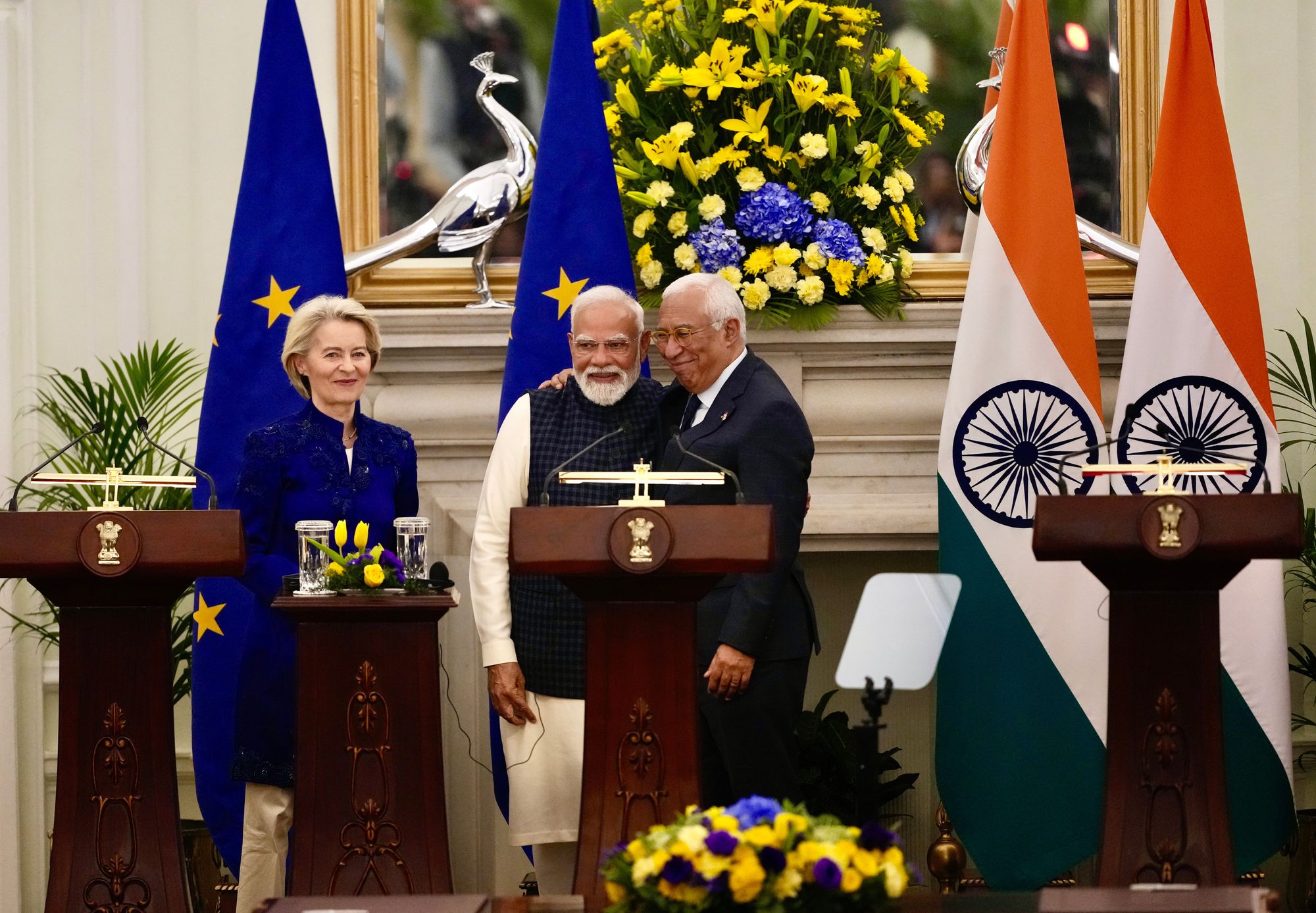
Mr Modi called Mr Antonio, who is an overseas Indian with parents hailing from Goa, as the Mahatama “Gandhi of Lisbon” for his simple lifestyle and love for society.
The free trade agreement will gradually eliminate EU tariffs on 99.5 per cent of goods traded over seven years, with levies to be cut to zero on Indian marine goods, leather products, chemicals, rubber, base metals, and gems and jewellery.
India will cut tariffs to zero on 93 per cent of the value of EU goods over a 10-year period.
The deal is expected to double EU exports to India by 2032 by eliminating or reducing tariffs on goods accounting for 96.6 per cent of the value of EU exports to India, saving around €4bn ($4.75bn) in duties a year for European companies, the EU said.
The automobile sector has emerged as a big winner as the agreement opens up India’s vast and traditionally protected market, with Delhi agreeing to slash tariffs on cars to 10 per cent over five years from as high as 110 per cent now, according to an EU statement.
The move is expected to benefit European automakers like Volkswagen, Renault, Mercedes-Benz and BMW.
India will also cut tariffs on alcoholic beverages such as wine to 75 per cent immediately from 150 per cent, with duties set to be reduced further to 20 per cent over time. Tariffs on spirits will be lowered to 40 per cent, the EU said.
In addition, the agreement will reduce tariffs on EU exports like machinery, electrical equipment, chemicals, and iron and steel products.
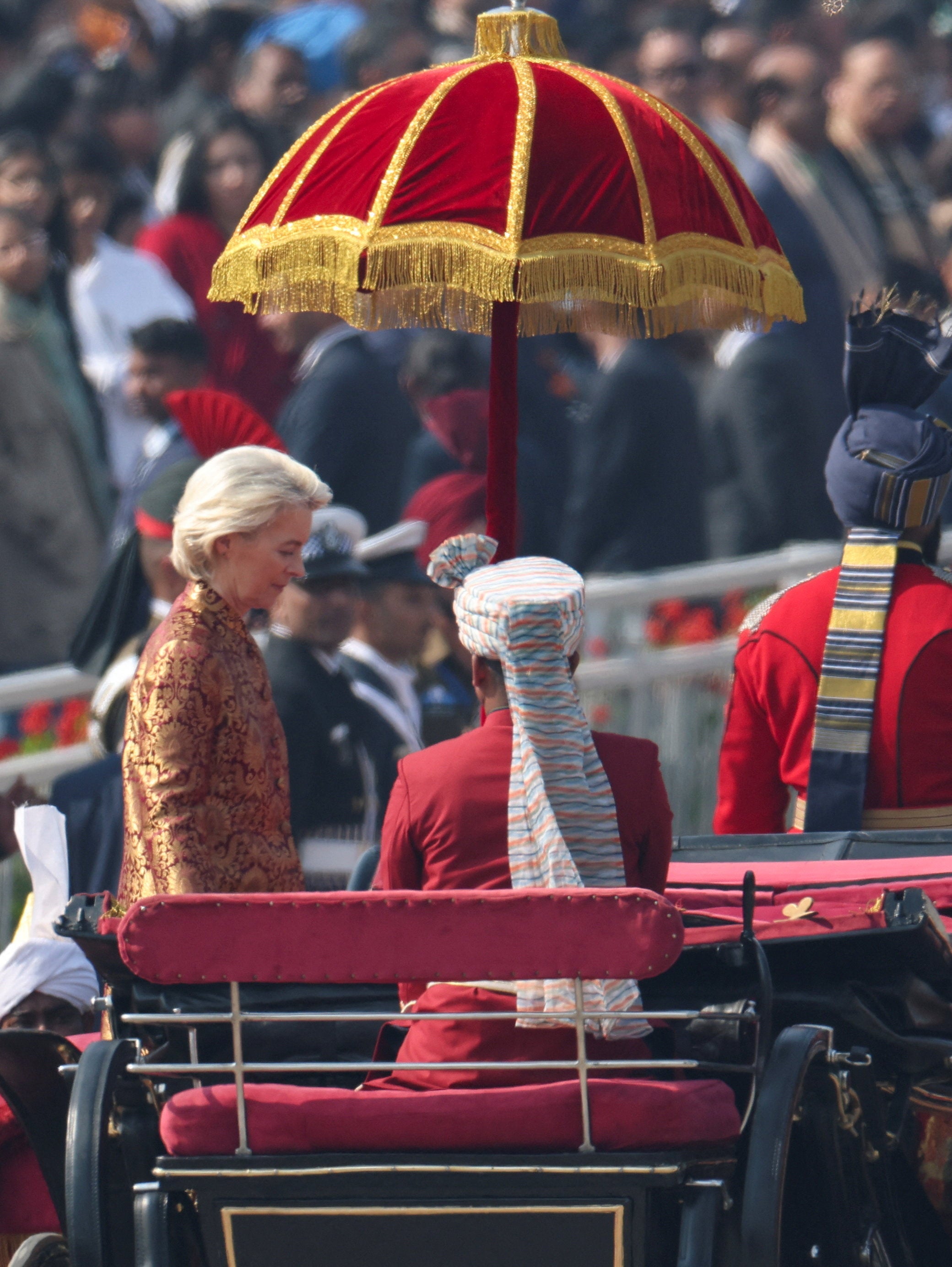
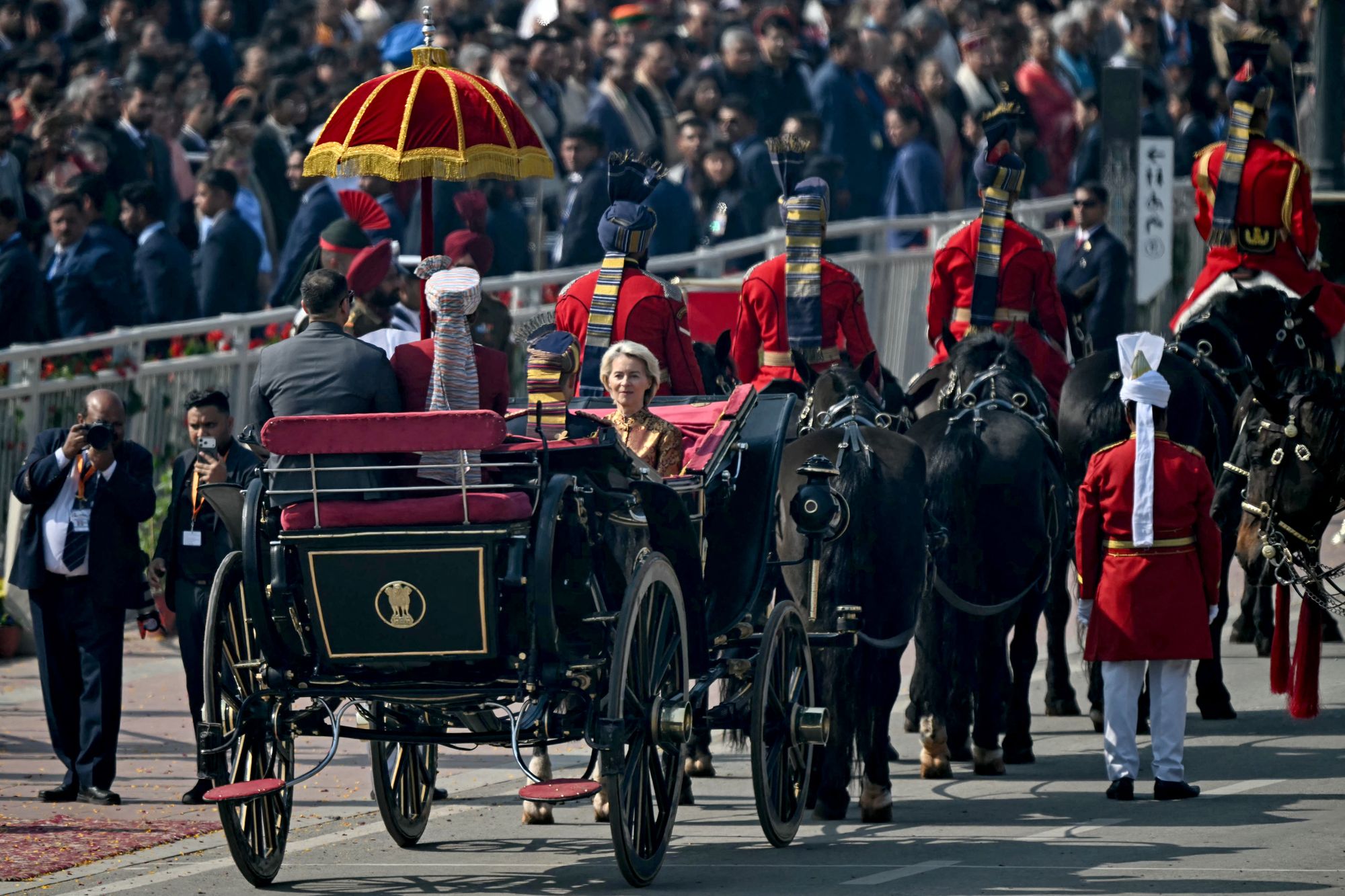
Ms von der Leyen, who was invited as a chief guest to India’s Republic Day parade on Monday, said “we did it” after the agreement was done. “We delivered the mother of all deals,” she added.
She said it sent a “true message that cooperation is the best message to global challenges” at a time when trade was being increasingly weaponised, making a veiled reference to Mr Trump’s tariff threats.
“We reduce strategic dependencies at a time when trade is increasingly weaponised,” she said.
The deal, which has irked the US, comes as the EU sees tariffs triple to 15 per cent despite reaching a deal with the Trump administration and India operates a 50 per cent tariff regime. The Trump administration slapped an additional 25 per cent tariff on India last year as punishment for its imports of cheap Russian oil.
Mr Trump has threatened to further escalate the trade war with the EU for opposing a potential US takeover of Greenland.
An India-US trade deal apparently collapsed last year after a breakdown in communications between the two governments.
US treasury secretary Scott Bessent warned that Europe could end up financing a "war" against itself by signing the deal with India.
"We have put 25 per cent tariffs on India for buying Russian oil. Guess what happened last week? The Europeans signed a trade deal with India," Mr Bessent told ABC News on Sunday. "And just to be clear again, the Russian oil goes into India, the refined products come out, and the Europeans buy the refined products. They are financing the war against themselves.”
This is one of the biggest trade deals India has signed in the last one year, with major agreements also signed with New Zealand, Australia, Oman, to go with a 2024 pact with the European Free Trade Association bloc of Switzerland, Norway, Iceland, and Liechtenstein.
Join our commenting forum
Join thought-provoking conversations, follow other Independent readers and see their replies
Comments
Bookmark popover
Removed from bookmarks