2025 set a new benchmark for hate speech in India amid tensions with Pakistan
Researchers say conflict between the two nuclear-armed neighbours made for a ‘perfect storm for mobilising activities’ against India’s minority communities, leading to a sharp spike in dangerous and hateful speech. Maroosha Muzaffar reports
Hate speech targeting religious minorities surged across India in the aftermath of the country’s border conflict with Pakistan last year, according to a new report by an American think tank.
Researchers documented a sharp rise in rallies and speeches portraying Muslims as “internal enemies” in 2025, suggesting external security crises were utilised to justify attacks against India’s own minority communities.
This link was especially evident after a terror attack targeting Indian tourists in the Kashmiri village of Pahalgam on 22 April, in which 26 people were killed. India accused Pakistan of harbouring the gunmen who carried out the attack, and responded by launching air strikes against targets inside Pakistan. Fierce clashes at the border and between the two countries’ air forces followed, ending in a ceasefire agreement after four days.
According to a new report from the India Hate Lab (IHL), a project run by the Washington DC-based Center for the Study of Organized Hate, at least 1,318 hate speech events targeting Muslims and Christians were recorded across India last year. This translates to an average of four incidents a day, and a 13 per cent increase on 2024. It is nearly double the number documented in 2023.
The report identified a concentrated burst of hate speech in late April and early May, after the Pahalgam terror attack and in the days preceding the India-Pakistan hostilities. In the 16-day period between 22 April 2025 and 7 May 2025 alone, 98 in-person hate speech events were recorded nationwide, pointing to what researchers described as coordinated anti-Muslim mobilisation during a period of escalating regional tension.
Eviane Leidig, director of research at the Center for the Study of Organized Hate, says the spike was “not a surprise”, explaining that periods of interstate conflict often become sources of division at home.
“Tensions between India and Pakistan create this perfect storm for mobilising activities,” she tells The Independent. “It offers up, for many, a justification for hateful attacks, which are then seen as lending further legitimacy to the Hindu nationalist cause.”
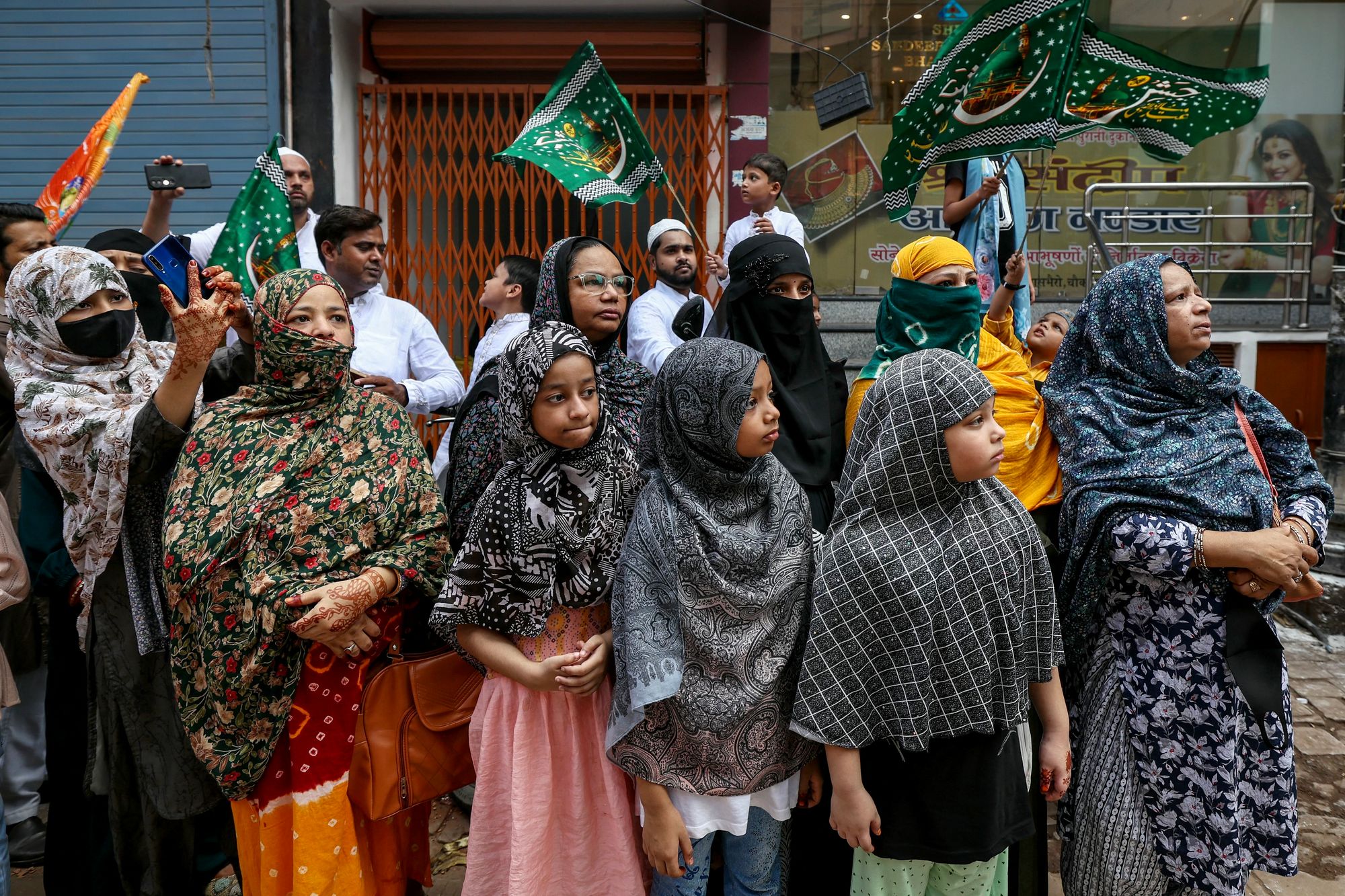
While hate speech was documented across much of the country, the report found it was most prevalent in states governed by prime minister Narendra Modi’s Bharatiya Janata Party (BJP), where nearly nine in 10 incidents took place. The majority of speeches explicitly targeted Muslims, often framing them as internal enemies at a time of external conflict.
“We believe the primary reason we see a higher number of recorded incidents in BJP-controlled states is that much of the hate speech has been top-down,” she says. “But we also see growing grassroots mobilisation in these states, where people feel emboldened to carry out hateful and violent acts.”
The state of Uttar Pradesh led the country in the number of recorded hate speech events, with 266 incidents, followed by Maharashtra (193), Madhya Pradesh (172), Uttarakhand (155), and the national capital of Delhi (76).

Leidig says what was most alarming was that the surge came in a non-election year. Typically, spikes in hate speech have been recorded during election campaigning by political parties in India.
“The fact that the baseline has been elevated in a non-election year is deeply concerning. It indicates that a new normal has been reached, where hate has been normalised and legitimised,” Leidig says.
Across the 23 states and federal territories that were studied, 16 were governed by the BJP for most of the year. Nearly 88 per cent of all hate speech events occurred in BJP-ruled states or territories, a 25 per cent increase from 2024. By contrast, opposition-ruled states saw a decline, with 154 incidents recorded in 2025 – down 34 per cent from the previous year.
Pawan Khera, a spokesperson for the opposition Congress party, said the report’s findings “almost certainly capture only a fraction of the truth”.
“The actual scale of hate speech in India is likely far more pervasive and far more dangerous than what even these alarming figures reveal,” he told The Independent.
“That BJP-ruled states consistently dominate the hate-speech landscape is no coincidence. It points to a deeper pattern of political patronage, institutional silence, and deliberate normalisation of hate,” he said.
The Independent contacted the BJP’s national spokesperson for comment, but had not received a response at the time of publication.
The IHL report shows that hate speech often surged around specific political or religious flashpoints. April emerged as the most volatile month, with 158 incidents recorded during processions and rallies organised to mark the Hindu festival of Ram Navami, following the Pahalgam terror attack.
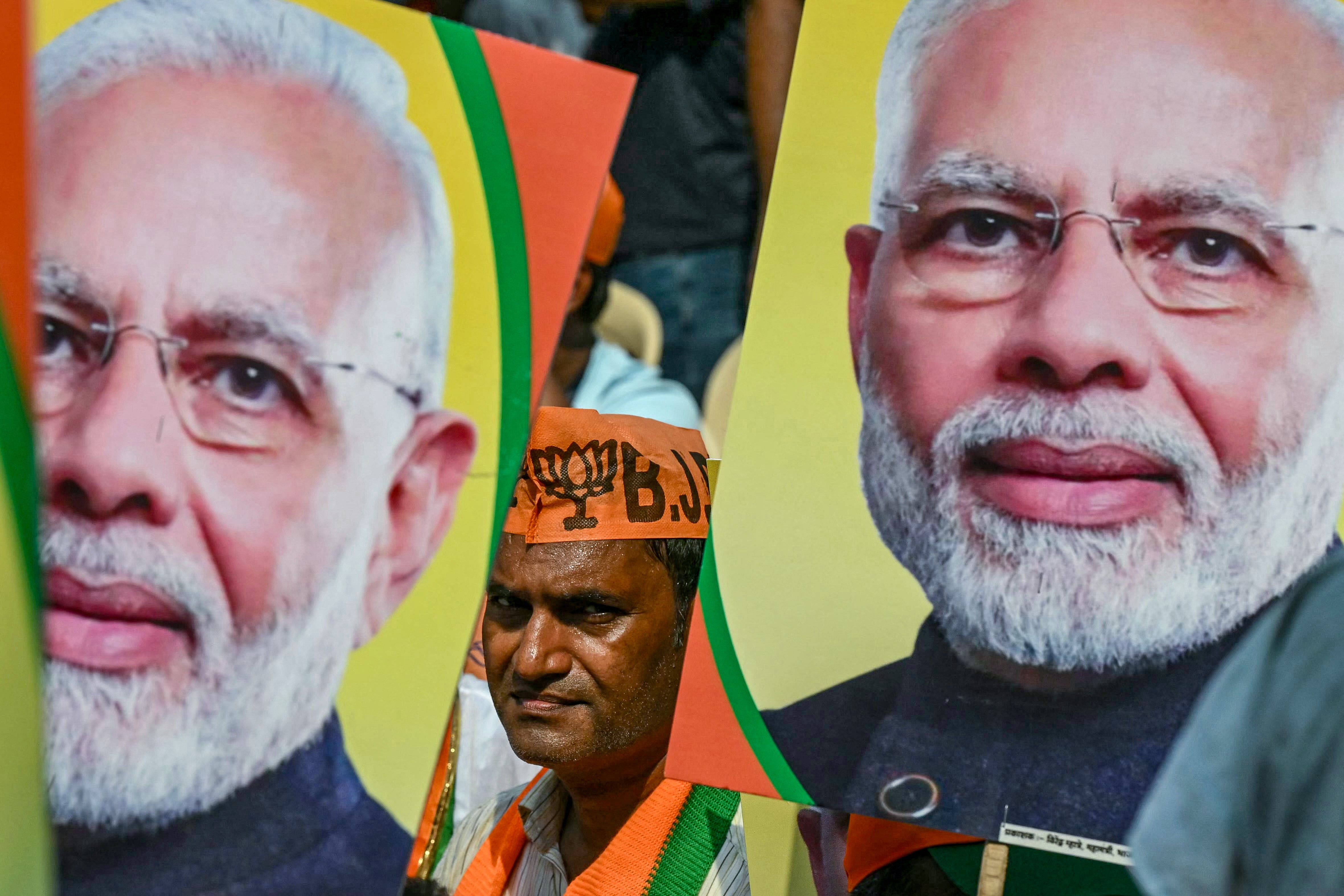
Leidig says those rallies were rarely spontaneous. “What we are seeing is a decade of sustained organising,” she says. It “really is organised hate” and “coordinated activity”.
“Much of the documented incidents in response to the Pahalgam terror attack was particularly facilitated by a wave of hate speech at rallies that were organised by Hindutva groups in response to the attacks. So indeed, it was a flashpoint for organised hate.”
Nearly half of all recorded speeches referenced to conspiracy theories portraying minorities as existential threats, including narratives such as “love jihad” – an unfounded conspiracy theory where it is claimed Muslim men are enticing Hindu women to convert to Islam through marriage; “land jihad” – which accuses Muslims of encroaching on public lands through the construction of religious edifices or conducting prayers; “population jihad” – the claim that Muslims are intentionally increasing their birth rates with the aim of surpassing and eventually dominating the population of other communities; and “vote jihad” – which accuses Muslims of voting as a block to manipulate elections, increase their political influence, and weaken Hindu dominance.
Almost a quarter of all speeches contained explicit calls for violence, while more than 130 included direct calls to arms.
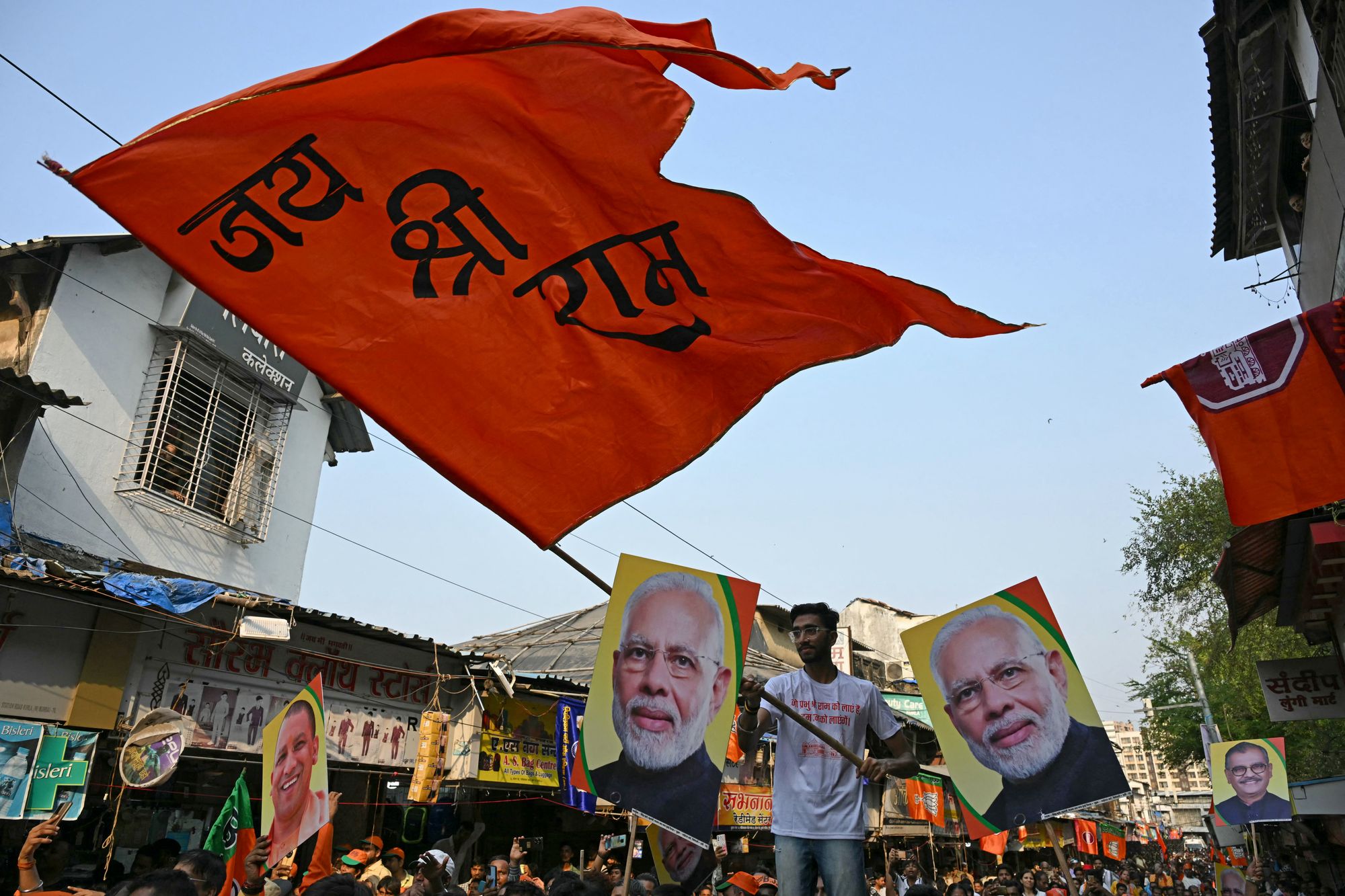
More than 270 speeches called for the removal or destruction of places of worship, most frequently targeting the Gyanvapi Mosque and the Shahi Idgah Mosque in Uttar Pradesh. At least 120 speeches explicitly urged boycotts of minority communities.
Both mosques are at the centre of a new flashpoint in a decades-long dispute. A section of India’s majority Hindu community believes they were constructed after destroying Hindu temples.
Maharashtra recorded the highest proportion of such high-risk speeches, with nearly 40 per cent involving explicit calls for violence. Among those identified as delivering the most dangerous speeches was Maharashtra minister Nitesh Rane.
The report notes that “rather than receding after the electoral cycle, hate speech in Maharashtra remained elevated, indicating the normalisation of anti-minority hate speech and incitement to violence beyond campaign periods”.
The Independent has contacted the BJP’s Maharashtra cadre for comment.
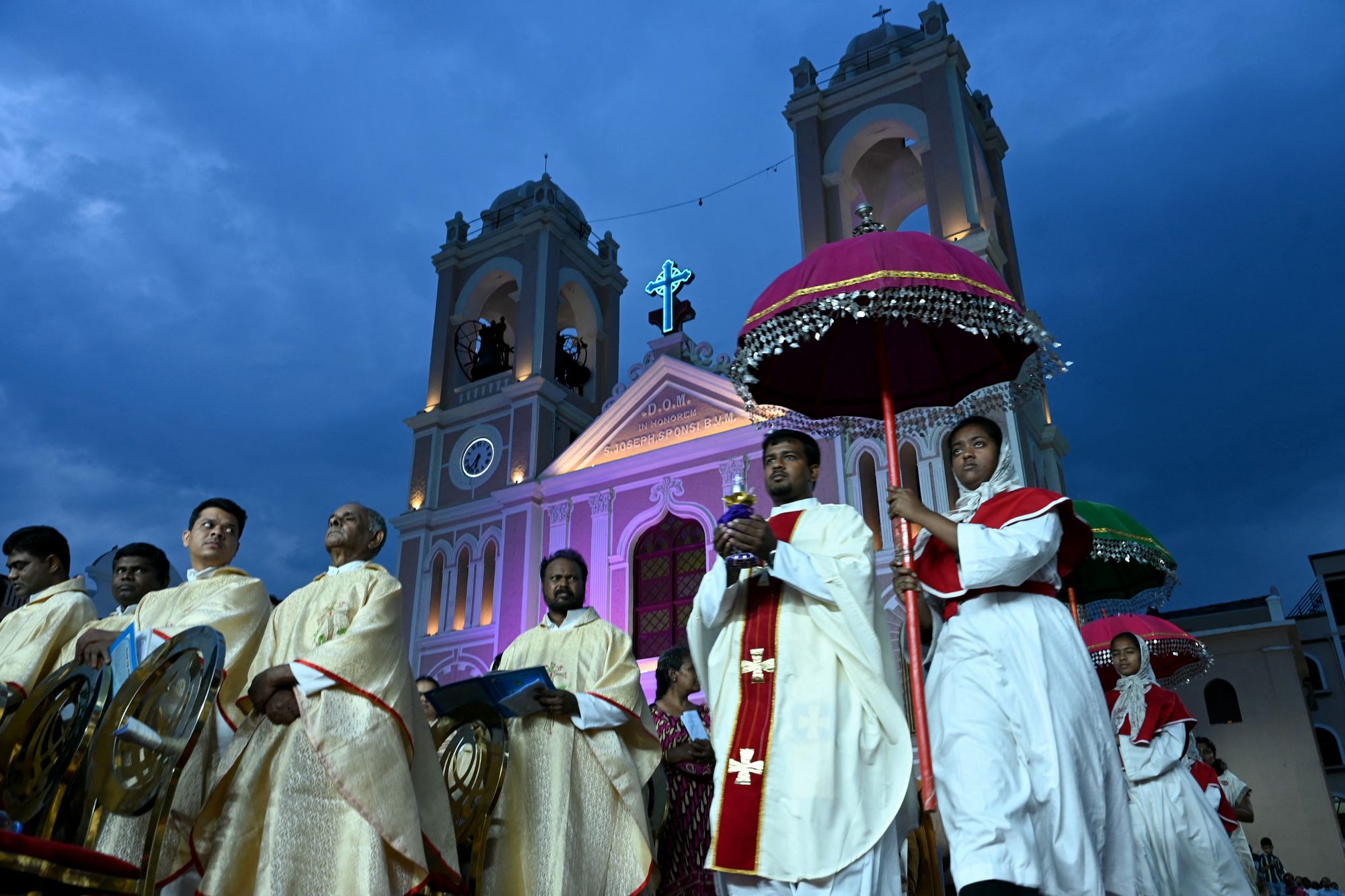
Researchers also recorded widespread use of dehumanising language, with minorities described as “termites”, “parasites” and “mad dogs”.
Leidig says such language plays a critical role in enabling violence. “Dehumanising labels create a psychological bypass,” she says.
“So then it kind of creates this emotional resonance with individuals, to be able to participate in acts of physical violence or sort of social ostracisation. And we see that this type of rhetoric has been witnessed historically and at present in sort of major communal and genocidal conflicts.”
The IHL report says that organised right-wing Hindu groups played a prominent role. The Vishwa Hindu Parishad and Bajrang Dal were linked to more than one-fifth of all incidents, while over 160 organisations and informal groups were identified as organisers or co-organisers. Hindu monks and religious leaders were involved in 145 incidents, reinforcing the religious framing of anti-minority rhetoric, the report says.
“Alarmingly, these rallies often occur in the presence, sometimes under the protection of police,” the report says.
The Independent has contacted the Vishwa Hindu Parishad and Bajrang Dal for comment.
Christian community leaders have repeatedly warned that they face growing hostility in India, allegations that the ruling BJP has previously denied.
Ahead of Christmas last month, Hindu vigilantes across the country attempted to disrupt celebrations, leading to a sharp rise in attacks on Christians. They vandalised churches, interrupted prayer services, harassed carol singers and dismantled festive decorations.
Christians make up about 2.3 per cent of India’s population and major events in the calendar like Christmas and Good Friday are national holidays. Yet that too was eroded last year, with the local government in the most populous state Uttar Pradesh ordering schools to open on Christmas Day, and for children to mark the day by honouring the birthday of freedom fighter and former PM Atal Bihari Vajpayee.
Social media played a central role in amplifying hate speech. Videos from nearly all documented events were first shared or live-streamed online, with Facebook accounting for the majority of initial uploads, followed by YouTube, Instagram and X.
Leidig says the failure of platforms to intervene was a growing concern. “The fact that social media platforms are continuing to fail in acting upon these violations on their platforms, despite having guidelines that prohibit this type of hate, is also something that is of concern for us.” She added: “Hate, conspiracy theories and disinformation are now intertwined into a perfect storm.”
The Independent has contacted Meta, X and YouTube for comment.
Join our commenting forum
Join thought-provoking conversations, follow other Independent readers and see their replies
Comments
Bookmark popover
Removed from bookmarks