Japan lifts megaquake advisory but urges public to remain vigilant for devastating tremor
Japan lifted a megaquake advisory for the country’s northeastern coast, a week after magnitude 7.5 earthquake struck off northern Japan
Japan lifted a megaquake advisory for the country’s northeastern coast on Tuesday, one week after a magnitude 7.5 earthquake struck off northern Japan that officials said had caused an increased risk of a subsequent major quake.
The lifting means residents in the designated area under the advisory are no longer asked to sleep in their day clothes, with helmets, shoes and grab bags at their bedside in case a magnitude 8 or larger quake hits the area.
At a joint news conference, officials at the Japan Meteorological Agency and the Cabinet Office said the probability of a megaquake has somewhat decreased, but the lifting of the advisory doesn’t mean the risk has disappeared, urging residents to maintain adequate levels of vigilance and preparedness.
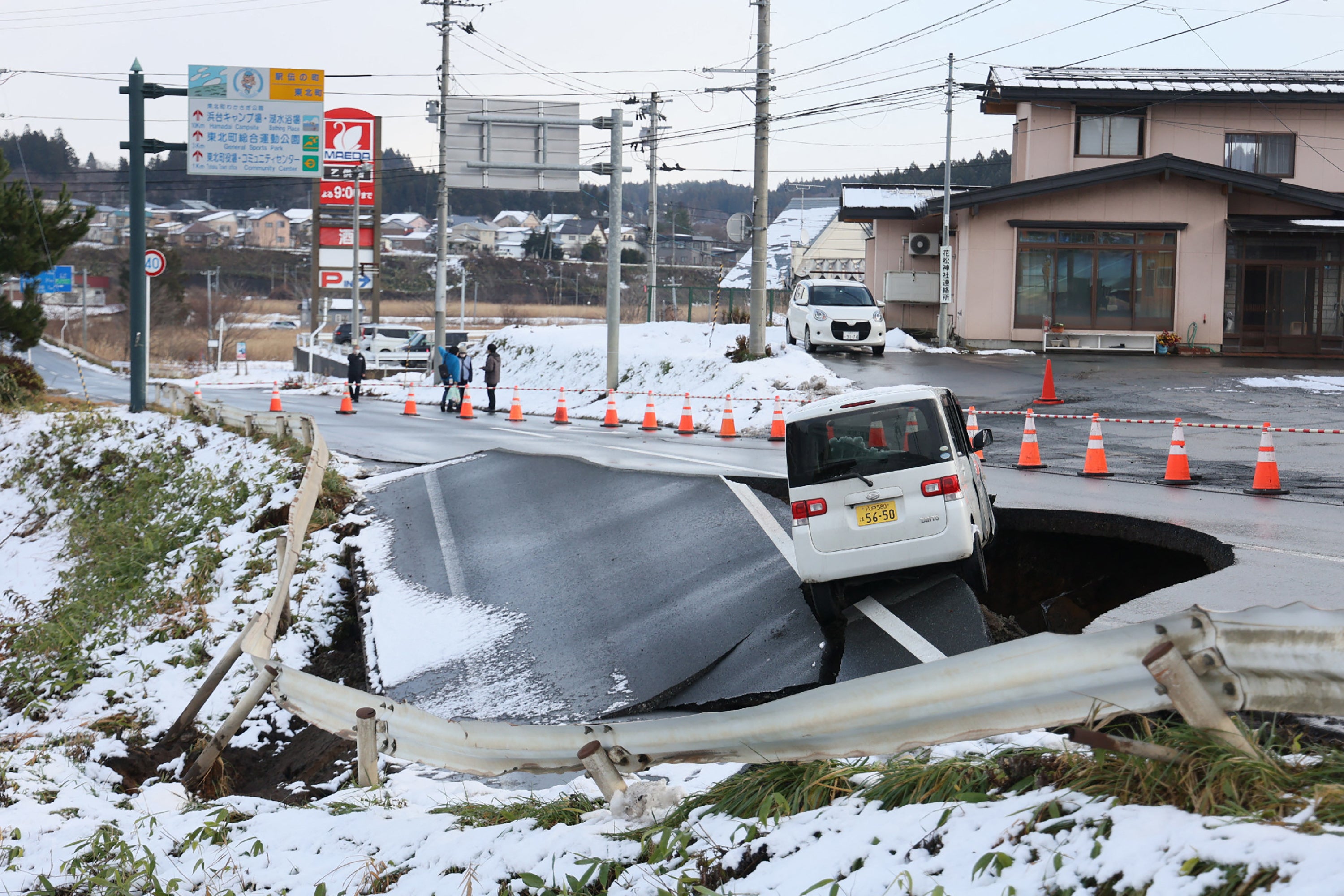
The agency issued the so-called megaquake advisory last Monday after the magnitude 7.5 quake struck off the eastern coast of Aomori, the northernmost prefecture of Japan’s main island of Honshu, and just south of the northern island of Hokkaido, leading to mild damage in the region.
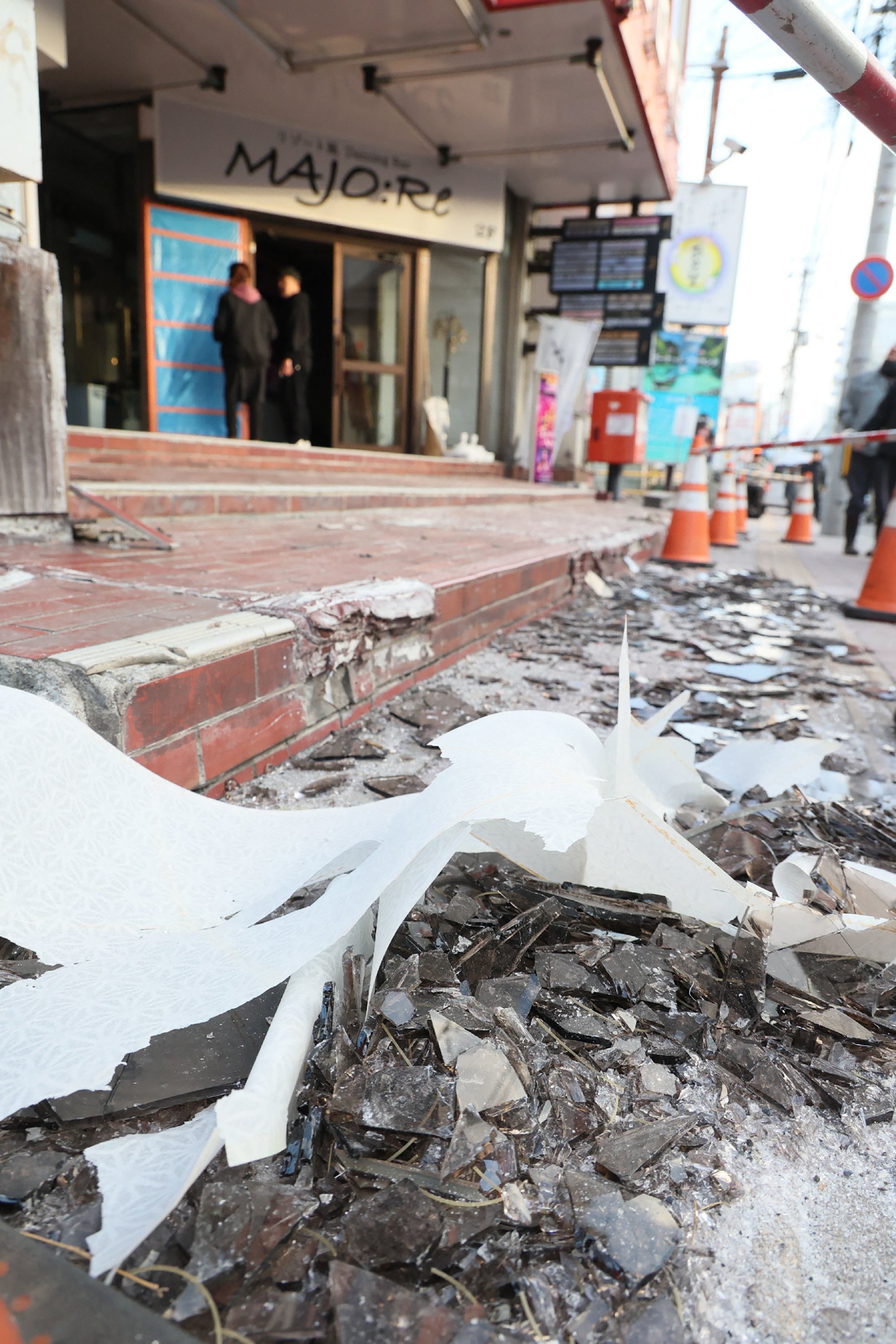
The earthquake caused more than 40 mostly mild injuries and damaged dozens of homes, according to the Fire and Disaster Management Agency. Tsunami alerts and advisories were issued, and waves of up to 70 centimetres (27 inches) were recorded in parts of the region, but no tsunami damage was reported.
A few days after the 7.5-magnitude earthquake, another magnitude 6.9 quake struck off Aomori Prefecture, prompting a tsunami advisory for coastal areas of Hokkaido, Aomori, Iwate and Miyagi, with authorities warning waves of up to one metre were possible.
The advisory instructed residents to stay away from the coast but did not call for evacuations.
Officials said municipalities and residents reacted calmly to the advisory and there was no panicking.
In the summer of 2024, when Japan issued a first-ever “Nankai Trough” megaquake advisory for the southern half of the country's Pacific coastline, the ambiguity of that warning led to panic buying of emergency food, event cancellations and business closures.

The mechanism for issuing advisories for the Hokkaido-Sanriku area was introduced in 2022 as a lesson from the 2011 disaster, when a magnitude 9.0 quake and subsequent tsunami devastated Japan’s northeastern coast.
Japan sits at the intersection of several tectonic plates, making it one of the most seismically active countries in the world. Many of its most dangerous earthquakes originate along deep ocean trenches, where one plate is forced beneath another in a process known as subduction.
The recent tremors have drawn renewed attention to the Japan Trench and the Chishima Trench, offshore fault zones capable of generating megathrust earthquakes that can trigger powerful tsunamis.
These trenches have produced some of Japan’s most devastating earthquakes, including the 2011 Tohoku earthquake, a magnitude 9.0 megathrust quake that triggered massive tsunamis along the coast.
Historical patterns show that magnitude-7 or higher quakes in these regions can be followed by even larger earthquakes, according to the Japanese Meteorological Agency (JMA), which is why Japan established a megaquake advisory system – a special alert to warn residents of northern Japan when the risk of a major trench-type earthquake and tsunami is elevated.
Government projections suggest that in a worst-case trench earthquake, parts of Hokkaido and northern Honshu could face tsunami waves exceeding 10 metres, with the strongest shaking expected along coastal areas closest to the epicentre.
Experts say Japan’s Pacific coast remains vulnerable because the recent earthquakes are occurring along a long-active offshore fault system where major ruptures have historically unfolded in stages. Monday’s magnitude-7.5 quake and a subsequent 6.9 tremor struck areas linked to past deadly earthquakes, suggesting seismic stress is continuing to shift along the fault zone rather than being released all at once.
Fumiaki Tomita of Tohoku University warned that the remaining unruptured section of the fault, particularly off Iwate Prefecture, could still generate a major event.
“Earthquakes with magnitudes of 8 could strike the area (if large-scale slips occur between the two plates),” he was quoted as saying by The Japan Times last week, noting that segments which have not ruptured in decades tend to store dangerous levels of strain capable of producing powerful quakes and tsunamis.
Bookmark popover
Removed from bookmarks