Japan’s Sanae Takaichi calls snap election next month: ‘Staking my own future as PM’
Takaichi promises a two-year halt to an 8% consumption tax on food and says her spending plans would create jobs, boost household spending, and increase other tax revenues
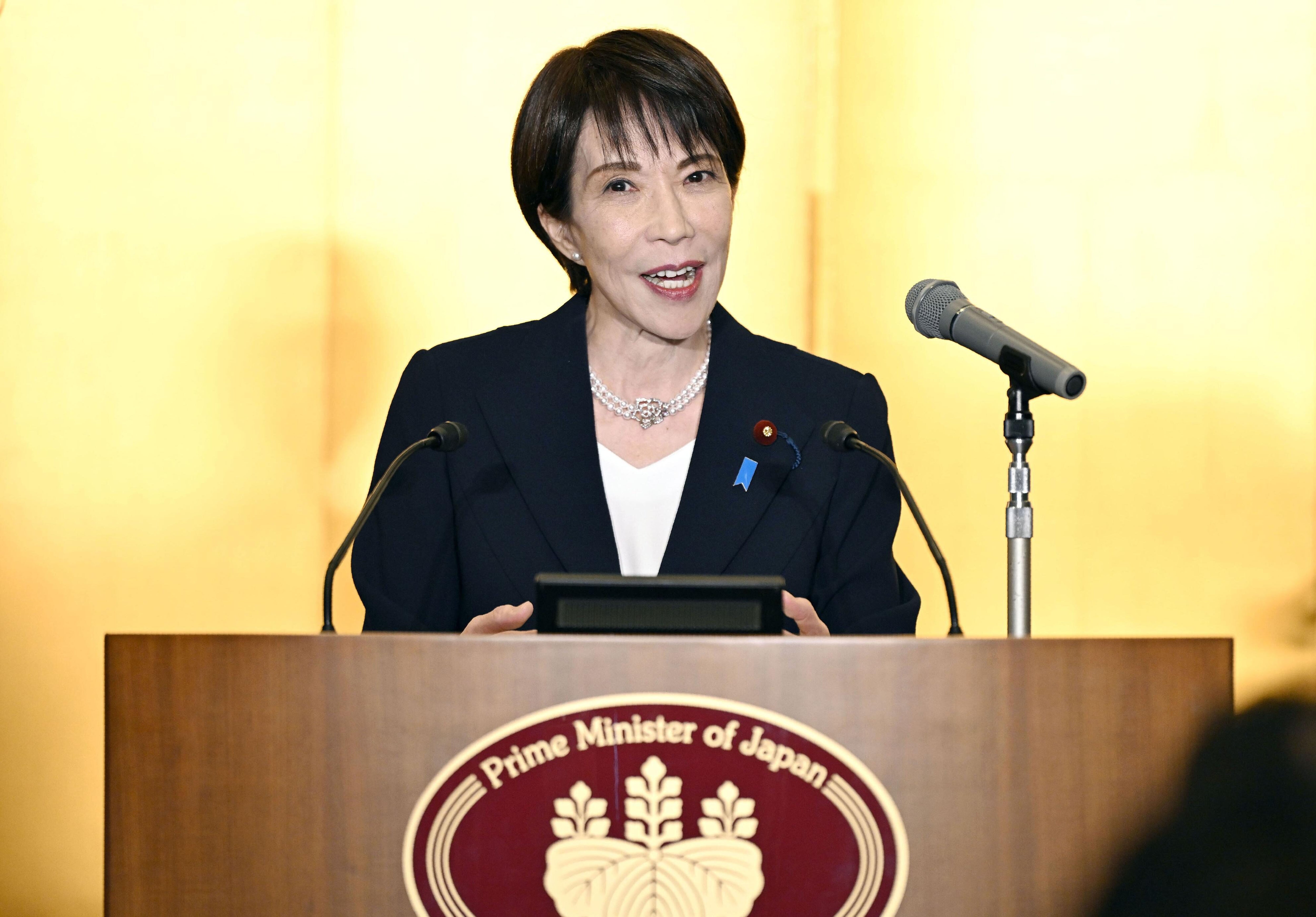
Japanese prime minister Sanae Takaichi on Monday announced her decision to call a national election next month, a power move widely seen as a bid to boost her party’s mandate in parliament, seek voter backing for increased spending and tax cuts, and tackle cost-of-living concerns.
Ms Takaichi, who was elected as Japan’s first woman prime minister just three months ago, said she will dissolve the House of Representatives on Friday and hold election on 8 February.
Her decision to call for a fresh election will see voting on all 465 seats in parliament’s lower house and mark her first electoral test since taking office in October last year.
If the lower house is dissolved, the official campaign can start as early as 27 January or 3 February, Kyodo news reported last week.
"I am staking my own political future as prime minister on this election. I want the public to judge directly whether they will entrust me with the management of the nation," Ms Takaichi said at a press conference on Monday.
The hardline nationalist leader said it was an "extremely weighty decision" that will "determine Japan's course together with the people". Ms Takaichi also urged the voters to place their trust in her for running Japan.
She promised a two-year halt to an eight per cent consumption tax on food and said her spending plans would create jobs, boost household spending and increase other tax revenues.
Ms Takaichi, 64, won the ruling party’s leadership contest after her predecessor Shigeru Ishiba resigned, but secured the country’s top job only after the Liberal Democratic Party (LDP), which remains the largest party in parliament, stitched up a coalition with the smaller right-wing Japan Innovation Party, known as Ishin.
The snap election will be a litmus test among voters for higher spending when Japan is facing a rising cost of living crisis. At least 45 per cent respondents said prices are their main worry in a recent poll released by public broadcaster NHK last week, followed by diplomacy and national security at 16 per cent.
A victory in the February snap election will help Ms Takaichi and her governing bloc to pass the budget and other legislation more easily.
In late December, her Cabinet approved a record 122.3 trillion yen (£577bn) budget that needs to be approved before the upcoming fiscal year starting April to fund measures to fight inflation, support low-income households and projects to help economic growth. The record defence budget plan, exceeding 9 trillion yen for the coming year, aims to fortify its strike-back capability and coastal defence with cruise missiles and unmanned arsenals as tensions rise in the region.
The conservative politician has also not shied away from regional tensions, especially with China while also promoting and seeking stronger ties with the Donald Trump administration in the US.
Ms Takaichi was involved in a bitter spat with China last November after she said that Japan could respond with its own self-defence force if China attacked Taiwan.
She is also expected to visit the US around 20 March for talks with Donald Trump as she looks to consolidate strong bilateral ties with Washington ahead of the US president’s visit to China, according to media reports.
Officials in Japan and the US have started making arrangements and her itinerary is likely to be finalised after the general election results, reported Kyodo news.
Join our commenting forum
Join thought-provoking conversations, follow other Independent readers and see their replies
Comments
Bookmark popover
Removed from bookmarks