Former PM’s son returns from exile as frontrunner to lead Bangladesh in new year
Tarique Rahman returns after 17 years in self-imposed exile to lead his party in February’s elections
The son of a former prime minister returned home to Bangladesh on Thursday after almost 17 years in self-imposed exile, becoming the frontrunner to lead the country after parliamentary elections in February.
Tarique Rahman moved to London in 2008 for medical treatment after he was allegedly tortured in custody during military rule from 2006 to 2008.
Mr Rahman, 60, is the acting chairman of the Bangladesh Nationalist Party, one of the two major political parties in the South Asian country of over 170 million people. His return is seen as politically significant ahead of the next elections set for 12 February.
A flight carrying Mr Rahman, his wife and daughter arrived at the Dhaka international airport late on Thursday morning, among tight security measures.
Massive crowds of supporters awaited him between the airport and a reception venue, where many had stayed overnight. A sea of people also waited at the venue.
Mr Rahman’s party members had said they expected “millions” to turn out. Mr Rahman needed about four hours to reach a makeshift stage set up on a major thoroughfare as a bus carrying him struggled to navigate the crowd. He told supporters he would work to establish a safe Bangladesh for all and promised to uphold religious harmony.
“I’ve a plan for the people of my country. Let us build a safe Bangladesh,” he said as the supporters cheered. “We want peace, peace, peace. We will build a Bangladesh that a mother dreams of.”
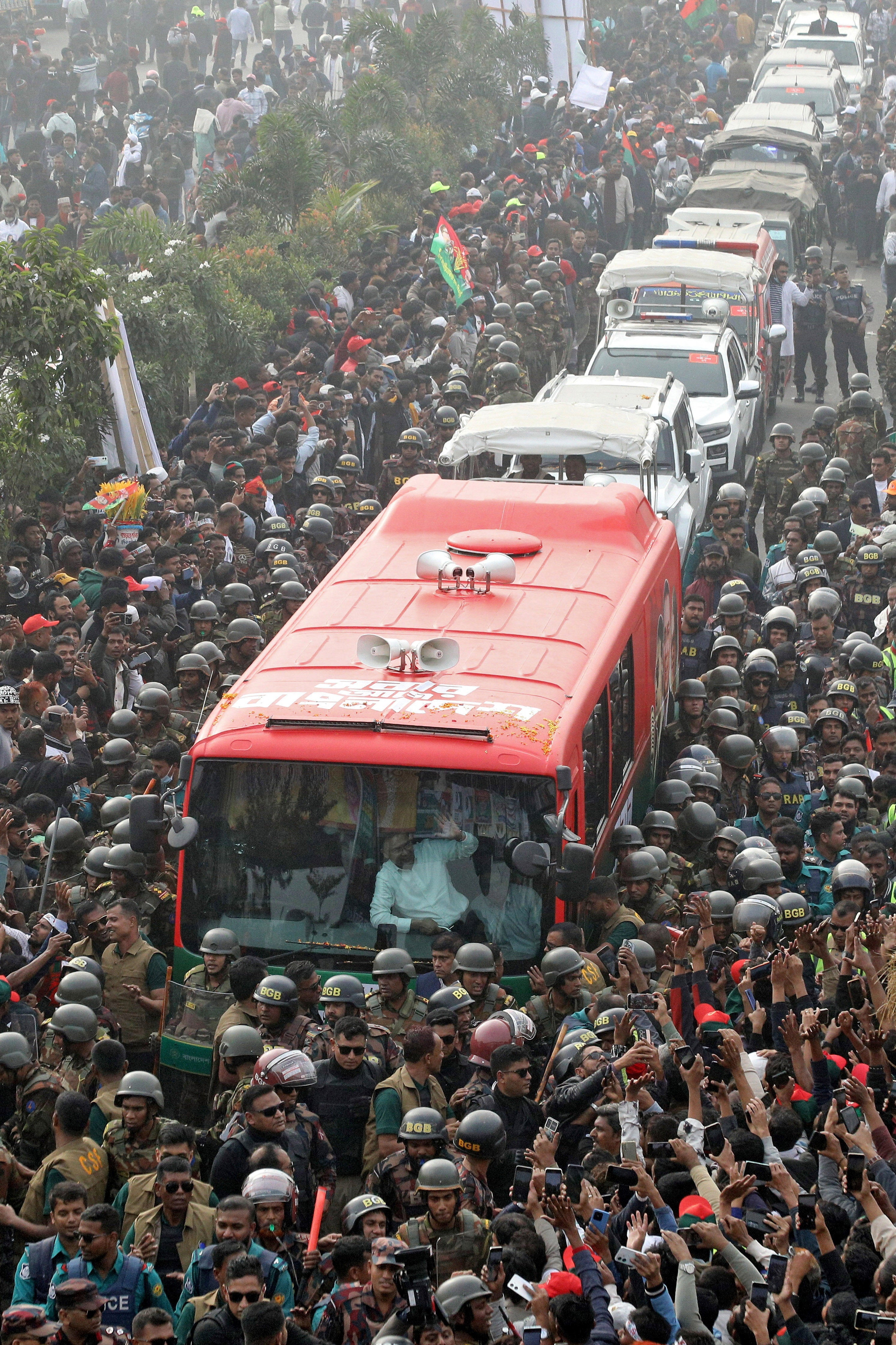
Mr Rahman said afterwards he would go to a hospital to visit his critically ill mother, former prime minister Khaleda Zia, who led a coalition government from 2001 until 2006, when an unelected regime backed by the military took power amid pervasive political chaos.
Ms Zia came to politics after her husband, former military ruler and later president Ziaur Rahman, was assassinated during a military coup in 1981.
She took power for the first time in 1991 after becoming a key leader in a nine-year movement against a military dictator, who was forced to quit during a mass uprising the year before.
Ms Zia is considered one of the two key figures in Bangladesh’s politics, along with Sheikh Hasina, who was sentenced to death in absentia in November.
Ms Hasina was convicted on charges of crimes against humanity for overseeing a deadly crackdown on a mass uprising that ended her 15-year rule in August 2024.
After her rule collapsed, Ms Hasina fled to neighbouring India, which has stonewalled Dhaka’s requests to extradite the former leader.
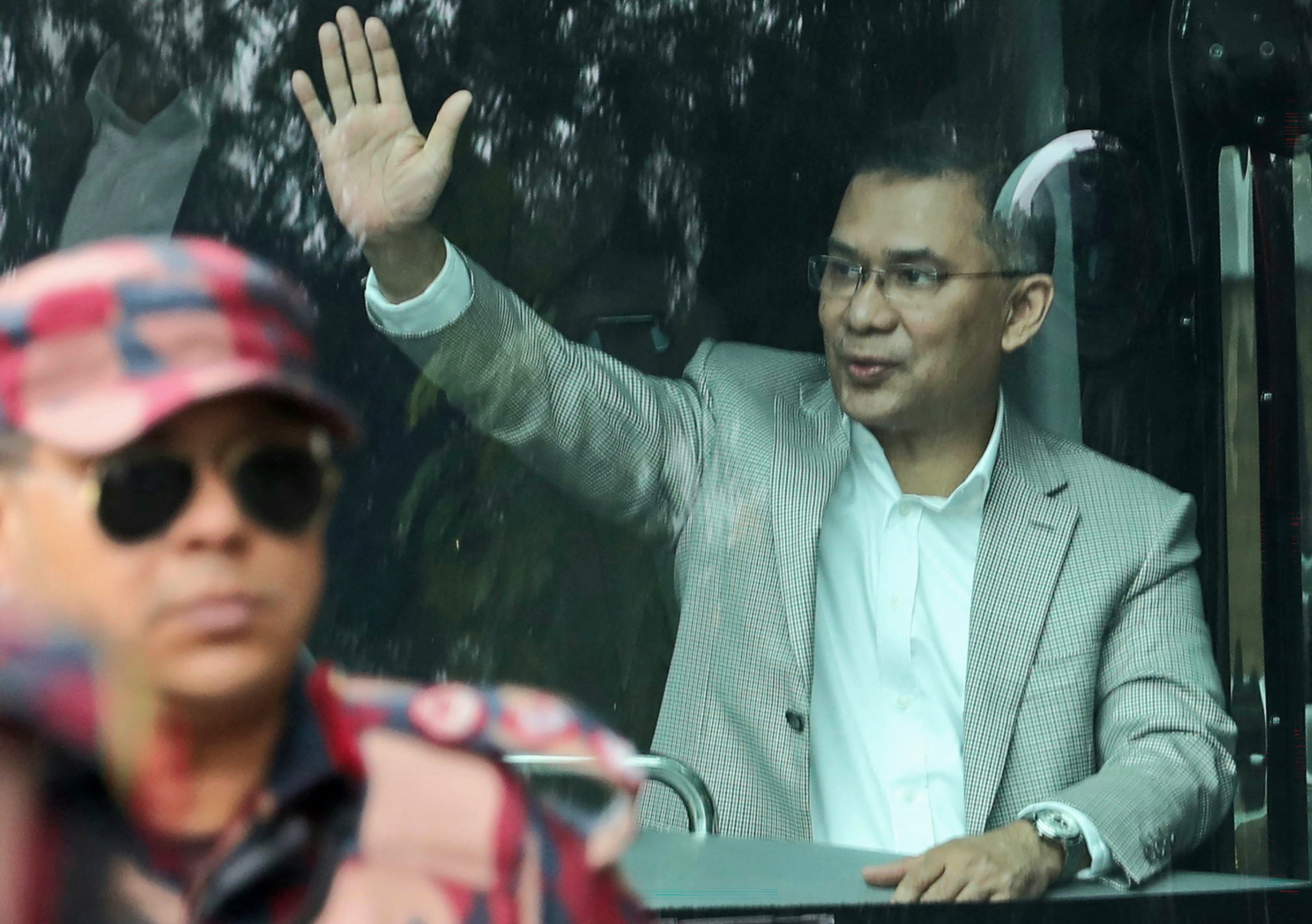
In recent years, as his mother’s health deteriorated, Mr Rahman took over as the de facto leader of their Bangladesh Nationalist Party. He regularly joined meetings and rallies online from London, keeping his party united. He wasn’t openly challenged by any party insider during his absence.
Bangladesh is at a political crossroads. The interim government led by the banker Muhammad Yunus is struggling to maintain law and order and restore confidence while attempting a return to democracy after Hasina’s long premiership.
Human rights groups such as Human Rights Watch and Amnesty International accuse the Yunus government of eroding democratic rights.
Mr Rahman supported Mr Yunus when he took over as the interim ruler following Ms Hasina’s ouster, but the relationship with his party remains shaky.
Mr Rahman was convicted in multiple criminal cases during Ms Hasina’s rule. But appeals courts under the interim administration have acquitted him of all criminal charges, including involvement in a grenade attack on a rally by Ms Hasina in 2004.
Join our commenting forum
Join thought-provoking conversations, follow other Independent readers and see their replies
Comments
Bookmark popover
Removed from bookmarks