Nepal’s eight-year-old living goddess leaves palace to bless worshipers
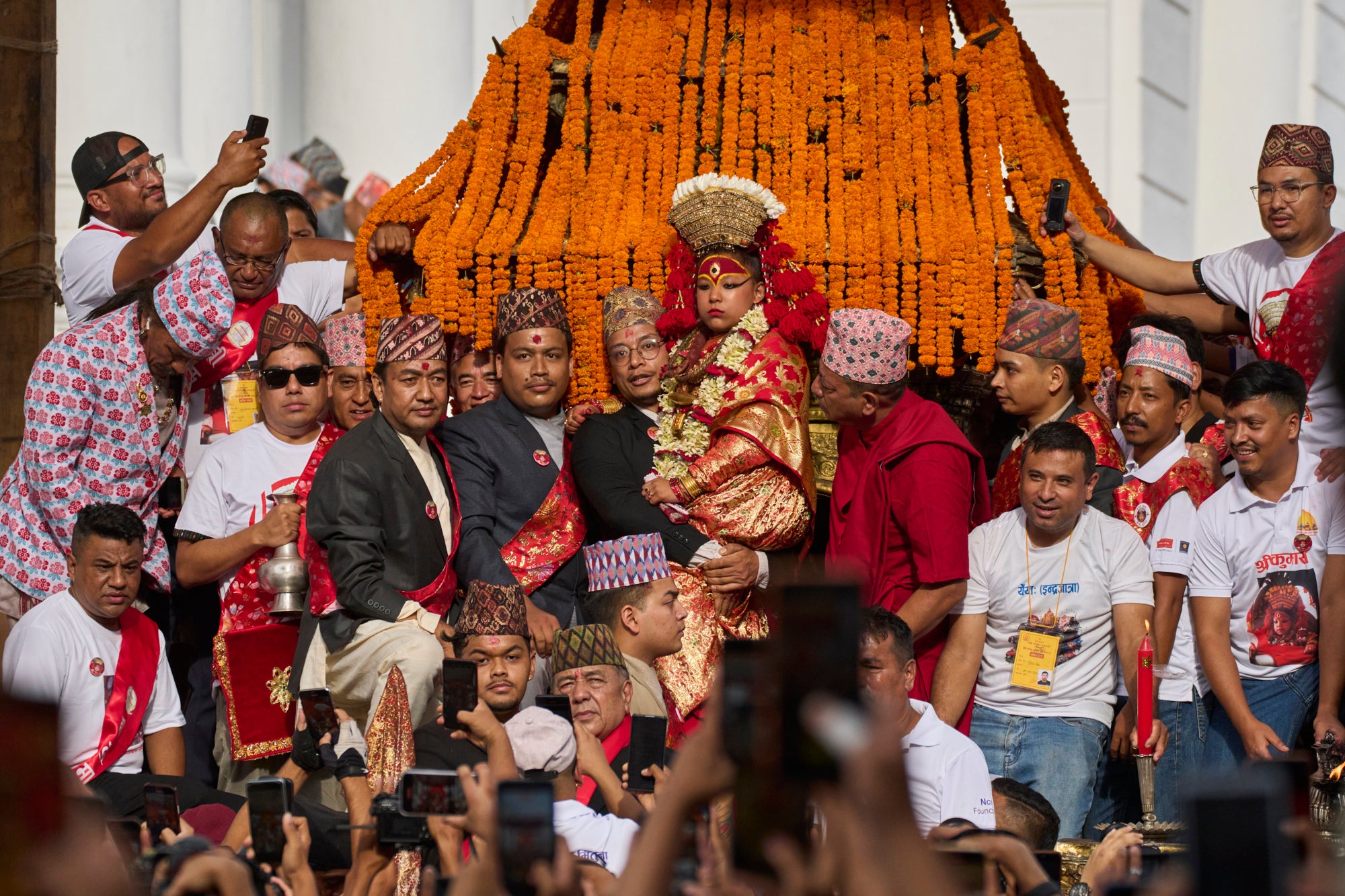
Trishna Shakya, 8, looks imposing in her finery as she is carried high in the arms of a helper from the temple palace

Eight-year-old Trishna Shakya, Nepal’s revered living goddess, the Kumari, made a striking appearance as she was carried aloft from her temple palace. Adorned in ceremonial finery, she then rode a garlanded chariot through the capital’s streets, captivating tens of thousands gathered for the start of the Indra Jatra festival on Saturday.
Devotees lifted their phones to capture the moment, seeking blessings from the young goddess, who has served in her sacred role since the age of three, residing in the Kumari's temple palace for the past five years. With thick vermillion paste on her forehead framing a golden representation of her "third eye," Kumari’s wooden chariot was pulled by worshippers through the thronging crowds.
The word “kumari” means virgin in the Nepali language, and its occupants are selected at a very young age, sometimes as young as 2. They spend years in the palace temple, serving in the role until just before puberty.
Kumaris rarely leave the temple palace, and when they do for festivals or rituals, their feet are never supposed to touch the outside ground. They are either carried in a palanquin or in someone’s arms.
Kumaris are chosen from Buddhist families from the Newar community, indigenous to the Kathmandu valley, and revered by both Hindus and Buddhists in the predominantly Hindu nation.
The weeklong Indra Jatra festival is the first of a series of celebrations that includes Dasain, the main festival, celebrated later this month; and Tihar or Diwali, the festival of lights, in October.
Bookmark popover
Removed from bookmarks