Thailand screens 1,700 passengers for Nipah virus after India outbreak
Public health ministry says screening focused on passengers from India’s West Bengal
Thailand has stepped up health surveillance at major airports following a Nipah virus outbreak in India, screening some 1,700 incoming travellers with no infections found so far.
The Ministry of Public Health said the screening measures were focused on passengers arriving from the eastern Indian state of West Bengal, the epicentre of the outbreak. These travellers entered Thailand chiefly through Suvarnabhumi, Don Mueang, and Phuket airports.
India last week reported a new cluster of infections in Kolkata, the capital of West Bengal, with the health ministry confirming two cases in the state since December, both healthcare workers. As many as 196 identified contacts tested negative for the virus, the ministry added.
Thailand’s public health minister Phatthana Phromphat said the enhanced measures were introduced following instructions from prime minister Anutin Charnvirakul and airport screening teams were deployed late last week.
Health officials say they are “fairly confident” the measures are sufficient to prevent an outbreak.
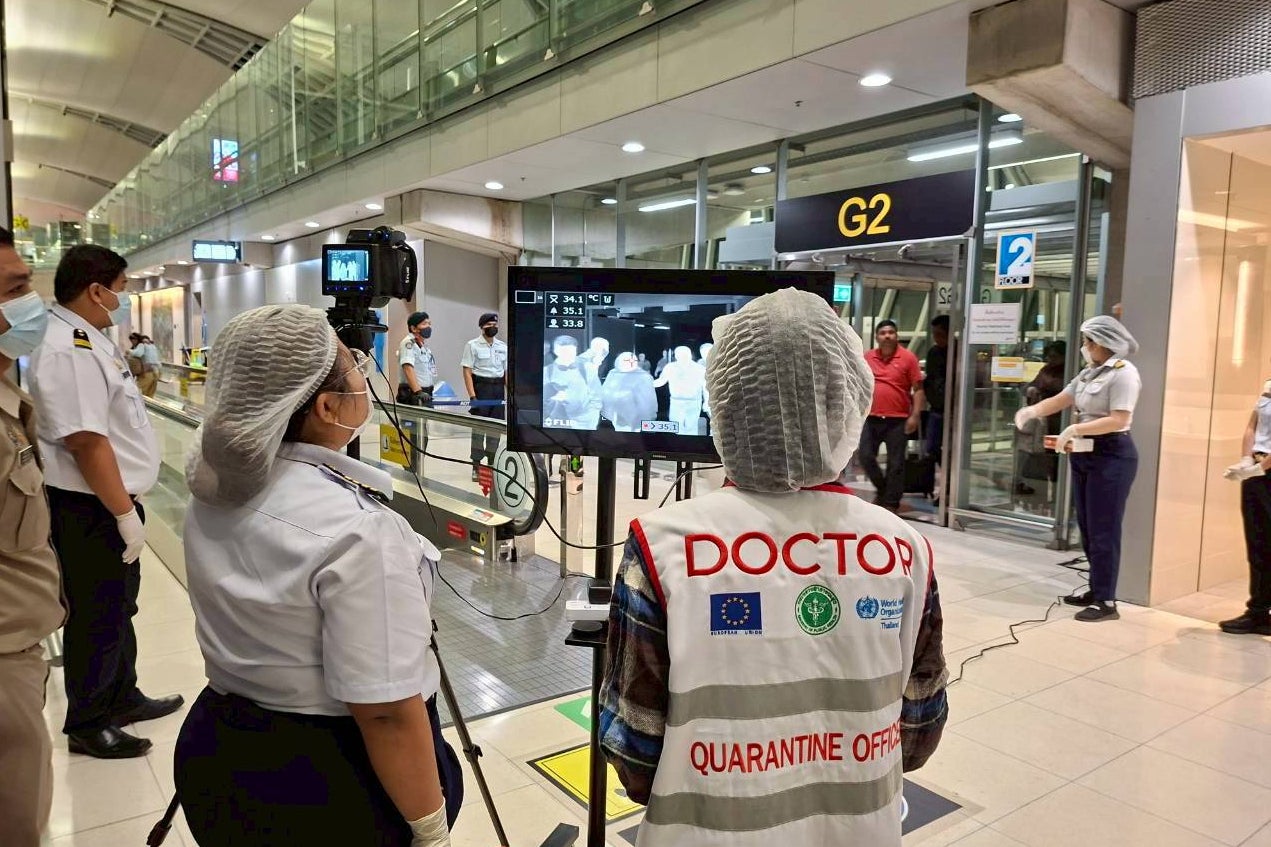
Nearly 700 travellers arrive at the three airports on flights from Kolkata every day, The Bangkok Post reported.
Mr Phatthana said he had worked with deputy prime minister and transport minister Phiphat Ratchakitprakarn as well as airport operators to ensure checks were carried out thoroughly.
“If there’s a suspected case at an airport, the person will be quarantined and the results of a relevant test will be known in eight hours,” he said.
The minister noted the likelihood of transmission to fellow passengers on the same flight was very low.
“The transmission of Nipah virus is not like that of Covid. Even though they may be asymptomatic, Covid-infected people can transmit the virus,” he added. “For Nipah, infected people will not transmit it as long as they do not have any symptoms.”
Mr Phatthana said his country had never reported a Nipah infection.
Nipah was first detected in Southeast Asia after outbreaks in Malaysia and Singapore in 1998 and 1999. The infections were largely linked to pig farm workers and those in close contact with livestock. Since then, multiple human outbreaks have been reported in India and Bangladesh, strongly associated with consumption of raw date palm sap contaminated by fruit bats, the virus’s natural reservoir.
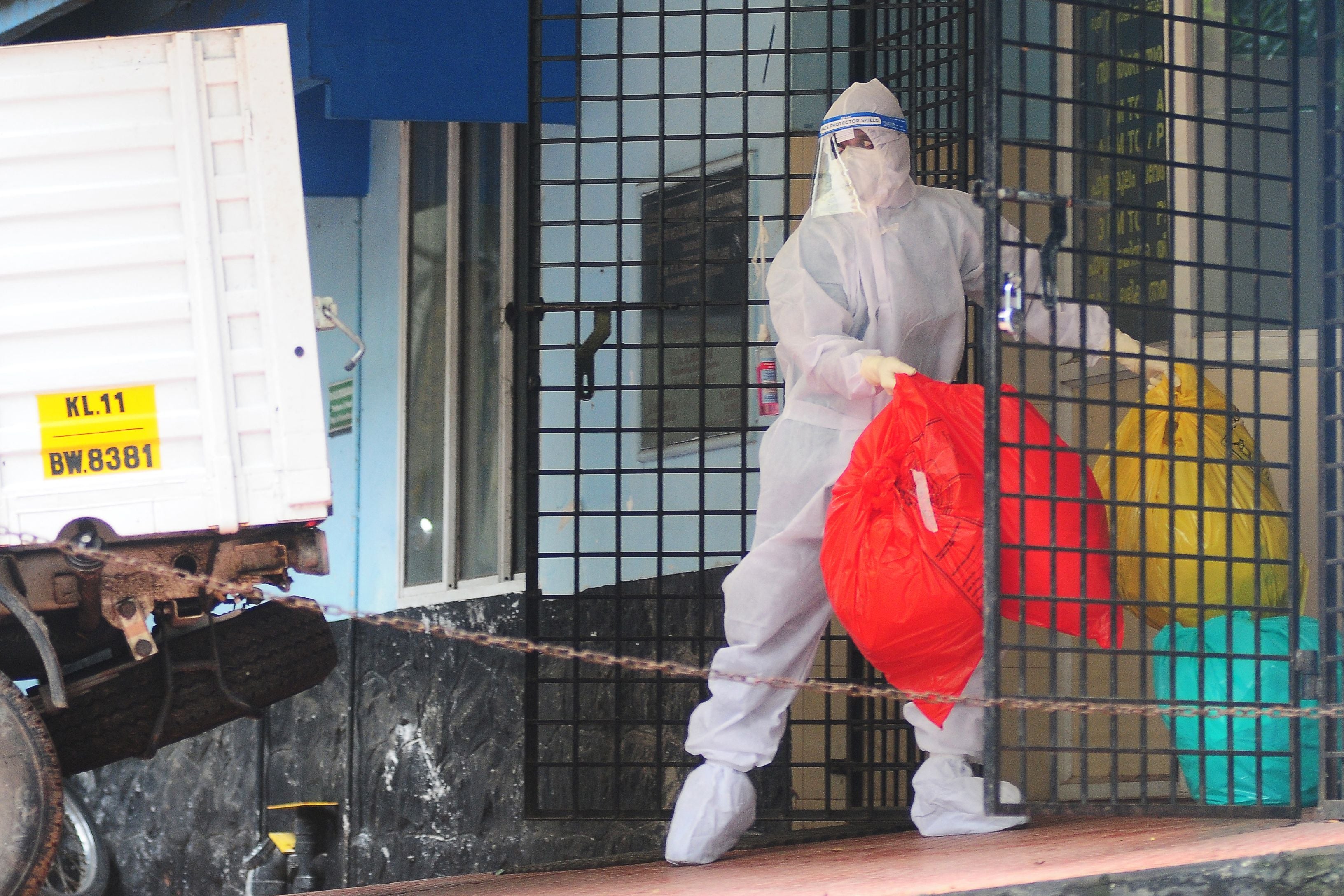
Thai authorities also addressed public concern over sightings of flying foxes – one of the animals known to host the virus – in Phra Nakhon Si Ayutthaya, saying there was no evidence linking them to any infections in Thailand, Asia News Network reported.
Meanwhile, health experts in Hong Kong are advising people to avoid travel to West Bengal.
The South China Morning Post reported that leaders of the city’s Bengali community expected some disruption to travel plans but stressed the situation did not warrant a panic.
“There is a large and thriving Bengali community in Hong Kong. Those who are planning trips might postpone them until they see what the situation is,” Vishal Melwani, vice-president of the India Association Hong Kong, was quoted as saying by the newspaper.
Nipah is classified as one of 53 notifiable infectious diseases under Hong Kong law, prompting authorities to monitor developments closely while urging caution rather than alarm.
Another neighbour of India, Nepal, also introduced screening measures for arrivals at the Kathmandu airport, along with checks at the land border crossings.
Taiwanese health officials have proposed classifying Nipah as a “Category 5 disease”, a designation for rare or emerging infections that pose major public health risks and require immediate reporting and special control measures.
Join our commenting forum
Join thought-provoking conversations, follow other Independent readers and see their replies
Comments
Bookmark popover
Removed from bookmarks