Olympian Roger Black on his life-saving heart surgery: ‘I realise now how serious it was’
The former 400m runner tells Lisa Salmon he had a heart problem throughout his running career and how walking has helped him recover from surgery.
As one of Britain’s best-ever 400m runners, Roger Black didn’t exactly shout it from the rooftops that he was running with a heart condition.
While he says he didn’t keep the congenital aortic valve condition that he was diagnosed with at the age of 11 a secret, the former athlete admits: “I never wanted it to be an excuse.
“I didn’t make it a big deal. All I saw was that I was a very fast runner and I wasn’t as out of breath as everyone else. I could only go on what I felt and what I saw, and I felt fine throughout my career.”
And as a result of not dwelling on his symptomless heart problem and just concentrating on his impressive running ability, Black, now 59, represented Great Britain at athletics’ highest level for 14 successful years, winning silver in the men’s 400m at the 1996 Olympic Games, and a total of 15 major Championship medals including European, Commonwealth, and World Championship Gold medals.
He retired from competitive sport at the age of 32 in 1998, and has since worked as a television presenter and motivational speaker. But he knew his heart condition could deteriorate, and annual heart tests in late 2024 revealed his aorta had swelled and he needed open heart surgery to replace a valve and reconstruct the aorta.
“I always knew the day might come where they said unfortunately, things have changed and you can’t carry on,” he reveals.
“But I never got any obvious symptoms. There are two symptoms of valve disease – breathlessness and fatigue, but I felt fine. I was a bit tired, but I thought I was just stressed out and tired with work and life and kids, although in hindsight, I was actually particularly tired.
“You just get scanned, and everything had changed inside, and they said sorry, but we’ve got to open you up, get a new valve in. And it was quite serious, actually. I realise now how serious it was.
“I was shocked, because I felt fine, but I knew one day this was going to happen. I just thought I’d be in my 70s, not in my 50s.”
The father-of-three explains that when the heart valve degenerates, it puts pressure on the root of the aorta, where the blood comes out of the heart. “And my aorta had started to swell,” he says. “When your aorta gets too big, it can burst. And if your aorta bursts, you’re done.
“So that was why they had to go in. I didn’t just have a new valve put in, I had a reconstructed aorta as well, so it was quite a big deal. And genuinely, without being too dramatic, I’m incredibly lucky, because if I hadn’t had my tests, who knows?”
Black had a successful seven-hour operation a year ago, and after spending time in intensive care with “a big scar neck to tummy button”, he recalls; “Your immediate thought is you’re just pleased you got through it. But before I came round, my wife was there, and the surgeon came in to see me and she said the obvious thing to him: ‘How did it go?’ And instead of saying it went really well, he actually said it was a lot worse than they thought.
“But it all went well. And then you start the long road to recovery.”
And for Black, that long road has involved not running, but plenty of walking.
“For me, walking is the ultimate medicine,” he declares. “We’re born to move, but when you’ve had heart surgery, your whole recovery bases around walking, and you never take walking for granted ever again.
“When you’ve had open heart surgery, your life, certainly for the first few weeks, is walking and resting.”
In the first few days he could do very little, gradually building up to a few steps around the ward, “And then you realise that your body recovers the more you walk, and the more you move. And so it’s got to be a good thing,” he says.
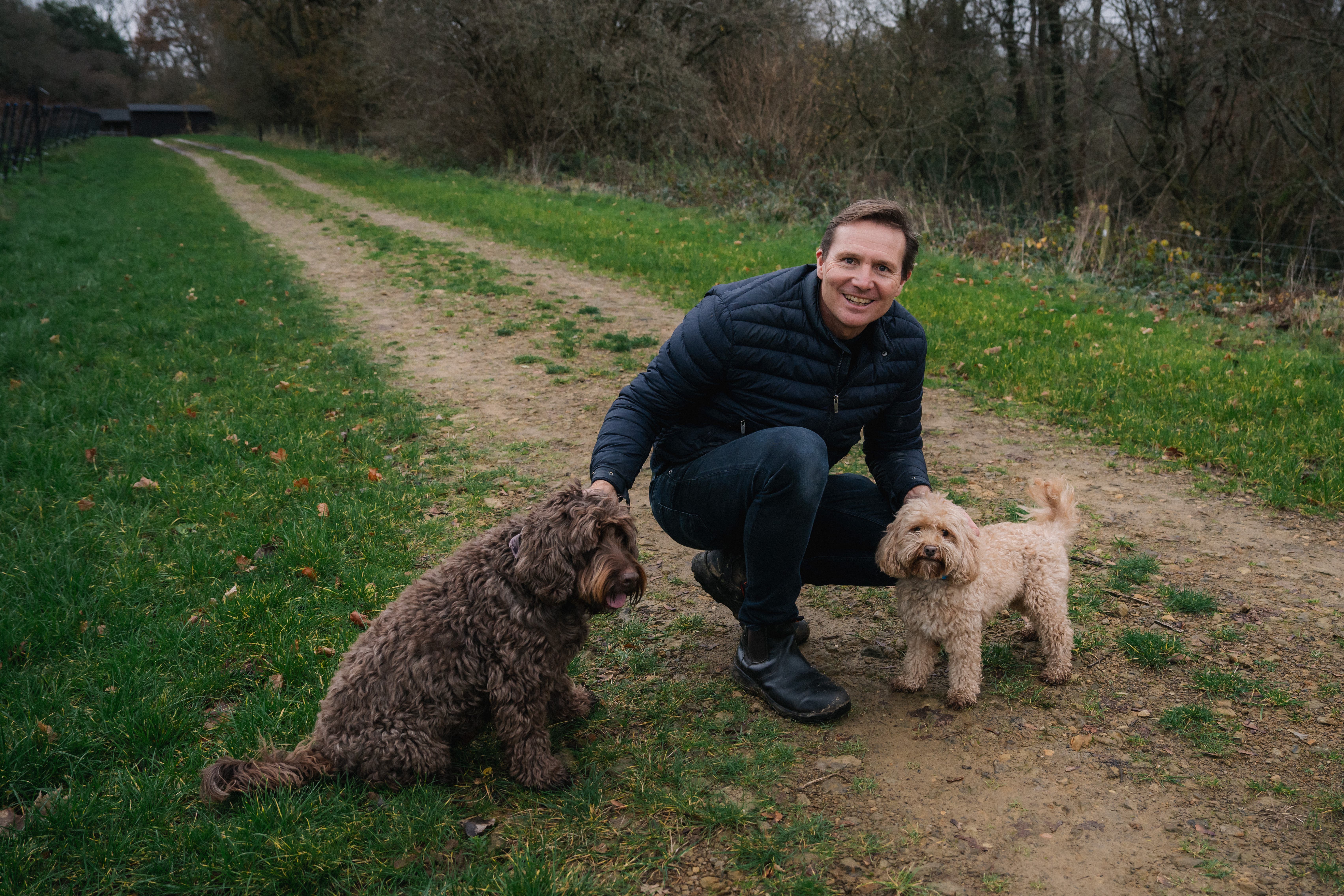
Now, a year on from his surgery, he takes his two dogs Howie and Daisy for two 45-60 minute walks a day in the Surrey hills where he lives. He doesn’t wear a step counter – “I’m very old school, unfortunately, so I don’t measure it”, but he sets himself little targets every day, like reaching a tree or a bench, or the church at the top of a hill.
“I’ve measured my recovery by listening to my body, so I would see a tree, and I would go, I’m going to get to that tree, and after that I’d walk home, and then I’d go, right, I’m going to get to past that tree.”
And he jokes that his dogs have loved the fact that he’s had heart surgery.
“For them, me having heart surgery was fantastic because I have to walk – although I would anyway. And of course, I’m at home all the time as well. So they’ve had a great year.”
In fact, Black thinks walking is so important he wants to encourage others to do more of it too, and he’s supporting the British Heart Foundation (BHF) Walk for Hearts campaign, which is encouraging the nation to walk 28, 50 or 100 miles over the four weeks of February’s Heart Month, to help raise money for BHF’s lifesaving cardiovascular research, while supporting their own heart health at the same time.
He says: “People can do it however they want. I’m out twice a day walking because it’s still part of my recovery, but you can do it indoors, on a treadmill, you can just monitor how many steps you take.
“It’s more to get the message across of how important walking is, and choosing to walk rather than not. I was asked the other day what’s one of my favourite walks, and I thought, funnily enough, it’s the choice to walk rather than get the tube.
“It’s about choices like that – the more we move, the better it is. I can be evangelical now about walking – it’s been amazing for me.”
Roger Black is supporting the BHF’s Walk for Hearts campaign to get the nation to walk 28, 50 or 100 miles over the four weeks of February’s Heart Month. Registration is open until February 14.
Bookmark popover
Removed from bookmarks