Companies are coming up with plans to block out the sun
Private companies are jumping into the race to deploy particles to the atmosphere to reduce global warming, prompting enthusiasm from investors and concerns from some scientists, Josh Marcus reports
A secretive team of scientists is working on an unprecedented plan to fill the atmosphere with tiny particles that imitate a volcanic eruption and block out the sun. It might save humanity, or it could spiral out of control. Thousands stand opposed to such a scheme, but these plans may move forward anyway.
This is not the plot of the next Marvel movie, but solar geoengineering, one of the very non-fictional frontiers of climate research.
In October, a start-up called Stardust Solutions announced it had raised $60 million to pursue technology that will bounce the sun’s light back into space using reflective, airborne particles.
It is the largest investment ever for a company pursuing such a strategy to cool our rapidly overheating planet, according to Politico, and builds off the firm’s previous $15 million funding series.
Stardust Solutions is one of a small but closely-watched group of companies and researchers pursuing such ideas in the hopes of making rapid gains on the climate crisis as international action remains perilously insufficient.

The basic idea is to limit how much of the sun’s energy reaches the Earth’s surface. While this won’t tackle the root cause of the climate crisis — still-rising greenhouse gas emissions from fossil fuels — “solar radiation modification” could reduce the global temperature and slow the melting of the polar ice caps, buying us all some much-needed time.
While the idea has been around since the mid-Sixties, small-scale outdoor experiments have only begun in the last two decades, including cloud seeding in Switzerland and testing salt spray’s impacts on the clouds above the Great Barrier Reef.
For every fledgling experiment, another project has been canceled in the face of public opposition. A 2024 effort spraying sea salt aerosols from a decommissioned air craft carrier in Alameda, California, was quickly shut down because of outrage from community members who said they were not consulted, while the Indigenous Saami people of Scandinavia were among those who opposed the aborted 2021 SCoPEx project in Sweden, arguing the plan to spray calcium carbonate dust into the atmosphere violated both their philosophy towards the Earth and would not be an impactful scientific strategy to stop the root causes of the climate crisis.
Despite these concerns, the daily glut of increasingly dire climate updates - including the recent news of the likely irreversible decline of ocean corals - has given new momentum to this once fringe idea.
A ‘human-safe’ particle spray

Stardust Solutions was founded in 2023 by Yanai Yedvab and Amyad Spector, nuclear physicists who met at an Israeli national laboratory, and particle physicist Eli Waxman, former chief scientist at the Israeli Atomic Energy Commission.
Alarmed that the planet was already warming beyond the benchmark limits of the Paris Agreement, the scientists decided to try to invent a technology that could have an immediate impact.
Yedvab told The Independent that he was inspired by how the world came together to address the hole in the ozone layer in the 1980s and that the current state of the planet requires rapidly exploring all available techniques.
“Given the escalating crisis it would be irresponsible not to do the work now to make sure that governments and the international community have all options to save lives and prevent additional disasters,” he wrote in an email.
“The last thing anyone who takes this crisis seriously should want is for governments to realize in a decade that they need to deploy SRT [sunlight reflection technology] and for the research, engineering, and de-risking not to be complete.”
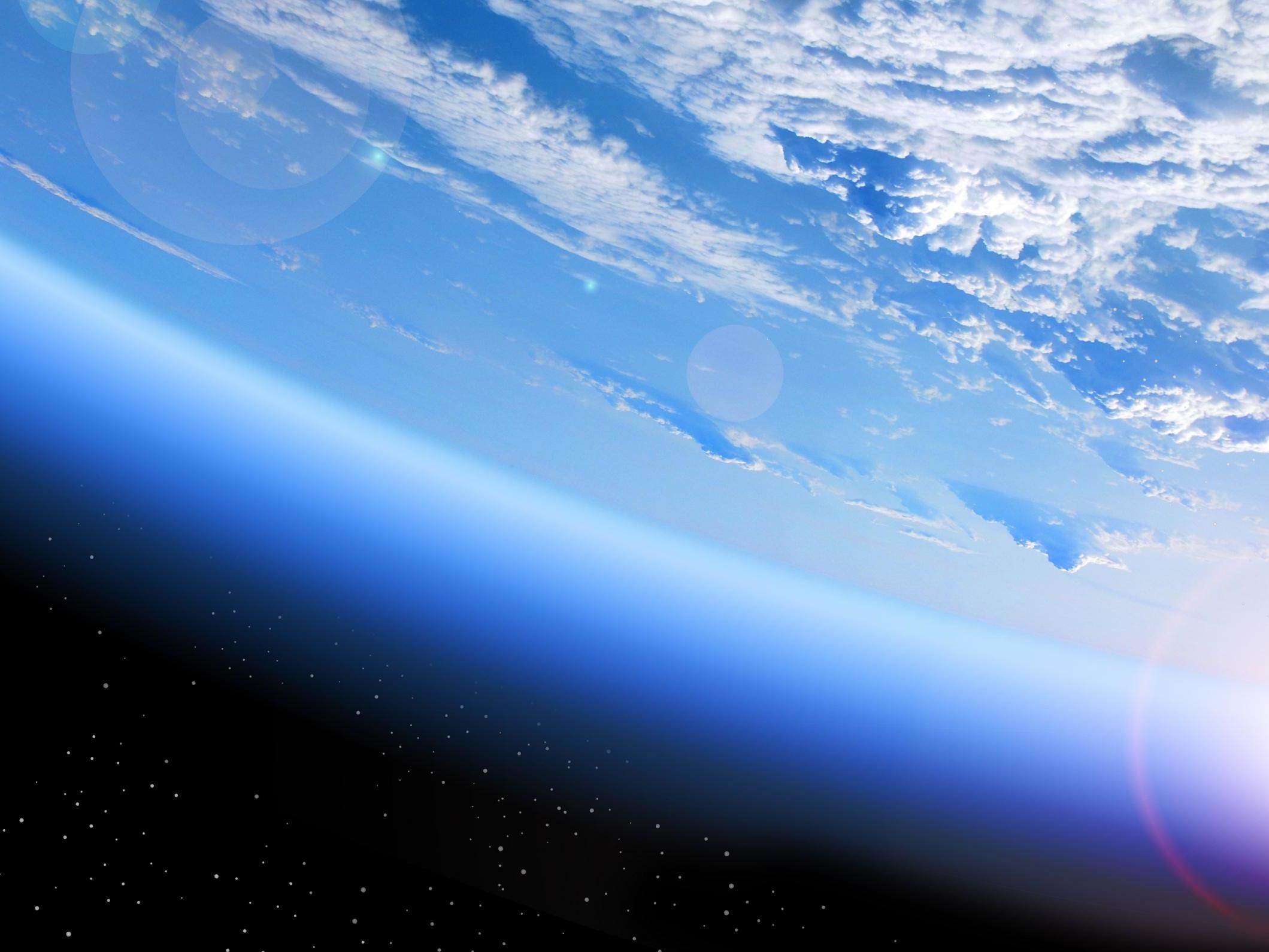
Someday, Stardust Solutions plans to deploy particles into the stratosphere, the atmospheric layer that begins around 4 miles up and extends to about 31 miles above the Earth’s surface.
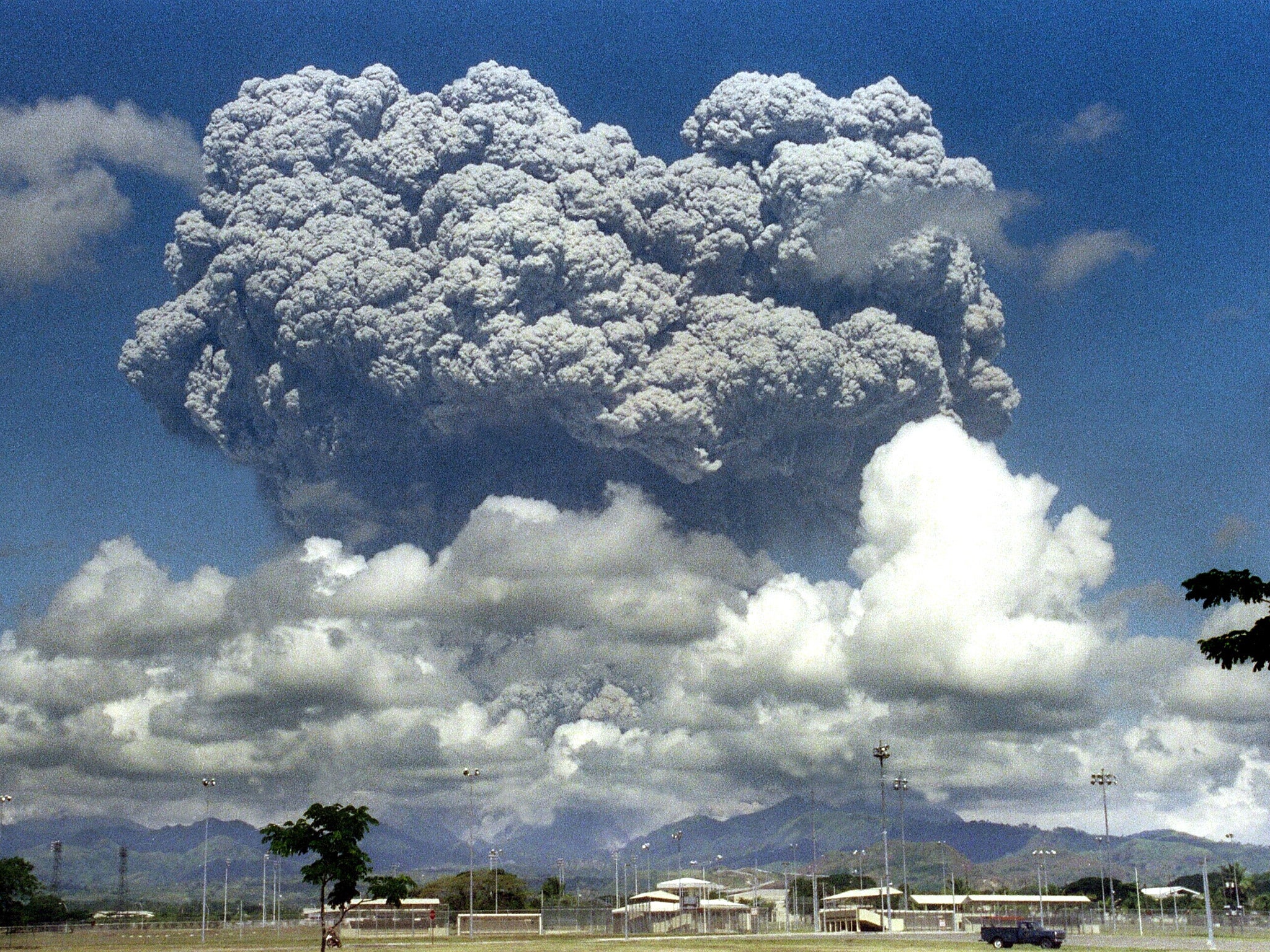
Some geoengineering projects have proposed using sulfurous particles like those released from volcanoes — plumes from the 1991 Mount Pinatubo eruption in the Philippines, for example, are thought to have blocked enough light to temporarily lower global temperatures by about 0.5C — but Stardust is planning something different. It just won’t say what exactly, at least not yet.
Stardust has kept quiet about the nature of its proposed plans, but Yedvab said the patent-pending particle will be non-sulfate because such materials “are toxic for humans and the biosphere and entail a long list of side-effects and unintended consequences,” like depleting the ozone layer and causing acid rain.
Thus far, Stardust has conducted tests in an indoor lab, but the start-up hopes to conduct “outdoor contained experiments” and publish peer-reviewed studies of its findings beginning next year.
Any use of Stardust technology would be under the close supervision of partner governments with strong guardrails, Yedvab said.
“Our customers would only be governments,” he told The Independent. “Any decision-making process on deployment is solely for governments, including decisions on whether to deploy at all, when and how to do it.”
An RV packed with helium balloons
There are no international rules or treaties that ban solar geoengineering, though the area is a hot topic in legal circles, and some U.S. states are moving ahead with plans to regulate it.
Bills have been introduced in at least 19 states to ban various forms of geoengineering. Tennessee, Louisiana, and Florida have already banned weather modification, in part influenced by persistent conspiracy theories about governments and private companies nefariously using “chemtrails” in the sky to spread toxins across the world.

On the whole, however, regulation of the field remains in its infancy, and one company, Make Sunsets, is already conducting outdoor deployments.
The start-up, founded in 2022, has floated weather balloons into the stratosphere filled with particles of sulphur dioxide, a chemical that can occur naturally or as an industrial byproduct. High above Earth, the balloons burst and the particles inside can remain aloft in the atmosphere for up to three years, according to the company.
Behind the company is Luke Iseman, former director of hardware at San Francisco’s famed Y Combinator start-up incubator, which helped boost companies like DoorDash and Airbnb, and Andrew Song, a former executive at crowdfunding site Indiegogo.
Their efforts are on the scrappy side. The company often launches its balloons from a Winnebago RV in the hills of northern California, and it has reportedly raised just over $1 million from investors, pocket change compared to the funding that’s flowed to Stardust.
Make Sunsets hopes to make up for these more modest efforts with a highly impactful solution. The company claims that each gram of sulfur dioxide released will offset the warming impacts of one ton of carbon dioxide, the most abundant greenhouse gas, for a year. (The average American’s carbon footprint is just shy of 18 tons per year).
The start-up sells “cooling credits” to customers, priced between $1-$5 per gram of sulfur dioxide, and monitors its releases with GPS, cameras, and censors attached to its balloons.
The California company says it has launched 213 balloons so far, delivering 207,007 cooling credits.
The effects of sulphur dioxide in the atmosphere are well-studied, though some regard the company’s efforts with skepticism. The European Commission’s chief scientific advisors have recommended against cooling credits linked to solar geoengineering.
In 2023, Mexico accused the company of carrying out launches without the permission or consultation of local communities or the government, prompting the country to vow it would ban the practice altogether.
Iseman told Reuters at the time he was unaware of what ultimately happened to the balloons.
“As far as I can tell, this was in compliance with all pertinent regulations,” he told The Independent in an email. “I have received no fines or other censures for my balloon activities in Mexico or anywhere else.”

The U.S. Environmental Protection Agency demanded more information from Make Sunsets about its activities earlier this year.
“The idea that individuals, supported by venture capitalists, are putting criteria air pollutants into the air to sell ‘cooling’ credits shows how climate extremism has overtaken common sense,” EPA Administrator Lee Zeldin said in a statement at the time.
The company says on its website its activities fall under the Weather Modification Act of 1976 and that it complies with all applicable regulations, including by reporting its activities yearly to the National Oceanic and Atmospheric Administration and keeping in touch with relevant government agencies including the FAA, FBI and CIA.
(In a response to the EPA, Make Sunsets nodded towards Trump’s MAGA campaign slogan and said it wants to be a part of “Making Earth Cool Again.” Iseman says the regulator hasn’t sent any further communications.) The Independent has contacted the EPA for comment.
A plan to thicken sea ice, courtesy of the British government
Governments and academics have also entered the fray. In April, UK’s the Advanced Research and Invention Agency (ARIA), which is sponsored by the UK’s Department for Science, Innovation, and Technology, launched a geoengineering program of its own.
Backed by about $75 million in government funding, the program will support a range of academic projects, as well as what ARIA calls “controlled, small-scale outdoor experiments” with technologies ranging from using frozen seawater to thicken Arctic ice, to potential plans to spray seawater into low-lying marine clouds above Australia’s Great Barrier Reef, improving their ability to reflect sunlight back to space.
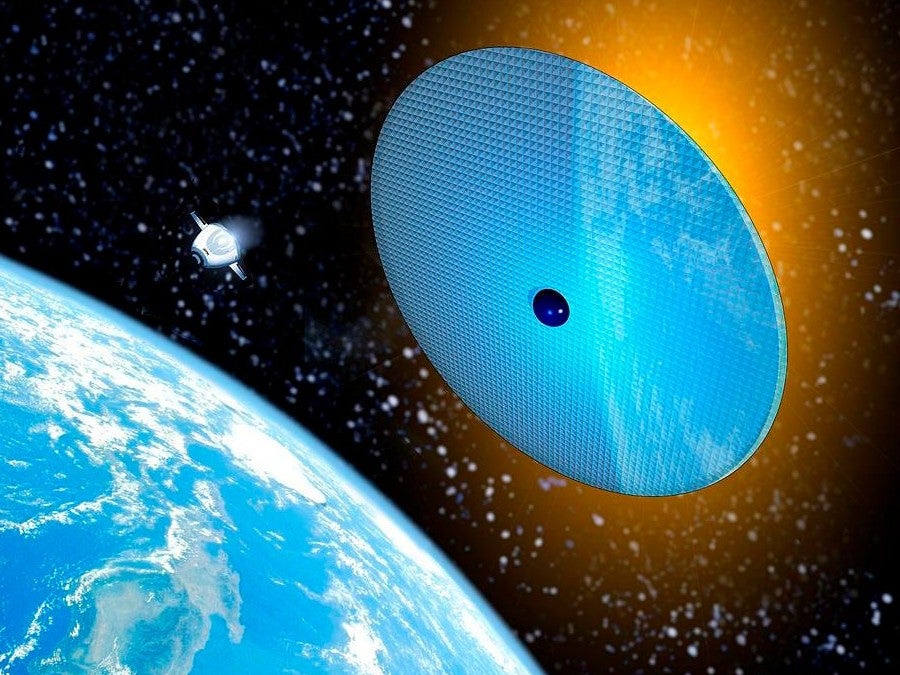
Elsewhere, other researchers have suggested tethering a sun-shading "umbrella" to an asteroid.
Yoram Rozen, a physics professor at the Technion-Israel Institute of Technology, is working with a team to develop a satellite-controlled solar shade prototype to test the overall feasibility of blocking solar energy from space.
On the cutting-edge or ‘total bulls***’?
Despite all this newfound momentum, large parts of the scientific and advocacy establishment remain doubtful of solar geoengineering, criticizing such projects as either distractions from better solutions or interventions that open the door for rogue action and unintended consequences.
Geoengineering’s selective application, without a coordinated global framework, could have adverse climate impacts like increasing the ferocity of hurricanes, exacerbating drought patterns in Africa, or causing a global “termination shock” if these projects suddenly end and temperatures rapidly increase, the UK Royal Society outlined in a report earlier this year.
Such efforts could also pull time and resources away from more impactful solutions, like reducing greenhouse gas emissions, a 42-person international team of scientists reviewing geoengineering proposals found.
“They do not address the underlying causes of the climate crisis but may cause serious damage and are extremely costly,” Regine Hock of the UAF Geophysical Institute and University of Oslo said in a September news release.

“The only effective way to reduce further global warming is rapid decarbonization.”
Private companies are particularly ill-suited to carry out geoengineering, according to critics, because they will be driven by profit motives in addition to safety concerns, and could be less accountable than publicly-run projects.
“The only way these startups will make money is if someone pays for their services, so there’s a reasonable fear that financial pressures could drive companies to lobby governments or other parties to use such tools,” David Keith, founding faculty director of the Climate Systems Engineering initiative at the University of Chicago, wrote in MIT Technology Review last month.
“A decision that should be based on objective analysis of risks and benefits would instead be strongly influenced by financial interests and political connections.”
Keith has also told The Washington Post that Stardust’s claims to have identified and studied a totally neutral particle in a matter of a few years sound like “total, unadulterated bulls***” and a “joke.”

“Humanity has well-established protocols to test and validate new types of particles and materials within years, not decades,” Yedvab told The Independent. “We use these protocols all the time in industries (e.g. [the] food industry) alongside developing dedicated validations required for this specific endeavor...Like you wouldn't trust a company developing a drug for cancer testifying to the safety of its products, here as well our products will be tested by regulators and independent validation authorities long before any operational deployment will occur.”
Iseman, of Make Sunsets, told The Independent he understands the skepticism, but he feels that the stakes of the climate crisis are too high to ignore the potential of geoengineering.
“I'd love to see well-funded university labs treating climate change like the emergency that it is, a modern Manhattan Project to declare war on global warming and replace fossil fuels with nuclear and solar,” he said.
“Private companies have far more leeway than I’d like them to hold in society broadly. The only thing worse than a private company doing solar geoengineering is nobody doing it. We all have been performing negative geoengineering with our carbon emissions, and it's time that we all do solar geoengineering to make up for it.”
Correction: A previous version of this story described Yoram Rozen's solar shade project developing technology that would tether a large mirror to an asteroid. The project in fact proposes a satellite-controlled solar shade.
Join our commenting forum
Join thought-provoking conversations, follow other Independent readers and see their replies
Comments
Bookmark popover
Removed from bookmarks