How the climate crisis is changing an ancient way of life in Ethiopia
Families have been raising livestock in the Afar region of northeastern Ethiopia for centuries, but Nick Ferris finds that these traditions are changing thanks to the impact of the climate crisis
Driving through the desert-like landscapes of the Afar, northern Ethiopia, traditional Afari tukuls – oval-shaped, flexible shelters made out of twigs and covered with mats or animal skins – are regularly seen scattered along the roadside.
These tent-like structures are specifically designed for their mobility, and they speak to how the livestock-raising community of Afar has traditionally trekked across the region, looking for pasture for their herds of camels and sheep, transporting the materials they need for their homes as they go.
Afar is considered the cradle of humanity, given that it is where the “mother of humanity”, known as “Lucy”, was discovered in 1974, and some of the oldest known stone tools have been discovered in the region.
When Lucy walked the valleys of Afar three million years ago, the landscapes were lush green and rich with biodiversity. The climate has been through many shifts since then, and is currently rapidly going through another. The human-driven climate crisis is pushing up the average temperature, disrupting weather patterns, and making the already arid environment ever more inhospitable for its inhabitants.
“Climate change is a huge issue here in Afar, driving two extremes: drought when there is not enough rain, and flooding, which erodes the soil and degrades the performance of land,” says Habtamu Ebrie, who leads the work by the UN’s World Food Programme (WFP) on livelihoods and resilience in Afar. Both rainy seasons of 2025, he adds, have followed a worrying pattern of arriving too late and then falling too hard and fast – causing floods.
Extreme weather is nothing new to the pastoralist communities of Afar. But droughts that used to happen every 10 years are now happening every year, says Ebrie, and they are devastating the herds of animals that essentially represent all of the material wealth that communities hold. Intensified rainstorms are also bringing devastating windstorms with them, destroying structures and killing animals.
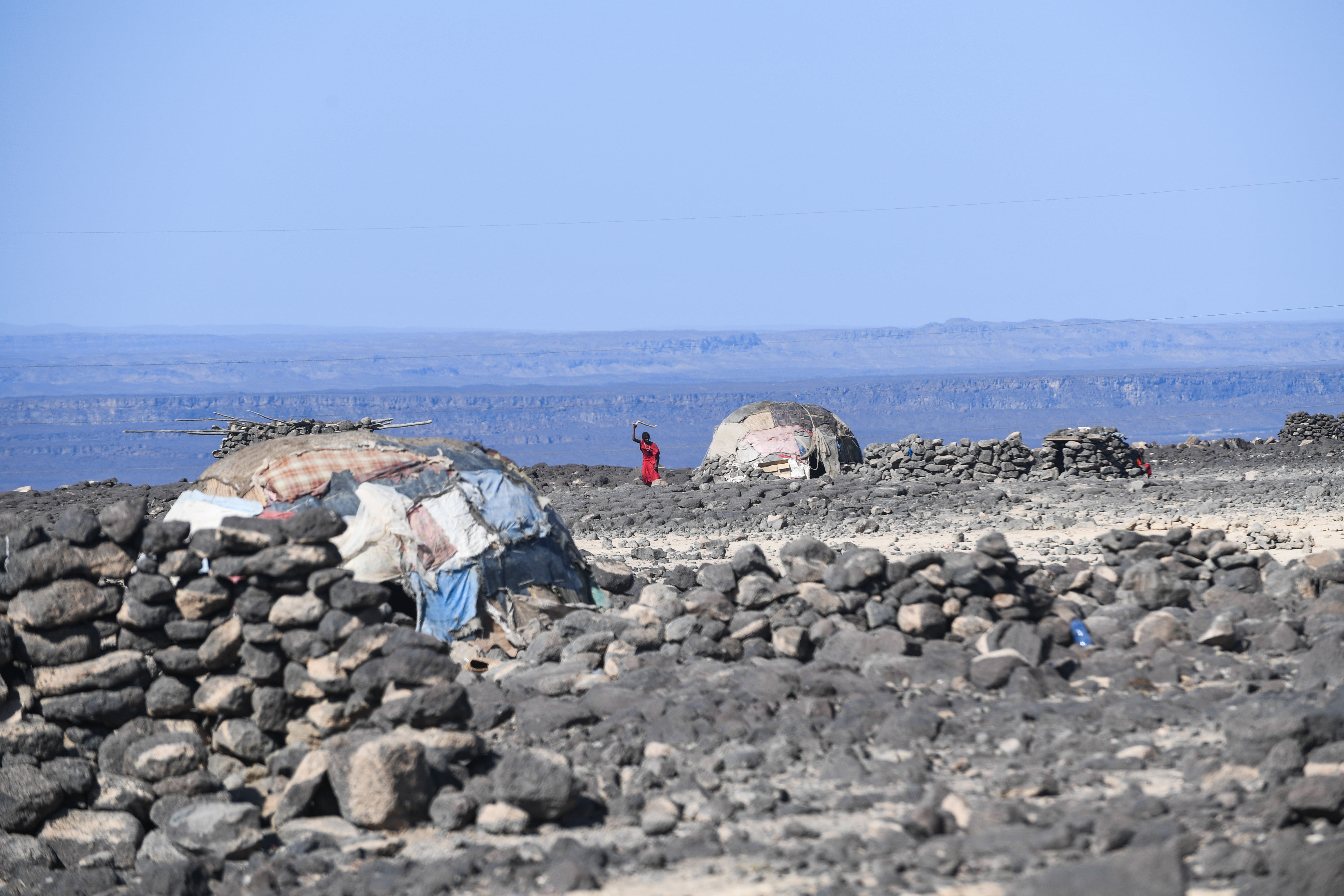
Evidence on the ground suggests that the climate is becoming too extreme for communities that rely solely on rearing animals, and families that have followed a nomadic way of life for generations are changing their livelihoods to adapt to their new reality.
Said Muhaba is a resident of the Amibara district of Afar. His herd consists of 10 camels, 10 cattle, and 20 goats. It has been 15 years now since the father of six, fed up with losing his animals to drought, decided to settle down and begin farming.
“Our life in Afar has always been more about raising animals – but now, due to the frequent droughts and weather patterns, we are turning to farming activities,” he explains, speaking in Amharic via a translator. “We have changed from pastoralists to agro-pastoralists.”
Said currently farms tomatoes, having previously grown both onions and cotton. He also grows fodder for his animals – rather than moving to find pasture – so that he can continue to feed them even in times of drought.
“Here in Afar, we share a strong connection with our animals. They are a source of meat and milk, and a source of income,” Said says. “We used to travel huge distances with our camels in particular.
“But previously, whenever natural calamities occurred, we would lose everything. Now, with both animals and crops, we feel more confident about the future,” he adds.

According to the chairman of Said’s kebele – which is the smallest level of local government in Ethiopian districts – the shift from pastoralism to agro-pastoralism is happening more and more, with a number of families now farming on the land alongside Said.
A couple of hours’ drive from Said, in the Gewane district of Afar, is 35-year-old Amina. She has been through similar experiences to Said as she has tried to adapt to the changing climate.
“Previously, we were completely dependent on animals, and we were purely pastoralists,” the mother of four says. “Back then, we could always find good pasture. The milk from a single cow was able to feed the entire family.”

In recent years, however, conditions for raising herds of animals have declined significantly: “The drought comes much more often, and we kept losing our livestock,” she says. “Everything has become much more unpredictable; we therefore had to change what we are doing.”
Nowadays, Amina farms one hectare of maize alongside her work tending to five goats and 10 sheep. Rather than living a mobile existence, travelling around searching for pasture, Amina now also grows fodder.
Farming’s own climate challenges
Beyond the changing climate, a key threat to the pastoralist lifestyle in Afar has been the reallocation of land rights from traditional nomadic peoples to the national parks in Afar, as well as to the sugar cane industry, according to Ian Scoones, a professor of resource politics at the Institute of Development Studies (IDS) in Brighton. This “land grab” has forced pastoralists off the wetland areas that they traditionally inhabited, says Scoones, and made them more vulnerable to climate change.

Another expert in pastoralist behaviour, Hussein Tadicha Wario at the Centre for Research and Development in Drylands (CRDD) in Marsabit in northern Kenya, says that it’s important not to slip into a reductive “old narrative” that argues that pastoralists “must settle”.
Pastoralism is culturally important for many of these communities in Ethiopia, and arguably better adapted to the climate of dryland areas like Afar than farming activities, says Wario, who adds that the change between pastoralism and agro-pastoralism is not always in one direction.
“The reverse also happens: in areas where irrigation systems have been established after disasters like conflict and drought, some communities have resumed pastoralism after gaining enough income to purchase livestock from crop proceeds,” he says. There are also downsides to farming in arid regions, he continues, including the fact that when pastoralists settle to farm, often the health of livestock can decline, and malnutrition can become more common.
Stories from Afar suggest that the shift to farming by no means automatically makes communities resilient to climate shocks.
Father of four Saidou, who lives in the Gewane district of Afar with 15 goats, eight sheep and two camels, describes how, during times of drought, low water levels in the Awash River make it difficult to irrigate his hectare-wide plot of land. “In the past, we have been able to harvest two crops per year, but more recently, we have only managed one,” he explains.
For Saidou, it is clear that both livelihoods can be seriously threatened by climate-driven weather events. By spreading his work across both areas, he is more resilient to different kinds of shocks.

Since settling down to grow crops 15 years ago, Said’s farming activities have also increasingly come under threat from extreme weather events.
“Last year, we were hit by a flood, which extensively damaged our cotton crop, and it was extremely difficult to start back up again,” he says. “We never know these days if the rainy season is going to be helpful, or if it is going to destroy everything.”
Said restarted farming with help from the World Food Programme (WFP), which provides climate-resilient seeds, including for onions and tomatoes. Previous floods had also silted up the irrigation canals that Said and his neighbours use for their farms, but WFP has recently restored them to function.
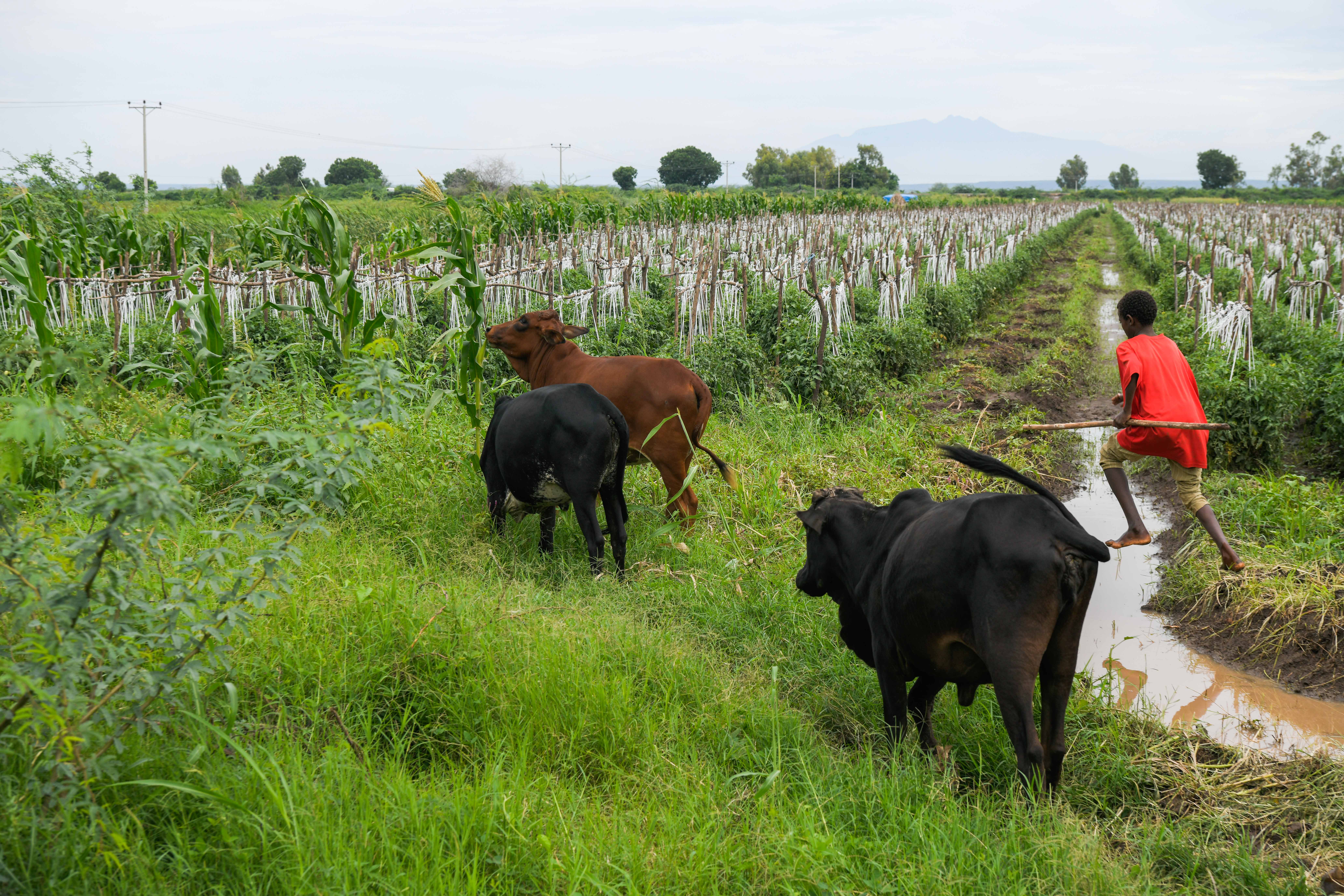
Humanitarian organisations like WFP have played a crucial role in helping inhabitants of Afar adapt to climate change – but cuts from countries around the world, led by Donald Trump in the US, are threatening this work.
The WFP in Afar, for example, has reduced its team from 87 to 46 people this year, and across the country the group’s activities are being scaled back – including the reduction of rations it provides to residents of refugee camps to less than 1,000 calories per day.
Cuts represent an “immense setback” for resilience programmes in the country, according to CRDD’s Wario. IDS’s Scoones believes that the collapse in external funding in the Horn of Africa is a “wake-up call for those involved in dryland development in pastoral areas”.
Having been buffeted by climate shocks in his pastoral and farming activities in recent years, farmer Said is now facing the risk of cuts to aid-supported services upon which he and so many others in the region rely. As a result, he says that he now has a clear ambition driving him forward: to earn enough money to send his children to a good school, so that they do not have to be beholden to the same climate-dependent lifestyle that he has been.
“When I see my children now, to be honest, I don’t want them to live through the same life that I have passed through,” he says. “I want them to be good students and to lead a better life.”
This article was produced as part of The Independent’sRethinking Global Aid project
Join our commenting forum
Join thought-provoking conversations, follow other Independent readers and see their replies
Comments
Bookmark popover
Removed from bookmarks