Svalbard’s polar bears keep body condition despite rapid ice loss, study finds
Surprising results show how different polar bear populations are responding differently to climate change.
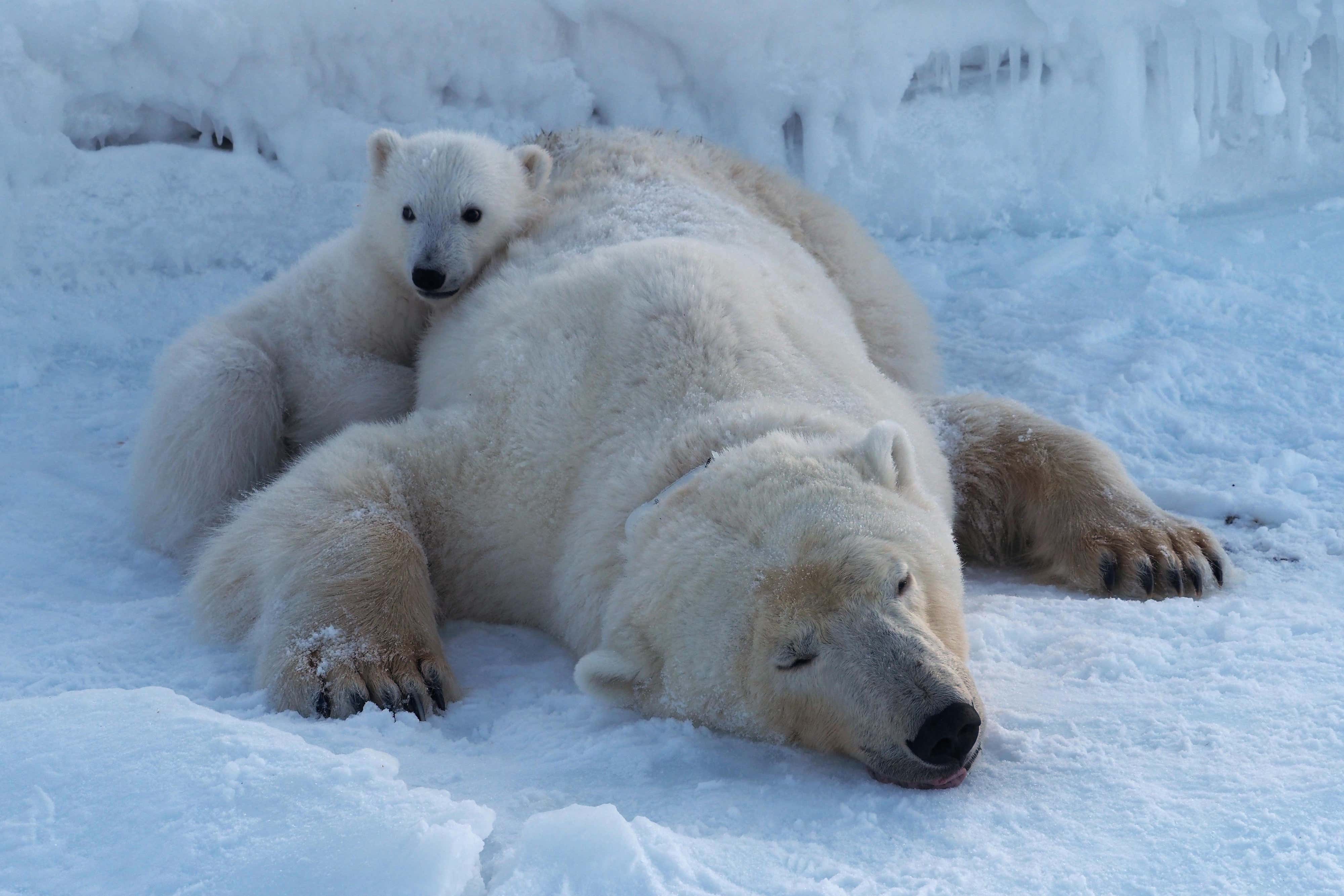
Polar bears in Svalbard have stayed in good physical condition despite rapid loss of their sea ice habitat due to climate change, a study has found.
Scientists behind the study said they would have expected the polar bears in the Norwegian Arctic islands to get “skinnier” as the warming climate reduces the opportunity to hunt seals on the sea ice.
But in results they described as a “surprise”, they found that – after initial declines from 1995 – the body condition of both males and female polar bears increased from around the year 2000, despite rapid sea ice loss during that time.
The findings differ from studies of other polar bears, which show Arctic sea ice loss affecting their condition and populations.
The researchers said the bears’ improved physical condition despite having to spend more time on land as Svalbard becomes increasingly ice-free could be down to targeting other sources of prey, including reindeer, walrus carcasses and harbour seals, which have all increased in numbers.
But they warned it was still likely the polar bears’ body condition will decline in the future as sea ice loss continues.
The Barents Sea around Svalbard, home to one of 20 polar bear populations across the Arctic, has experienced temperature increases of up to 2C a decade and has lost sea ice habitat more than twice as fast as any other areas where bears live.
For the study, the researchers used data gathered in 1,188 records of 770 adult polar bears, who were sedated and body measurements taken between 1992 and 2019, to compare changes in the “body composition index”, which indicate fat reserves and body condition.
They found that while the number of ice-free days each year in the region increased by around 100 over the period, the average body composition index increased following the year 2000.
One of the lead authors, Jon Aars, from the Norwegian Polar Institute (NPI) said: “The increase in body condition during a period of significant loss of sea ice was a surprise.
“If I had been told in 2003, the first year I started the work at NPI, that bears in Svalbard would have access to sea ice two months less on average from 2000 to 2019, and was asked what I would predict, I would say bears would likely be skinnier, and maybe that we would see effects on survival and reproduction, and the start of a population decline.
“And we see the opposite, bears are now in better condition, even though they are forced to be on land much more of the time, without the ability to hunt ringed seals.”
He added that while there was some evidence sea ice loss may have some impact on reproduction, “in general mothers continue to raise cubs, so there is not an alarming trend, and the proportion of cubs surviving until they are one year old does not seem to have declined.”
He told the Press Association: “The most likely explanation why they still do well is that they are able to compensate for a shorter period on the ice by being able to use the resources on land.”
He said the bears took more reindeer, whose population had increased significantly, as well as eating carcasses of walruses, numbers of which have also recovered and increased in the last couple of decades.
He said they also hunted harbour seals in West Svalbard, another population which has also increased, and took a lot of eggs and some birds in summer.
He added that polar bears were already having an impact on other wildlife, particularly bird colonies, and would become a more important part of the ecosystem in Svalbard than they used to be when they spent more time on the sea ice.
But he said: “It is likely that body condition will decline in the future, as sea ice loss will continue. What is uncertain is when this will happen.”
Report co-author Andrew Derocher, from the University of Alberta, said the study highlighted how different polar bear populations could be from one another.
“Bears in this region (Svalbard) appear to be experiencing short-term buffering to climate impacts because they hunt in areas with diverse and new types of prey, which helps explain why adult body condition has remained stable so far despite rapid sea ice loss.”
But he warned the “resilience was temporary”.
Commenting on the study, John Whiteman, chief research scientist at Polar Bears International said: “Overall, while the big picture for conservation remains clear – polar bears need sea ice, which is disappearing due to climate change – this new study helps illustrate the substantial variation in how ice loss has affected bears thus far in different areas.”
The study was published in the journal Scientific Reports.
Bookmark popover
Removed from bookmarks