How Brexit talks turned into a learning experience for the UK
Europe correspondent Jon Stone reviews Britain’s confused dealings with the EU since the referendum in 2016

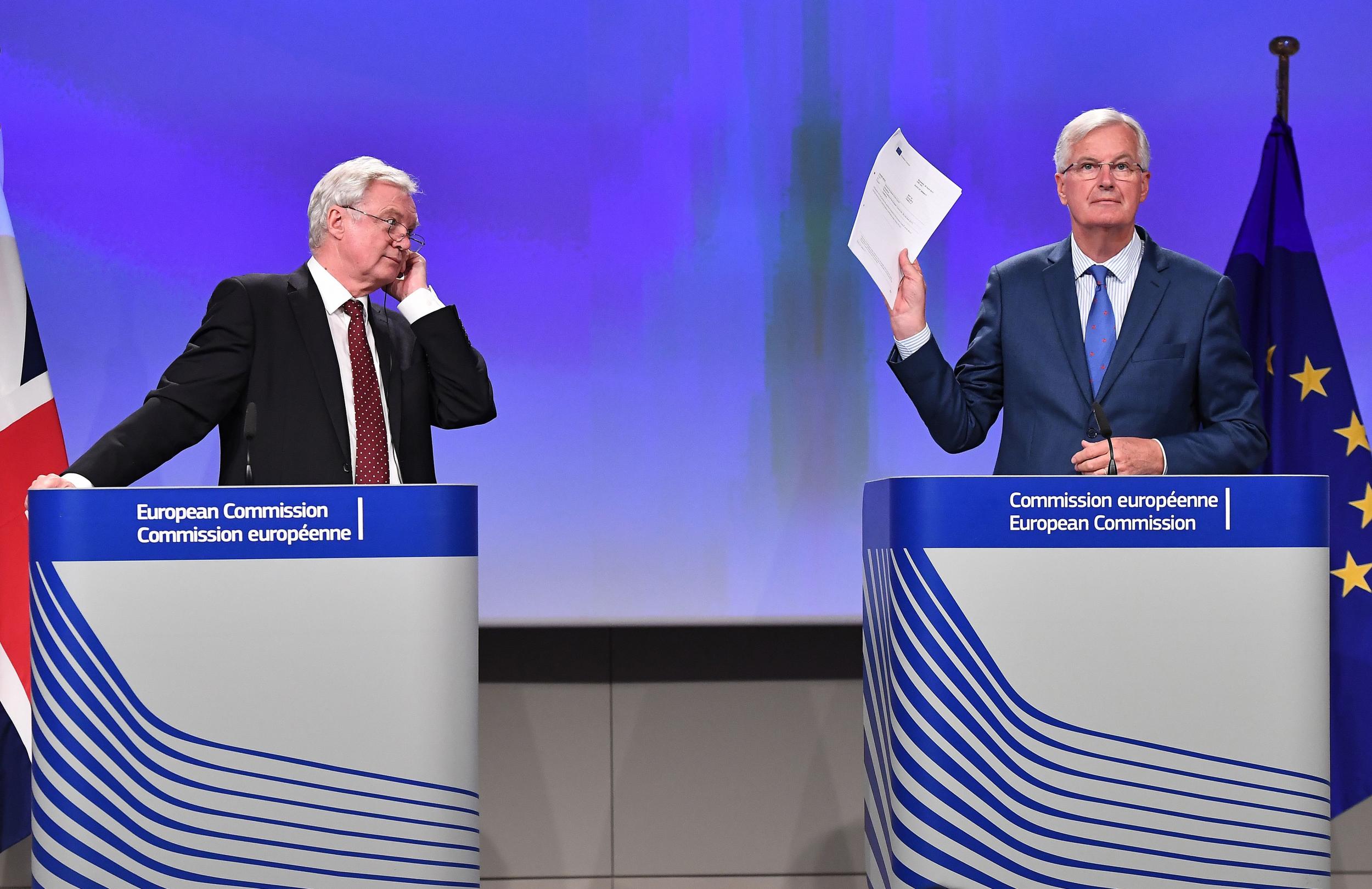
The first calling point of the UK’s negotiator immediately after Brexit will not be Brussels, it will be Berlin, to strike a deal,” said Conservative MP David Davis, a month before the 2016 EU referendum.
At the time a backbencher, Davis painted a picture in which “a UK-German deal would include free access for their cars and industrial goods, in exchange for a deal on everything else”. Similar deals would be reached with other key EU nations, he said.
“France would want to protect £3bn of food and wine exports. Italy, its £1bn fashion exports. Poland its £3bn manufacturing exports,” he went on, concluding: “Trade negotiations are exercises in mutual self-interest.”
As it happened, a few months later Davis found himself in the hot seat, as the first secretary of state for Exiting the European Union. Things did not go as he expected, and he actually found himself in Brussels rather a lot. There was no deal with the Germans.
His comments are an important fragment for understanding how Brexit talks played out, because they illustrate one central truth very well: Britain’s Eurosceptics may well have been obsessed with the EU for their entire political lives, but that didn’t necessarily mean many had any idea how the thing actually worked, or what it did.
The comments look quaint now: anyone who followed the negotiations knows that EU member states are in a customs union with a common commercial policy, meaning they do not strike trade deals alone. Four years later, the whole Brexiteer argument for leaving the customs union is that Britain will be able to strike its own agreements with countries around the world, which EU member states must do collectively. Davis’s plan wasn’t even a legal possibility.
But the German side deal fantasy shows that like so much of Brexit, today’s justifications are a backwards-rationalisation for something Eurosceptics wanted to do anyway.
If Britain’s relationship with the EU since 2016 has been anything, it has been an education. In 2015 it was utterly inconceivable that Jean-Claude Juncker, Michel Barnier, even Guy Verhofstadt, would become household names of British politics with name recognition eclipsing some cabinet ministers. And yet here we are. Ministers, journalists, backbenchers, and interested members of the public alike were more or less forced to learn what a customs union was, what the single market did, and how EU decisions were made if they wanted to follow events.
Some took longer than others. As late as January 2018 leaked WhatsApp messages showed Tory MP Nadine Dorries still unsure how the EU customs union worked, despite advocating publicly for leaving it. Stumped by a conversation with a member of the public, she turned to her colleagues for advice, who filled her in.
“You have just convinced me what my gut always knew – it is so complicated and convoluted, we must get the hell out,” she told the MPs, perhaps still not entirely comfortable with the detail.
The first calling point of the UK’s negotiator immediately after Brexit will not be Brussels, it will be Berlin, to strike a deal
There were similar learning curves all over the place. In the first year of talks, Davis and his officials were repeatedly blindsided by the EU’s media operation. It was a comedy of repetition: the British minister would show up to a press conference in Brussels to kick off a week of negotiations, opening proceedings alongside Michel Barnier, the EU’s chief negotiator. Davis would say the talks were going fine, and then Barnier would give his statement, inevitably accusing the UK of cherry-picking, or rubbishing its latest proposal. The EU’s message would lead the headlines back in the UK that evening. Then, every day without fail during the week of talks, a different EU figure – perhaps from the European parliament, or a member state – would also pop up and say something that got Brussels’ message in the news again. Downing Street, used to having a monopoly on information in Westminster and only having to say what it wanted, would stay quiet, and was repeatedly outflanked.
The UK walked into the metaphorical lamp post perhaps half a dozen times until it deployed a new strategy of its own: not doing any media in Brussels. The press conferences unceremoniously stopped. But even then EU officials filled the gap, generously briefing and leaking to get their message across. The situation eventually improved, mostly thanks to initiative by UK officials based in Brussels who knew the terrain – but it took a long time.
The UK public’s growing familiarity with how the EU worked was also helped by the significant expansion of the British press corps in Brussels – colloquially known in the city as the Britpack. I was posted here for The Independent in 2017 as part of the expansion of our coverage, part of a wave of deployments across Fleet Street that saw the contingent in the EU capital roughly double in size. Veteran Brussels correspondents found themselves getting front pages and leading news bulletins with far more regularity than they ever did when the UK was a stable member of the club.
The intensity of British interest was such that it sometimes became irritating to officials and journalists from other countries who wanted to get on with discussing other things: the EU, after all, continued to exist and had plenty of work to do. It became common to hear questions about Brexit at press conference apologetically prefaced with “Sorry, this one is about Brexit...” followed by a wry ripple of laughter through the audience and on the stage.
The irony was not lost on anyone involved: had there been more focus on the detail of EU affairs in the decades that led up to the referendum, the UK might never have voted for Brexit at all. The arguments put to the public might certainly have been less reliant on the whims of MPs in Westminster who effortlessly dominated commentary of the union, despite the fact they were still struggling to understand what it did or was months into exit talks.
From Brussels, the narrative in Westminster was followed with a uniform mix of disbelief and bemusement: “parallel universe” was a phrase often heard on the city’s cafe terraces. One eye-opening moment for me came during a visit back to London, when a group of knowledgeable remain-leaning friends, all with various jobs in Westminster, seemed surprised when I mentioned that Theresa May’s now long-forgotten “Chequers plan” was not going to happen. I wasn’t making a prediction: Brussels had repeatedly said it couldn’t accept the proposals, poked holes in them on a daily basis, and I had spent the last two months writing about them doing so. It clearly hadn’t really crossed the Channel.
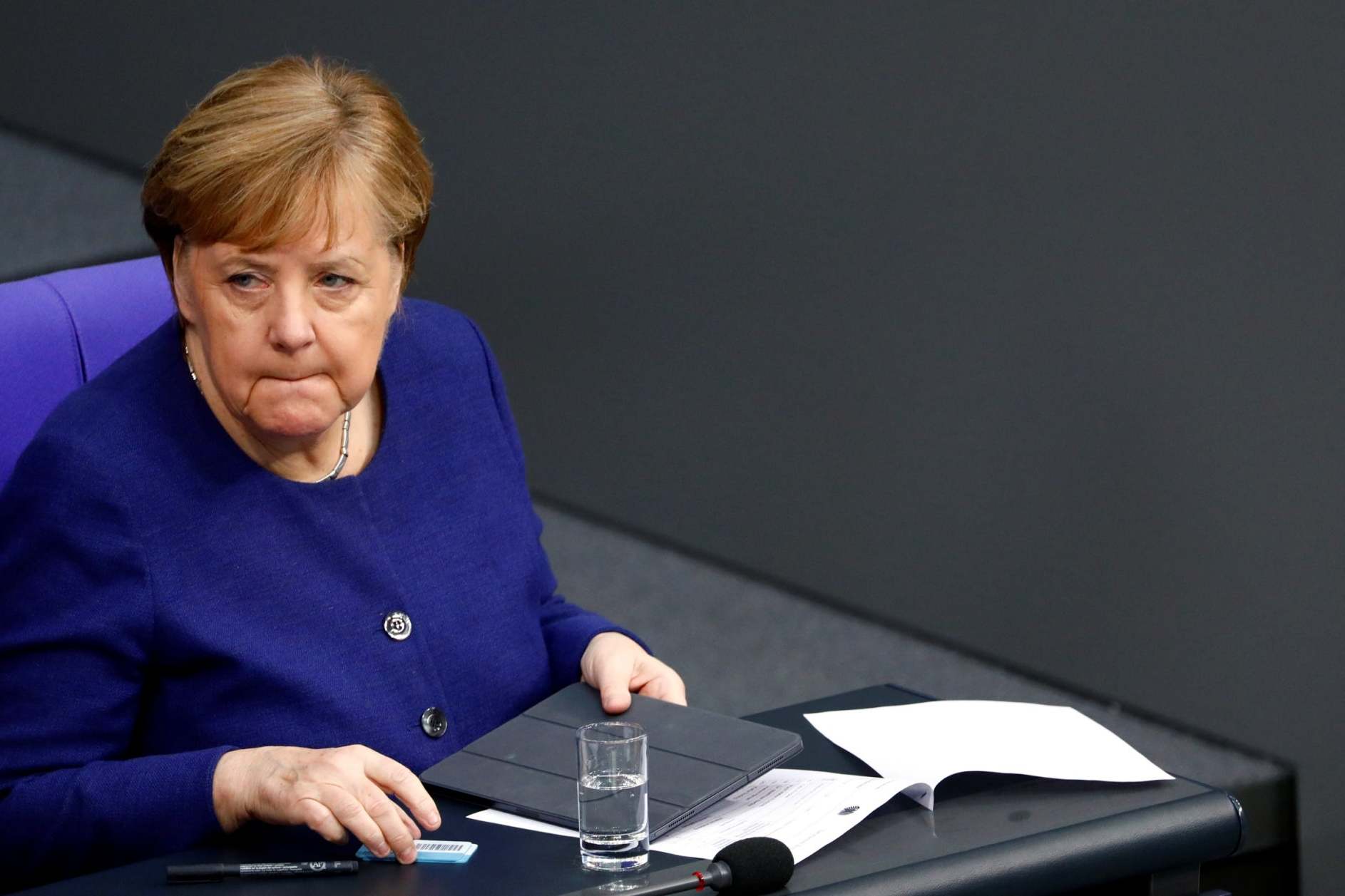
If Britain had a visible strategy throughout talks, it was “divide and conquer”. As vividly illustrated in Davis’s imagination before the referendum, the plan, repeatedly detailed in breathless reports from Westminster, was to split off member states with different interests and play them off against each other. Sometimes we’d hear that the UK was on the verge of getting the EU27 to abandon Ireland and ditch the backstop. Sometimes, Angela Merkel was going to inexplicably ride to the rescue and cut us a great deal: first it was going to happen right after the 2017 German federal elections were out of the way; then it was to be at the eleventh hour. Such stories persisted through the next several “eleventh hours” as Article 50 was repeatedly extended.
The Angela Merkel fantasy was particularly baffling viewed from Brussels, because it had no basis in reality – it was never really explained why the German chancellor would want to do such a thing, beyond vague Davis-esque fantasies about German car manufacturers. The real reason for the obsession was arguably another longstanding British Eurosceptic myth about the EU: that it is really run by Germany, which calls the shots behind the scenes.
None of the divide-and-conquer bids ever worked: the EU anticipated the approach – not that it had to, the plan was on the pages of every British newspaper. Michel Barnier’s main job, other than as a figurehead, was travelling around member states to keep everyone on the same page, and the bloc of 450 million people and 27 countries was significantly more united than the British cabinet at every stage in the talks. The closest Britain ever got to successfully splitting a country off was in January 2019, when the Polish foreign minister suggested a time limit on the Irish backstop. He was immediately put back in his place by his counterparts and the idea was never mentioned publicly again.
Where Theresa May failed, Boris Johnson succeeded. But Johnson’s victory was not one of negotiating with the EU: it was of public relations, selling the medicine, prescribed by Dr Barnier, back at home. May rejected a border down the Irish Sea out of hand: Johnson accepted one, with some camouflage, and then spent an election campaign flat-out denying that he had done so. The government’s strategy back at home has been to portray the withdrawal agreement as a victory over Brussels, won by pure brinkmanship and threatening to walk away, appealing, as David Davis would have put it, to the EU’s “self interest” – all the things Brexiteers wanted their prime minister to do.
It was of course, nothing of the sort: Johnson ticked off every EU negotiating objective and accepted something his predecessor said no British prime minister could accept. As the next phase of talks begins, the worst thing the government could do would be to believe its own PR and put its success down to the brinkmanship of Brexiteer imagination. It didn’t work that way, whatever the sales pitch.
Join our commenting forum
Join thought-provoking conversations, follow other Independent readers and see their replies
Comments
Bookmark popover
Removed from bookmarks