Scheming, back-stabbing and betrayal: Why All About Eve is as topical as it was 70 years ago
Joseph L Mankiewicz’s film may be about narcissistic theatre folk but almost everyone watching it has encountered their own pushy newcomer, says Geoffrey Macnab
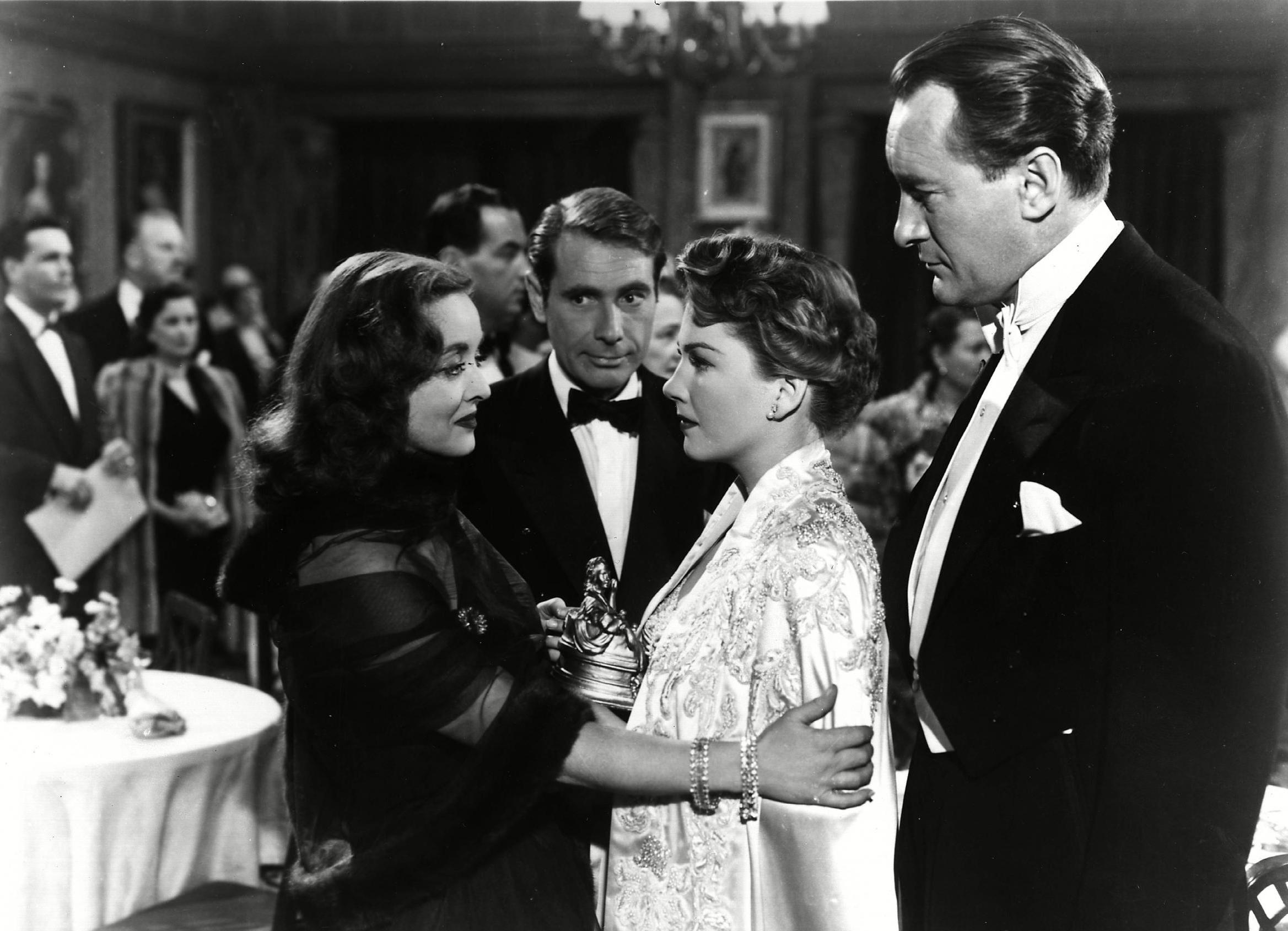
At the start of Joseph L Mankiewicz’s All About Eve (1950), now celebrating its 70th anniversary, a newcomer stands up to receive her first major theatrical award. She is excited, glamorous and clearly very talented. The image freezes. By the time Eve Harrington (Anne Baxter) sits down with her award towards the end of the movie, we’ve discovered just how she won it. Eve, “this girl of so many rare qualities”, this “golden girl”, this “girl on the moon”, as she is styled by the haughty theatre critic and powerbroker Addison DeWitt (George Sanders), is an amoral hustler. She has betrayed trust and trampled over those closest to her to get to the top.
What makes All About Eve so irresistible is the malevolent wit and relish with which Mankiewicz tells his Darwinian backstage tale.
In a moment of misogyny, Mankiewicz once called Eve “a conniving bitch”, but that isn’t really, or entirely, how the film portrays her. She is resilient and cunning because that is the way to get ahead. We know that the young actors we see giving their gushing speeches after winning Oscars, Baftas and their stage equivalents are probably just as ruthless as Eve. If they didn’t have her egotism and drive, they wouldn’t be up there.
“Fasten your seatbelts. It’s going to be a bumpy night,” Margo Channing (Bette Davis) famously warns her guests at the start of a party. Margo is the established star whose lustre Eve wants to steal for herself.
This is Davis’s most famous role. She writes with pride in her autobiography of how playwright Edward Albee told her about one cinema in Greenwich Village that played All About Eve on a near-permanent loop. “You could never hear one word I said because the audience knew every one of my lines and would say them out loud with me.”
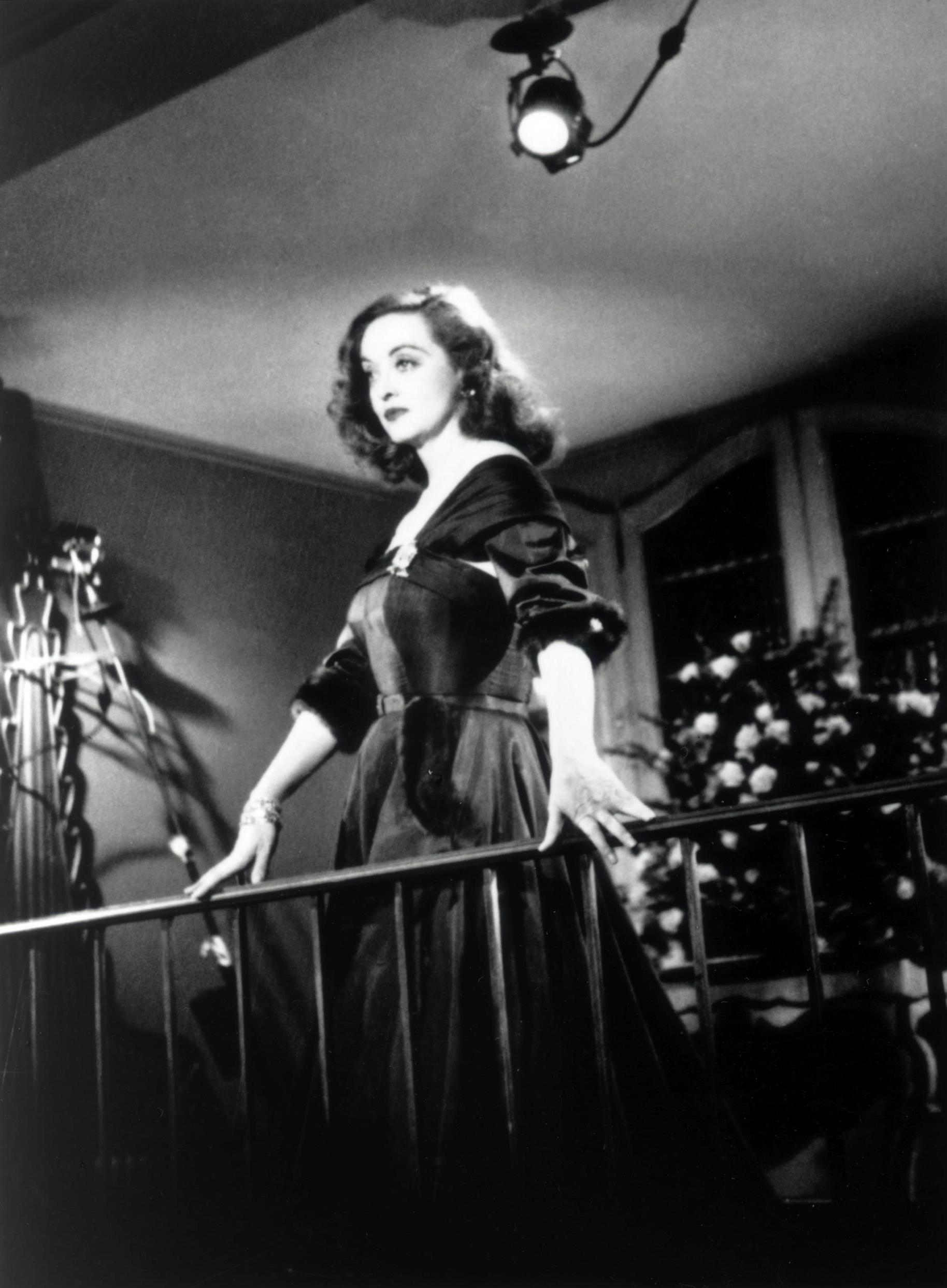
Mankiewicz provided Davis with plenty of ammunition but she put over his one-liners with caustic brilliance. She speaks throughout in aphorisms that could have been written by Dorothy Parker. “I’ll admit I may have seen better days... but I’m still not to be had for the price of a cocktail, like a salted peanut,” Margo declares at one stage. For her, small talk means making remarks like “peace and quiet is for libraries”, or “in this rat race, everybody’s guilty until they’re proved innocent – one of the differences between the theatre and civilisation”.
You can’t help but marvel at the pathos, sarcasm, irony and anger with which Davis imbues these lines. On the one hand, she is the embodiment of Cruella de Vil-like camp. On the other, she captures the vulnerability of a woman who has just turned 40 and is terrified that her best years are already behind her. She is poised and refined but doesn’t care what she says or who she offends. Davis later observed the key piece of direction Mankiewicz gave her was that Margo was “the kind of dame who would treat a mink coat like a poncho”.
All About Eve is Davis’s finest hour but she was far from first choice. Mankiewicz had originally earmarked the role for Susan Hayward. Fox boss Darryl Zanuck eventually signed Claudette Colbert, famous for washing in a bath of asses’ milk when she starred in Cecil B De Mille’s biblical epic The Sign of the Cross (1932). Colbert, though, slipped a disc and had to give the part up. Ingrid Bergman might have been a viable last-minute replacement but had run off to Italy to be with filmmaker Roberto Rossellini. Gertrude Lawrence wasn’t available either.
Zanuck heartily loathed Davis. He had fallen out with her in 1941, when Davis had very briefly become the first female president of the Academy of Motion Pictures Arts and Sciences. Still then friendly with her, Zanuck had engineered the appointment. Davis suggested radical changes to the Academy Awards. She wanted the old-style dinner and dancing scrapped, with the Oscars being given out instead in a big theatre, as they are today. She also called for extras to have their votes taken away on the grounds that (as the Hollywood Reporter put it) “they could be swung behind whichever studio hired them around the time of balloting”.
When the Academy reacted to her proposals with indignation, Davis promptly resigned, saying she didn’t really have time to do the job anyway. This severely embarrassed her patron Zanuck. He was so angry he reportedly told her she would “never work in Hollywood again”. They hadn’t spoken for almost a decade but production on All About Eve was already under way and, needs must, she was the best chance of saving the movie.
Mankiewicz himself received conflicting advice about working with Davis from fellow filmmakers. As Charles Higham recounts in his biography of the star, Edmund Goulding, who directed Davis in Dark Victory (1939), warned him “she will destroy you. She will grind you down to fine powder and blow you away … she, not you, will direct.” However, William Wyler testified to her consummate professionalism. All About Eve was her chance to revive her faltering career, then by her own admission in a “macabre” phase. Mankiewicz’s writing was too sharp to need revision. He later described her as a “dream” to work with, ”syllable perfect” in her knowledge of the script.
All About Eve is loosely based on actual events. In the early 1940s, Austrian theatre and movie actor Elisabeth Bergner had been in a Broadway production called The Two Mrs Carrolls. Every night of the run, she had been accosted at the stage door by a nervous young fan who watched all her performances. The fan was so fawning, ingratiating and self-deprecating that Bergner tried to help her, little realising the monstrous scope of the fan’s ambition. Bergner told the story to writer and actor, Mary Orr, whose short story, inspired by Bergner’s experiences, appeared in Cosmopolitan magazine in May 1946. Orr later adapted the story into a radio play that Twentieth Century Fox bought.
Writer-director Mankiewicz decided Orr’s story would make the perfect follow-up to his 1949 hit, Letter to Three Wives. He structured his screenplay ingeniously, starting the film with the moment that Eve wins her Sarah Siddons Award and using different narrators to tell her story.
As Addison DeWitt, one of these narrators, Sanders is the same purring, malevolent presence as when voicing the tiger, Shere Khan, in Disney’s The Jungle Book a few years later. “I am a critic and commentator. I am essential to the theatre,” he pronounces with supreme conceit. He is perceptive about others but blind to his own faults. Based on the celebrity New York drama critic George Jean Nathan, DeWitt is as sharp in his dress as in his phrase-making but shows no pity for anyone. He happily discards Margo, the star he once championed and sneers with condescension at the naivety of his young companion Miss Caswell (a doe-like Marilyn Monroe) who is as star-struck as Eve but lacks her steel. He describes Caswell as “a graduate of the Copacabana school of the dramatic arts”.
Mankiewicz is justly celebrated for his acerbic dialogue but he is just as interested in looks and gestures as in words. Our first glimpse of Eve is through a close-up of her hands. The supercilious way Addison holds his cigarette holder tells us as much about his character as his malicious put-downs. Margo, meanwhile, makes smoking a cigarette a mini-concert performance in itself, tapping the fag nervously on the table, inhaling swiftly and waving it like a semaphore signal.
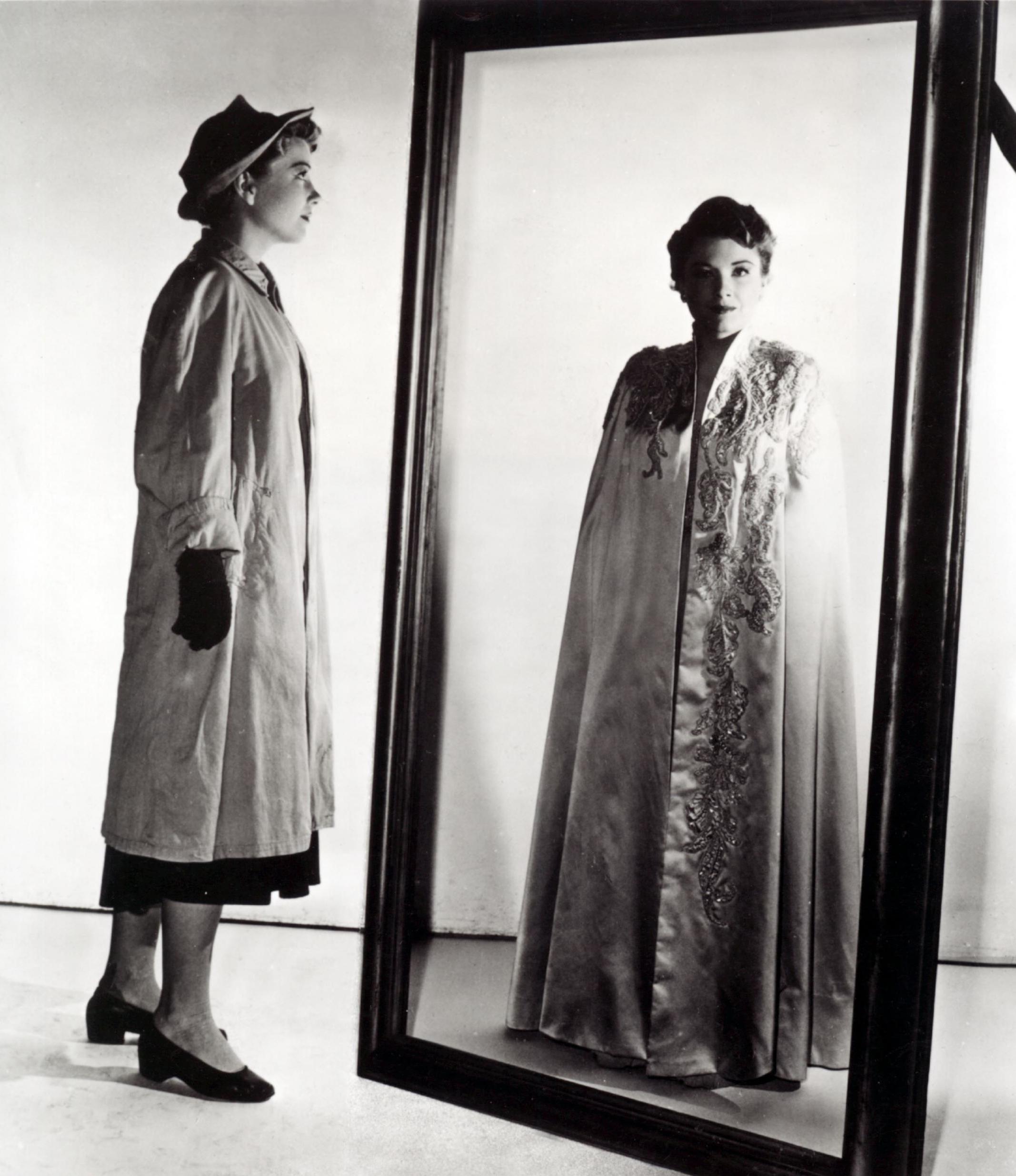
Amid all the witty repartee, the director cuts away continually to the troubled faces of his protagonists. The most telling shot of Eve comes when she is seen early on, taking away one of Margo’s costumes to be cleaned. Margo spots the young pretender looking at the mirror and imagining herself as the star she aims to become. That’s when Margo realises she is a snake.
The film is as much about the neurotic anxiety of the generation whose world Eve crashes into as it is about her own machinations.
Baxter excelled as the deceptively meek anti-heroine. When Mankiewicz was shooting the film, he worried that the film really was all about Eve and that Davis might be upset at being eclipsed by her young co-star. Once he was in the editing room, he realised those fears were groundless. This was very clearly Davis’s movie. The pinpoint performances of Baxter, Sanders, Celeste Holm (as her best friend) and Thelma Ritter (as her dresser) showed up her brilliance all the more vividly. For once Davis had been enjoying herself on a movie set too, a process strengthened by her steamy affair with her leading man, Gary Merrill, whom she married not long after the production was over.
The comedy here leaves a sour taste. Mankiewicz is probing away at the murkier side of human behaviour. His biographer Sydney Ladensohn Stern quotes him saying that if the film had been just about “an ambitious young actress, an ageing actress and a woman married to a playwright”, it would have had limited appeal. “But we were particularly careful in telling our story never to let the external characteristics of our chief protagonists cover the universal application of what they were as people.”
All About Eve may be about narcissistic theatre folk but almost everyone watching it, regardless of their line of business, will have encountered their own Eve Harringtons. In business, sport, politics, playgrounds, and in just about every other form of human endeavour, there always comes a moment when the pushy newcomer tries to dislodge the established figure, often using underhand methods to do so. That is one reason why the film is as topical now as it was 70 years ago.
‘All About Eve’ is available to stream on Amazon. ‘The Brothers Mankiewicz’ by Sydney Ladensohn Stern is available now
Join our commenting forum
Join thought-provoking conversations, follow other Independent readers and see their replies
Comments
Bookmark popover
Removed from bookmarks