Trying to call US political outcomes can be hazardous, but we have our insights
Bernie Sanders and Jeremy Corbyn may have strong parallels, but Sanders is sharper-tongued and less anti-capitalist, and doesn’t have an antisemitism problem, writes John Rentoul

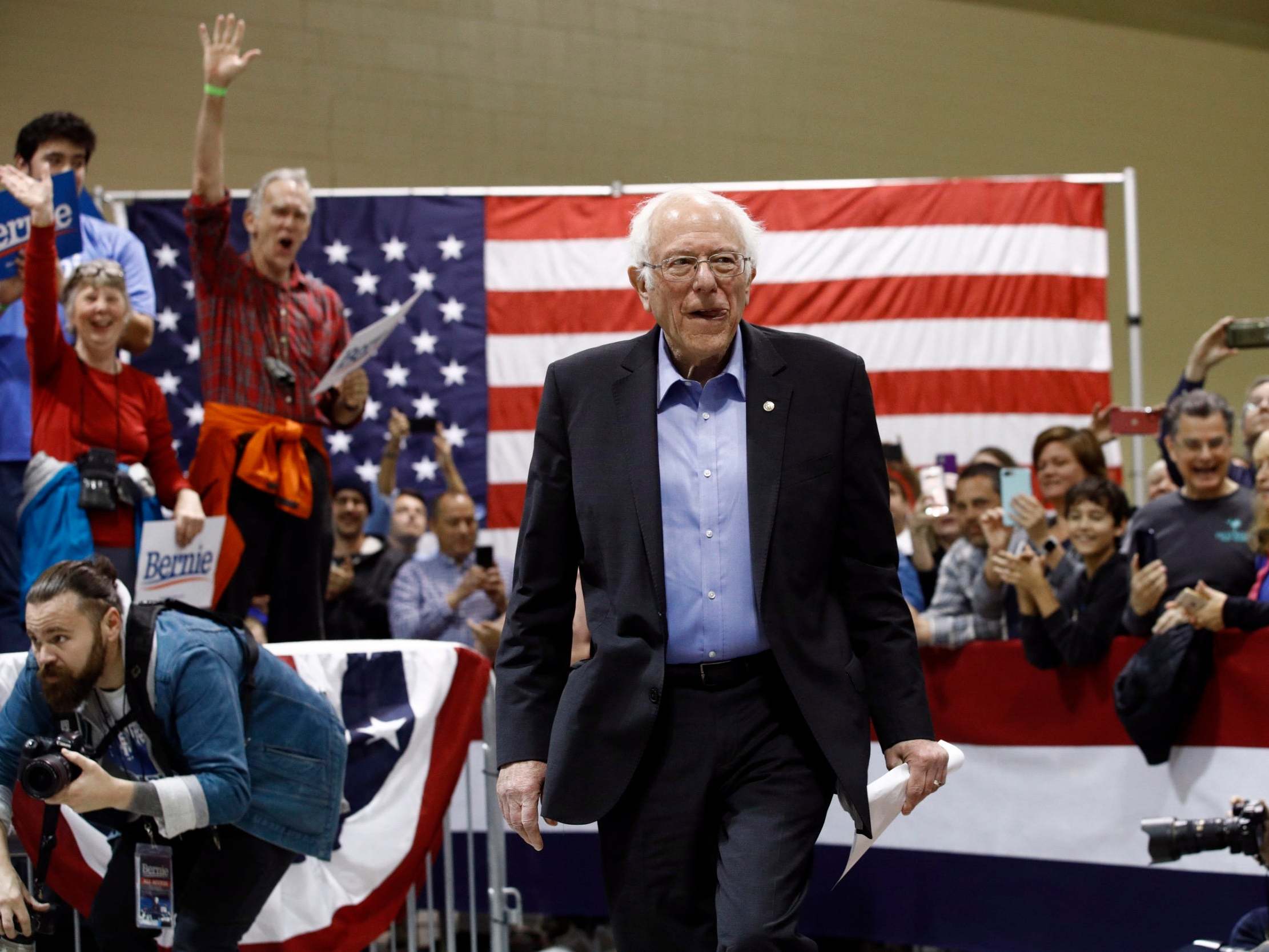
US politics is deceptive, because it is conducted in English and there are themes that echo back and forth across the Atlantic. So when British political commentators wade in to give their opinions, we often get it horribly wrong. But just sometimes we see things Americans can’t see.
It has taken British journalists a while to see how likely Bernie Sanders is to be the Democratic nominee this November. For one thing, the obvious parallel between him and Jeremy Corbyn has made it hard to believe that Democrats would want to repeat Labour’s experience in the 2019 election.
For another, the recent trend towards proportional representation in primaries means it takes longer for a winning candidate to emerge – and even most Americans don’t know what will happen if no candidate has a majority of delegates at the party’s national convention.
In fact, as far as I can tell, Sanders is no Corbyn. The Democratic establishment’s horror of a “socialist” seems similar to Labour MPs’ alarm about a member of the Socialist Campaign Group. But Sanders, who is Jewish, doesn’t have the problem Corbyn had with antisemitism; nor is Sanders a doctrinaire anti-capitalist in the same way.
And Sanders is a better public performer than Corbyn, even though he is eight years older: as one sharp-tongued New Yorker up against another, he could take the fight to Donald Trump.
I have got many things wrong about US politics. I thought John Kerry had a chance in 2004. I thought Hillary Clinton would beat Barack Obama for the nomination in 2008. And I assumed that she would win the White House in 2016, because all my liberal east coast friends said so.
But I do claim one insight. I did notice that the state-by-state opinion polls in 2016 gave Clinton a narrow lead in the swing states that would decide the election. Two weeks before election day, I pointed out on Twitter that a 1.8 percentage point swing, or polling error, in Trump’s favour, would win it for him.
On the day, those state polls were out by more than 1.8 points, and the rest we know.
Yours,
John Rentoul
Chief political commentator
Join our commenting forum
Join thought-provoking conversations, follow other Independent readers and see their replies
Comments
Bookmark popover
Removed from bookmarks