Will Nigel Farage strike a pre-election pact with the Tories?
The Reform leader has allegedly told potential donors that he is prepared to do a deal to unite the right at the next general election, writes John Rentoul

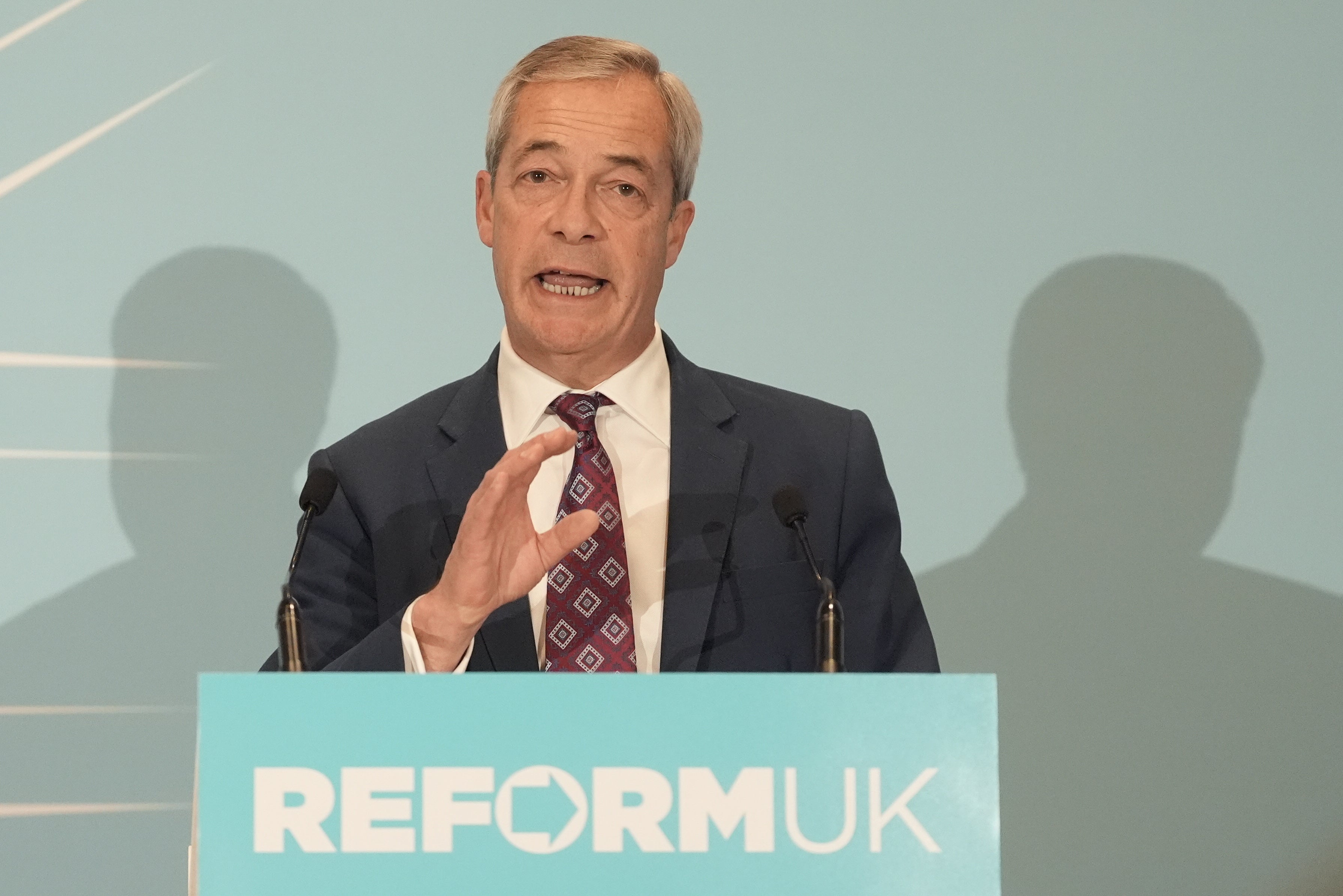
Nigel Farage denounced what he called “a false story” in the Financial Times on Tuesday night. It reported that he had told donors that he “expects a deal or merger between his Reform UK party and the Conservatives ahead of the next general election”.
The story suggested two possibilities: one is a pre-election pact by which Reform and the Tories would stand down in each other’s favour in constituencies; the other is a full merger, in which Reform would be the dominant force. The article also suggested that a different donor had suggested that a merger was “inevitable” but that it “might take some time”, which could be after the next election.
What did Farage say?
Farage said in a post on X: “The idea I’d work with them is ludicrous.” He said that “after 14 years of dishonesty and lies”, the Tories “should never be forgiven... They betrayed my trust in 2019 and we will ensure they cease to be a national party in May.”
This was a reference to the unilateral arrangement of the 2019 election, when Farage stood down candidates for the Brexit Party – as Reform was then known – in Tory target seats in order to avoid splitting the pro-Brexit vote.
Boris Johnson then “betrayed” him by negotiating what he thought was a bad Brexit deal and by allowing immigration from outside the EU to get “out of control”.
But Farage was also quoted by the FT in its original report as saying that “sometimes people hear what they want to”. This is a more convincing denial, suggesting that he may have allowed a potential donor to gain the impression that he agreed with them that Reform and the Tories ought to work together.
A deal is unlikely though, isn’t it?
A pre-election deal is extremely unlikely. It is simply not in Farage’s interest to agree to it. He would lose more than he gained from it. There are many Reform voters who believe, as he said, that the Tories should “never be forgiven”, and a deal with the Tories risks driving them away.
The same calculation applies to accepting Tory defectors. While Farage wants some high-profile defections, which help give the impression that politics is moving towards him, he does not want Reform to look like the discredited Tories in new packaging.
That is why Reform sources told journalists that this week’s defectors – Tory former MPs Jonathan Gullis, Lia Nici and Chris Green – would not get “preferential treatment” for selection as Reform candidates in winnable seats.
A pre-election pact is equally against the interest of the Tory party. While its voters may be prepared to switch to Reform to keep Labour out, in a way that Reform voters are not prepared to do in return, a pact would be a public admission that Reform was the senior partner. It could only be a prelude to a full takeover of the Tory party by Reform after the election.
So it is good news for Keir Starmer?
Not really. If a pre-election pact would be ineffective in “uniting the right”, it does not make much difference to Labour whether there is one or not. It is quite possible that, if Farage continues to look as if he will be prime minister, the leading figures of the right will coalesce around him anyway and the Tory party will shrink to irrelevance.
Hence the significance of today’s report in The Times that “a senior Reform source” is dangling the prospect of being chancellor in a Reform government in front of Robert Jenrick, who was defeated by Kemi Badenoch for the Tory leadership last year.
“Robert clearly wants to” join forces at some point before the next election, the source said, “and he’d put himself in a strong position to go to the Treasury as chancellor if he did”.
Will Reform and the Tories unite in the end?
If they do, it may be more the result of defections than a formal merger. It could be that Reform simply replaces the Tory party after the next election, with many of the same people in it but under a different leader. Or, if the Tories can retain enough seats to have some bargaining power, especially in a hung parliament, they may be able to negotiate a merger.
The one thing that could complicate that might be if Reform stands by its support for proportional representation. Alex Wilson, the leader of Reform on the London Assembly, said last week that his personal preference was for a Reform government, if elected, to stick with its policy on changing the voting system.
So perhaps the twist in the story will be that Reform saves the Tory party in the end.
Join our commenting forum
Join thought-provoking conversations, follow other Independent readers and see their replies
Comments
Bookmark popover
Removed from bookmarks