Do I have to provide evidence that I can’t wear a mask?
Simon Calder answers your questions on face coverings, flight demand and booking policies


Q I am due to fly on Tui soon, but I cannot wear a face covering for medical reasons. In order for me to fly, Tui says I must show a letter from my doctor explaining why I cannot wear a mask in a plane. But my GP says there is no requirement for this. She says the traveller’s word should be enough, and has refused to sign a letter. I am going around in circles. I don’t want to fly if I must wear a mask.
Name supplied
A The UK government says that a face covering must be worn by passengers in all transport situations (eg airports and airlines) unless there is a legitimate reason not to wear one.
Possible reasons why a mask need not be worn include “a physical or mental illness or impairment, or a disability that means you cannot put on, wear or remove a face covering”, or circumstances in which “putting on, wearing or removing a face covering would cause you severe distress”.
The Department for Transport says: “If you rely on an exemption, transport staff should not ordinarily ask for evidence.” And in its online question and answers, Tui says: “If you have a medical condition that means you shouldn’t wear a mask, you won’t need to.”
I raised your case directly with the company, and was told: “We require a medical note from the passenger explaining this. The reader will therefore have to request that their doctor explain why they medically can’t wear one as a condition of carriage on Tui Airways.”
This seems to be an impasse. The airline appears entitled to stipulate that you must provide written evidence of your condition, while your GP can reasonably argue that she is following government advice that your word should be sufficient. Quite reasonably, she has more pressing matters.
It may be that (for example) a prescription for asthma-related treatment could suffice, but I fear that to be sure you will need to offer to pay for a private certificate – and, if your GP surgery is still unable to help, go to a privately run clinic for a suitable letter. I am sorry this is so difficult, and I wish your word were enough.

Q Do you have any idea why easyJet isn’t flying Gatwick to Vienna until October?
Clive G
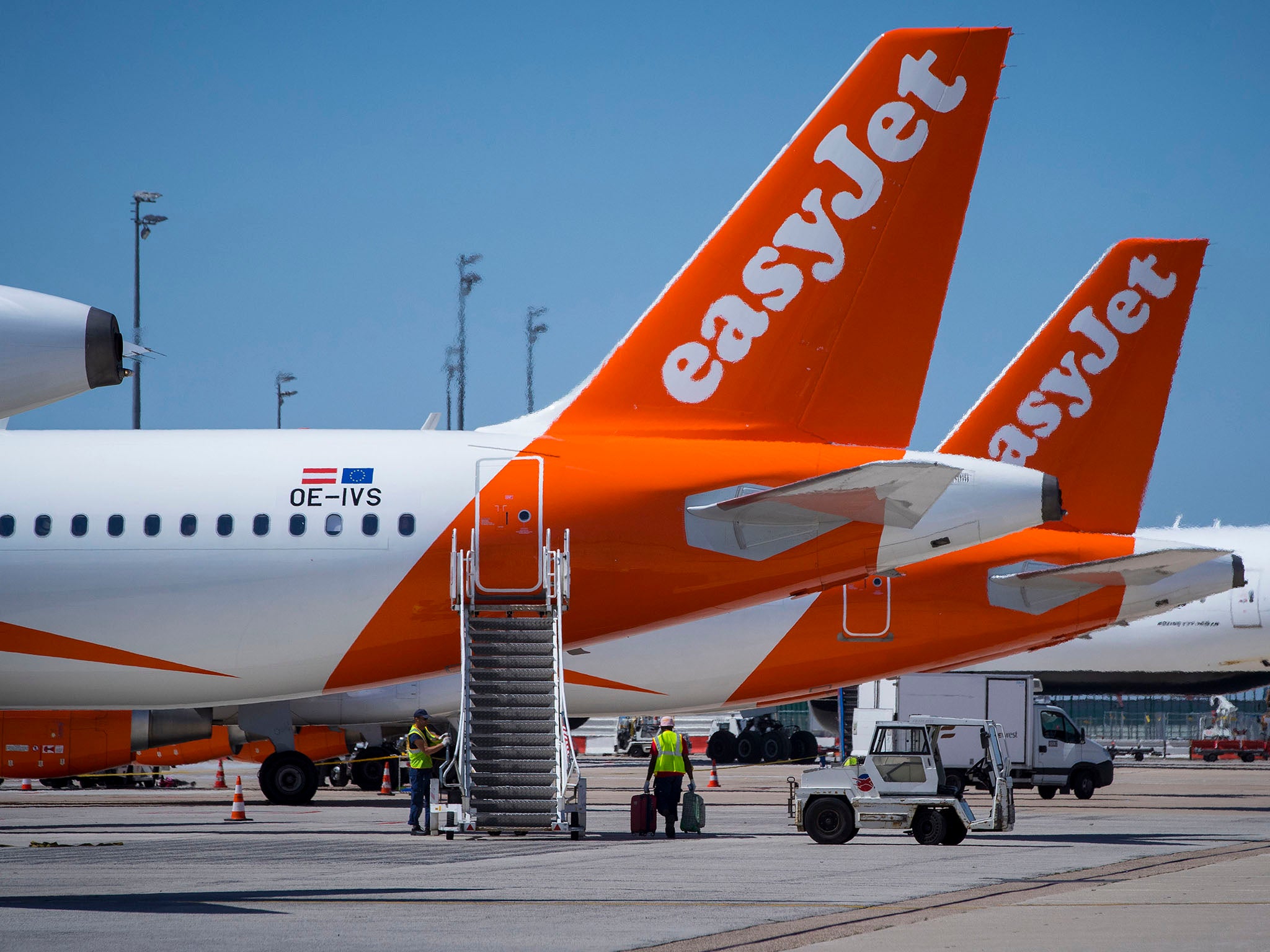
A Presumably because the airline does not feel it has any chance of making money, or merely breaking even, on the route before then. Competition is intense and demand is faltering. Like other carriers, easyJet is not short of aircraft or crew. But it is short of passengers. Some of the fares I am seeing on the routes easyJet is serving are preposterously low.
Take easyJet’s busiest domestic route, connecting Edinburgh with London. On Thursday 20 August – normally a peak day of the week, in what should be at the height of the festival season in the Scottish capital – you would struggle to pay more than £30 one way. That is not the basis for a profitable operation.
While easyJet is doing well on some Mediterranean links, the mandatory two weeks of quarantine for travellers coming back from Spain has caused huge problems for the airline. Britain’s biggest budget airline really does not want to invest a fortune in staffing, fuel, aircraft depreciation and air-navigation charges on a route such as Gatwick-Vienna.
The link to the Austrian capital is principally a business route, and easyJet hopes that by restoring the link on the first day of the winter season (Sunday 25 October) it will begin to tap into a reviving market. However, looking at the fares for November and December, the carrier faces serious challenges: under £25 is the order of the day.
All airlines will continue to be tentative about the operations they restart, since they have haemorrhaged cash for the past five months. But if you need to travel between London and Vienna before late October, Wizz Air from Luton and Ryanair from Stansted have plenty of low-fare options – together with more expensive tickets from Heathrow on Austrian Airlines.
Q Will either easyJet or Ryanair sell three seats together for two people? I am quite prepared to pay for three if it can be guaranteed that the extra one will not be sold again and filled by them?
I cannot find a way to get an answer from them.
Roger D
A I imagine the reason you can’t get an answer from the airlines is that they don’t particularly want to share it with you.
You can increase the odds of having three seats between two very sharply in your favour as follows.
Book three tickets, for you, your travelling companion and a third, non-travelling person. It will make life slightly easier if the non-traveller is a real person rather than, eg, “Mouse/Mickey/Mr, because you will need to input some passport data. But declare them to be an under-16, because that way you avoid paying Air Passenger Duty of £13 on the empty seat.
Check in online as normal. For Ryanair you will need to pay extra to sit together (and again you get a discount for a child). You could pay easyJet to ensure you’re occupying a row of three seats, but personally I would trust in the airline’s seat-assignment algorithm – I have found it is very good at assigning groups together.
On the day of the flight, the two of you turn up. You could carry the third boarding pass to prove your “entitlement” but it will actually make no difference. (For the avoidance of doubt, you cannot use their cabin baggage allowance in addition to your own.)
All being well, you will enjoy the extra space and, perhaps, the reassurance of having three seats between the two of you. But there is no absolute guarantee.
As you may know, easyJet traditionally overbooks busy flights – selling more tickets than there are seats on board. The airline is betting that there will be enough “no-shows” to allow everyone to fly. Your imaginary friend will be classed as a no-show, and their seat could theoretically be reassigned to an “overbookee”. There is nothing you can do about this.
And while Ryanair does not overbook, suppose you are in seats 21A, B and C but there is a problem with a seat belt in 21D. For safety reasons, the cabin crew could assign that person to your empty seat.
If it is any comfort, none of the dozen of flights I have been on since lockdown ended has been more than two-thirds full, which means that finding three seats for each group of two people has been easy. But if you are really concerned about not sitting next to a stranger, perhaps air travel is not for you right now.
Email your question to s@hols.tv or tweet @simoncalder
Join our commenting forum
Join thought-provoking conversations, follow other Independent readers and see their replies
Comments
Bookmark popover
Removed from bookmarks