Johnson’s Treasury power grab gives him the whip hand – but only in the short term
Power struggles between the Treasury and Downing Street are nothing new. In the 1960s, Harold Wilson set up a Department of Economic Affairs as a rival powerbase, but it was outgunned as the Treasury fought back. It always does, writes Andrew Grice

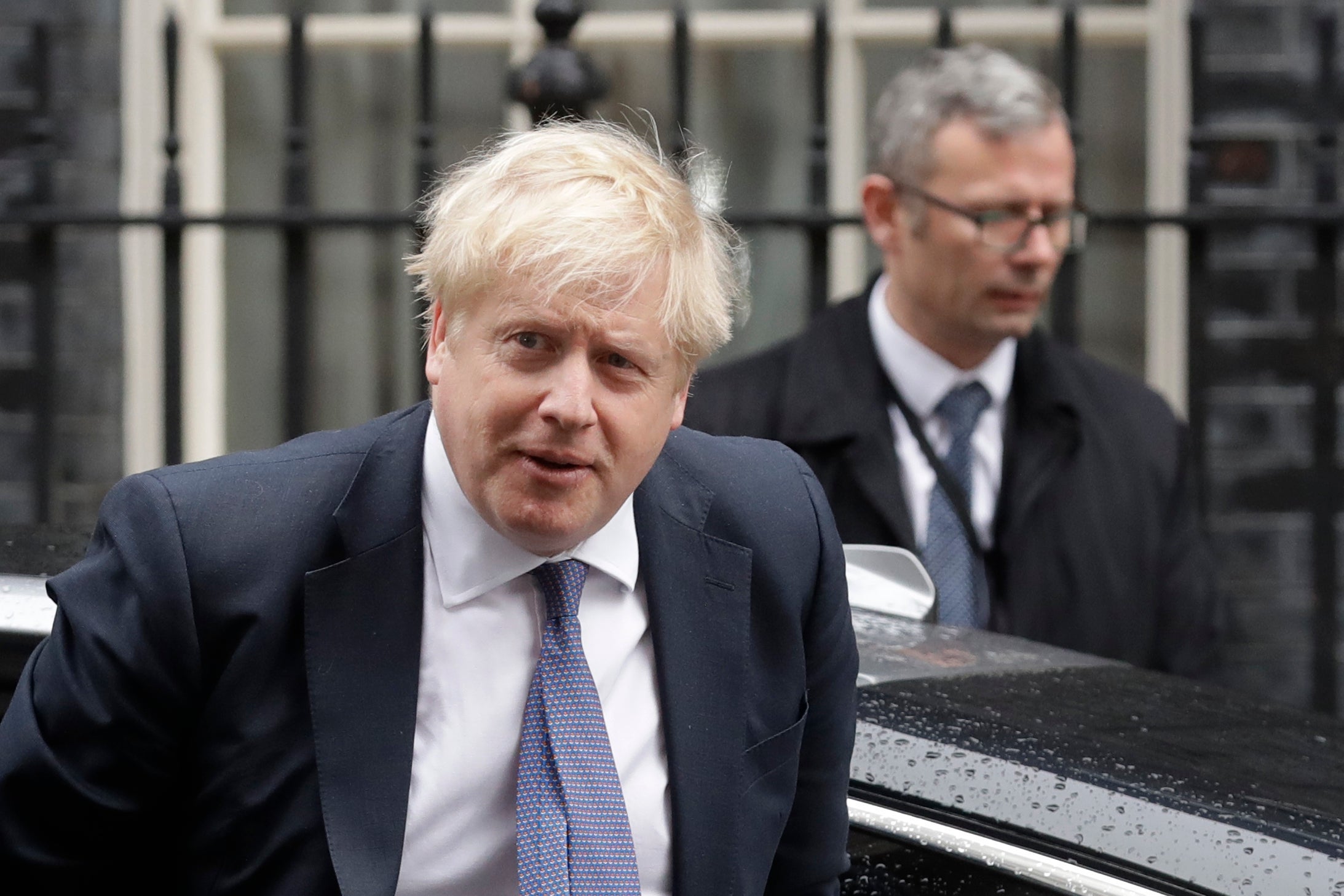
It was hardly an advert for strong cabinet government. When his new ministerial team met for the first time on Friday, Boris Johnson got them to recite his key election pledges in front of the TV cameras that were briefly allowed into the cabinet room.
The muppets – sorry, I mean the ministers – played along nervously. In the short term, Johnson has got the cabinet of loyalists he wanted. They know he will not tolerate any dissent. Although his allies say the most important ministerial qualities will be competence and delivery, we now know that discipline is a higher priority.
One senior Tory told me: “When he became PM, it was about loyalty on Brexit. Now it’s all about loyalty to him.” This rings true, since Brexiteers Andrea Leadsom, Theresa Villiers, Esther McVey and Geoffrey Cox were among the casualties in Thursday’s reshuffle.
Naturally, cabinet ministers reject as a caricature the idea they are prime ministerial poodles. They describe the rules as follows: fight your corner in private, but be scrupulously loyal in public.
Friends of Rishi Sunak, spectacularly promoted to chancellor after the surprise resignation of his boss Sajid Javid, insist he will be no pushover. But he has allowed the power grab by 10 Downing Street that Javid refused to swallow – a joint No 10-11 economic unit which will dilute the Treasury’s influence.
Despite talk that Sunak will have a strong hand because Johnson cannot afford to lose another chancellor, the PM will hold the whip hand, at least in the short term. The Budget due next month will bear Johnson’s imprint more than it would have done if Javid had agreed to fire his special advisers in order to keep his job.
Traditionally, chancellors propose tax rises to balance the nation’s books but meet opposition from prime ministers, who are nervous about a backlash from voters. I’m told the roles were reversed in the pre-Budget tension between Javid and Johnson. The chancellor jealously guarded the fiscal rules he persuaded a reluctant Johnson to accept before December’s election. They include not borrowing for day-to-day spending and clearing the annual deficit within three years.
The election result left Johnson and his most influential adviser Dominic Cummings itching to spend more, so they could “level up” the poorest regions – and, crucially, hold on to the Tories’ new working class voters.
They probably regretted signing off Javid’s rules. With borrowing constrained by them, No 10 eyes turned to possible tax rises that would not breach the Tory manifesto pledge not to increase the rates of income tax, national insurance and VAT. That’s why the idea of a mansion tax or higher council tax bands for the most expensive properties entered the Budget discussions.
Sunak, despite a reputation as a fiscal hawk like Javid, will not find it easy to resist No 10’s demands to spend, tax and borrow more. Although no decisions have been taken yet, tax rises for the wealthy are more likely than they were before Javid’s departure. They would be a sea change for the Conservatives, and worry many of their MPs. When Nick Clegg proposed a mansion tax of 1 per cent on properties worth £2m or more during the Lib-Con coalition, David Cameron told him his Tory donors would never wear it.
A shake-up of council tax could achieve the same goal for Johnson. A Tory government taxing the rich to channel resources to the poorest regions would be revolutionary, and help Johnson cement his new support.
Power struggles between the Treasury and Downing Street are nothing new. In the 1960s, the Labour prime minister Harold Wilson set up a Department of Economic Affairs as a rival powerbase, but it was outgunned as the Treasury fought back. It always does.
Tony Blair, who once pleaded with Gordon Brown to “give us a clue” what was in his imminent Budget, drew up plans to clip the Treasury’s wings. He wanted to switch public spending to the Cabinet Office, in effect part of 10 Downing Street’s operation. Blair vowed to cut the Treasury down to size after the 2005 election, but needed Brown’s support to win it. Afterwards, the chancellor refused to implement the change and Blair backed off.
After this week’s No 10 power grab, the Treasury will keep its head down, but over time will again fight back. Its officials have very close links with their counterparts in every Whitehall department. The Treasury will find ways to question and if necessary block bad ideas coming out of No 10 and departments. Such creative tension can be good for government. It will re-emerge, despite Johnson’s desire to squash all dissent.
The PM will discover he cannot run an entire government from Downing Street. When Theresa May tried to, No 10 became swamped, creating a logjam of decisions. Declaring war on the Whitehall machine is counter-productive; Johnson will need its support when times get tough, as they will.
An over-centralised operation will also mean Team Johnson can no longer point the finger at ministers or their departments when things go wrong. As one Tory MP put it: “No 10 will have no one else to blame.”
Join our commenting forum
Join thought-provoking conversations, follow other Independent readers and see their replies
Comments
Bookmark popover
Removed from bookmarks