No wonder Corbyn looked horrified – this is the Budget he wanted to deliver
Often the Conservatives just steal the best lines, and carry on with policies that are biased against the poor, writes John Rentoul. But that is where the Johnson experiment gets interesting

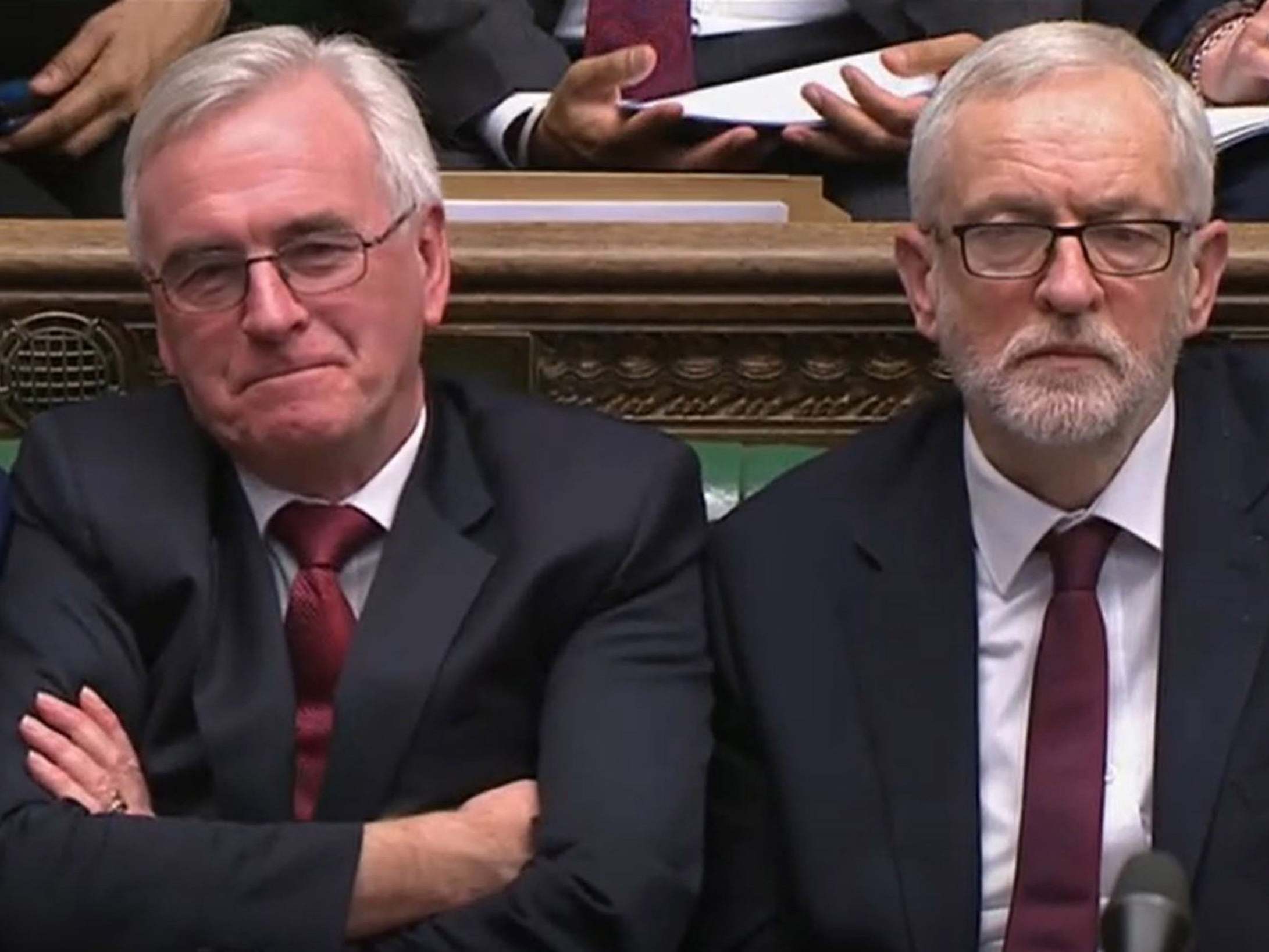
The party of austerity lost the election in December. So the chancellor of the anti-austerity party boldly declared: “This is the first Budget of the new government” – and announced a £30bn fiscal boost to mark this change of direction.
Jeremy Corbyn went through the motions, saying that the Conservatives were very bad, and that some poor chap on universal credit had starved to death, but it was as if he was fighting the election before last – which, given his relative performance at those elections, is understandable.
But his hard-hearted pro-austerity opponents are nowhere to be seen. Theresa May watches harmlessly from the backbenches. David Cameron and George Osborne are no longer here. Only a few weeks ago, the last of the fiscally responsible Tories, Sajid Javid, was despatched to the re-education camp.
In their place, Corbyn found himself facing people who called themselves Tories, but who advocated the same policies as him. “We have just had an election where people voted for change,” Rishi Sunak said. “Change in our economy, change in our public services, change in the cost of living, change in our economic geography.”
No wonder Corbyn looked puzzled. It was as if he were sitting where the Tories ought to be, listening to John McDonnell deliver the Labour government’s first Budget.
Rishi McDonnell was promising to spend whatever it took to cope with the coronavirus outbreak. John Sunak, speaking for “the people’s party”, “the workers’ party”, “the party of public services”, was announcing a huge increase in public spending, not just to offset the immediate effects of the virus, but to level up regional inequality, improve public services and mitigate climate change.
Of course, some of this is the rhetorical trick known to Tory chancellors through the ages. I remember Osborne claiming we were all in it together, Hammond claiming the mantle of equality, May claiming to have ended austerity.
The Conservatives are serious about the acquisition and retention of power, and they will do what it takes to do that in a democracy. If that means stealing their opponents’ best tunes, they will do it without shame or embarrassment. (There is a clue here as to why Tony Blair was so successful at winning elections from the other side, but it is not one spotted by Corbyn.)
Often, the Conservatives just steal the best lines, and carry on with policies that are biased against the poor. But sometimes they need to do more than that to win elections, and that is where the Boris Johnson experiment gets interesting.
There is no doubt that the pendulum of public opinion has swung in favour of higher public spending. The pendulum in favour of higher taxes to pay for it may be swinging some way behind, but we are certainly in a long phase where the demand for tax cuts is weaker than it has been.

That is why “this is the first Budget of the new government”, and why Johnson portrays himself as a sharp break from the nine years that went before. The previous government, he and Sunak imply, was one of hard-nosed Victorian accountants, obsessed with balancing the books, and to make matters worse, they were the secret agents of the European superstate, intent on undermining the will of the people to leave the EU.
Hence the lines in Sunak’s speech about getting Brexit done and spending the money that we would otherwise be sending to Brussels on “the people’s priorities”.
Hence the even greater inner turmoil in Corbyn, as he rose to reply. Here was a government with an ambitious programme of public spending, intent on building socialism in one country, an object that had been his aim all his political life – before he became leader of a party totally committed to EU membership.
Join our commenting forum
Join thought-provoking conversations, follow other Independent readers and see their replies
Comments
Bookmark popover
Removed from bookmarks