Protecting the vulnerable is important during this coronavirus crisis – but restricting walking is just a bad idea
The police have been proactive in monitoring rural jaunts, says Janet Street-Porter, but is it really the best use of their time?

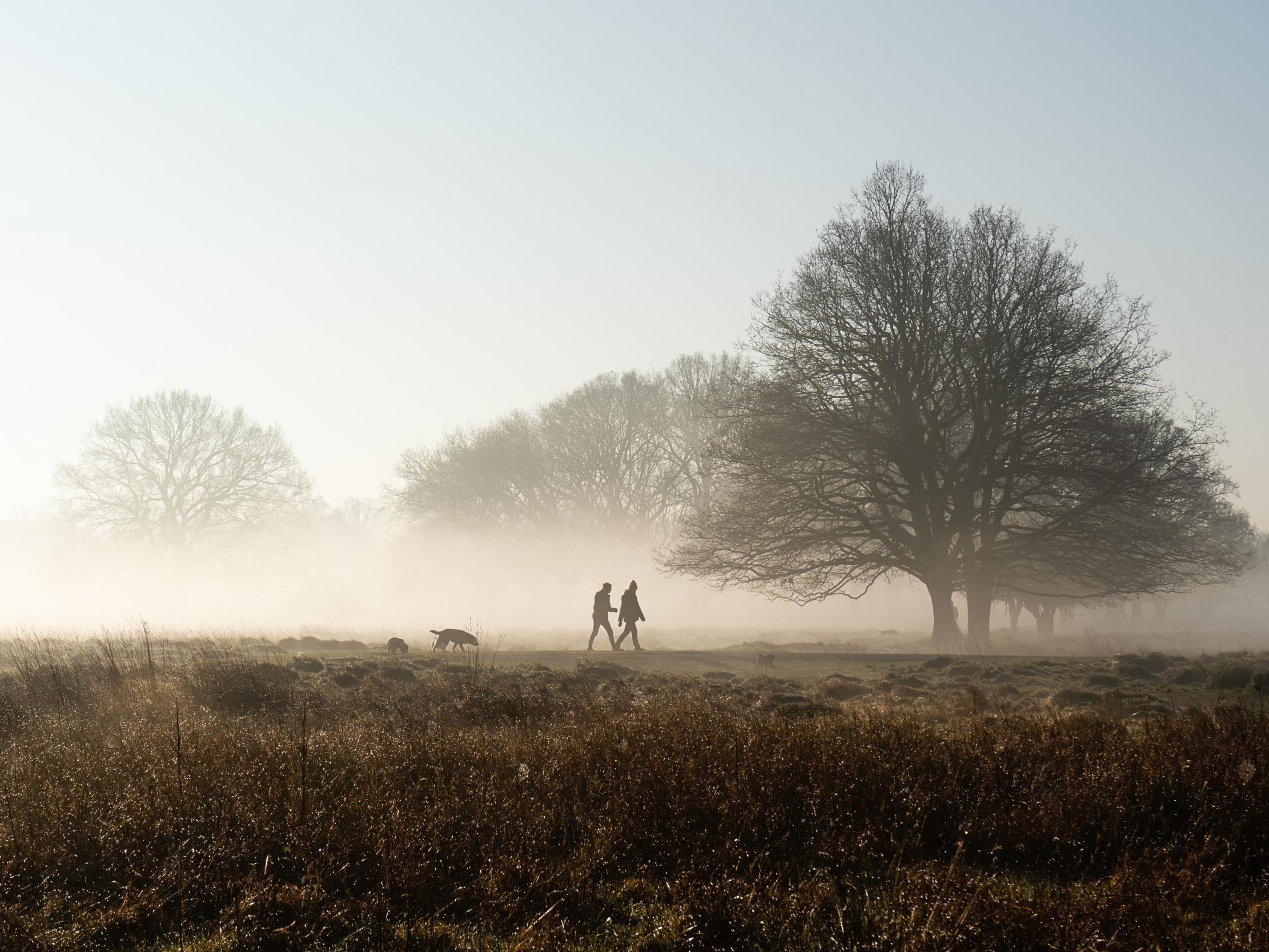
As a former president of The Ramblers charity – who has walked the length and breadth of the UK for several TV series (and pleasure) – the removal of my right to roam in the name of “safety” is a step too far.
With sunny spring weather predicted this weekend, walking is a simple pleasure, but one that’s become a battleground in the current climate of catastrophe.
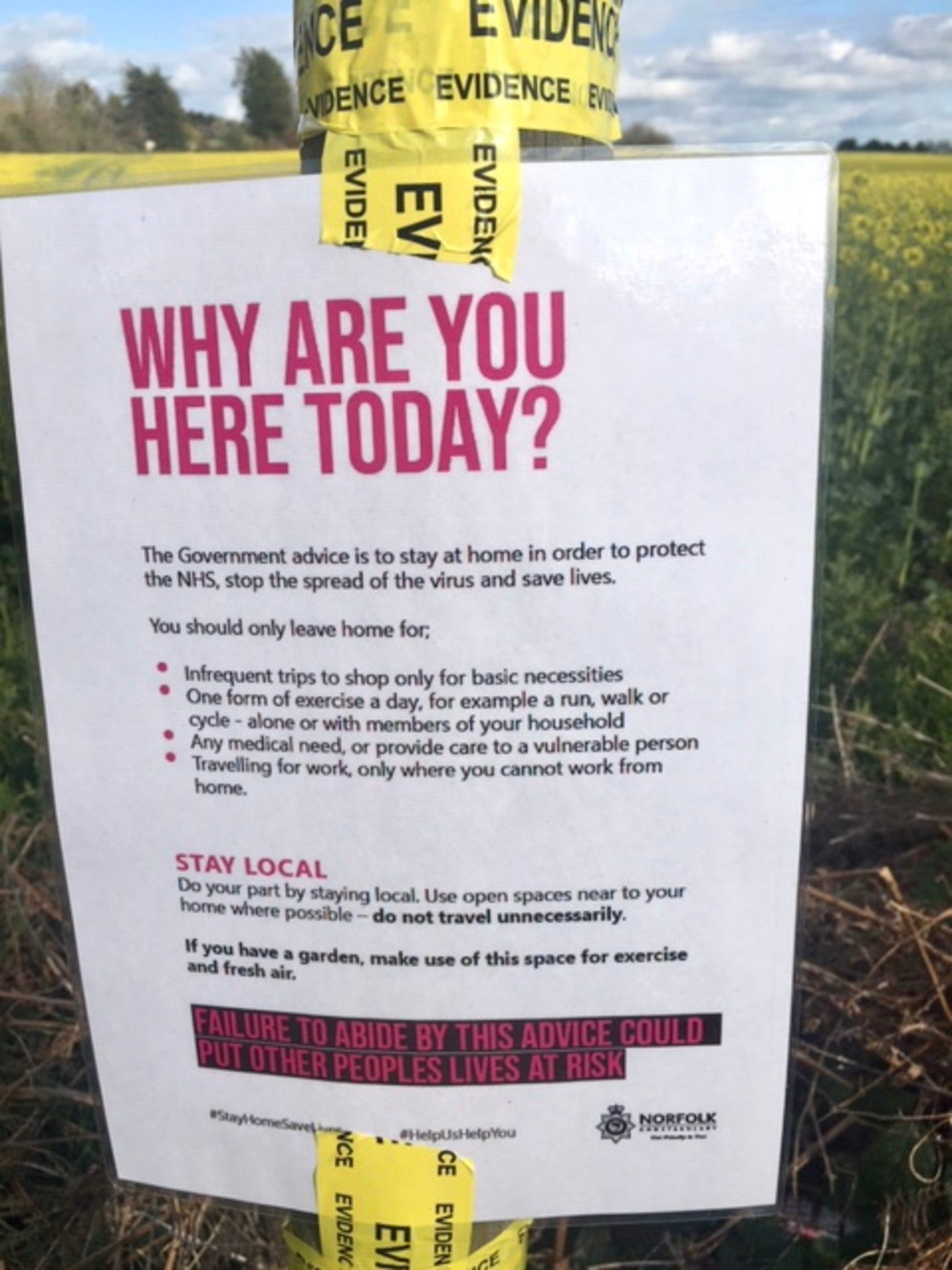
Yesterday, I went to the woods near my house in Norfolk – where I’ve only see four hikers at most during an hour long stroll – and found gates and fence posts were festooned with ugly yellow plastic laminated signs attached with plastic tape marked “evidence” asking “why are you here today?”
The local police have decided to interpret government guidelines (which are only guidelines, not law, according to respected legal minds) about where we can walk. And what about the environment? There’s no guarantee this plastic detritus will not be forgotten about and left to pollute the pristine hedgerows long after the virus has subsided.
The signs tell me I should only leave home for “infrequent trips to shops” or “one form of exercise a day” etc… adding the mantra “stay local”. What is local? In rural areas, a trip to the nearest shop might involve a drive of several miles, and why shouldn’t you stop on the way there or back to take a healthy stroll with the dog?
Is this really an activity the police should be monitoring? They could be ferrying meals to the isolated, taking NHS workers to tests, but no, they have decided to target harmless walkers.
Professor Hendrick Streeck is a leading virologist heading the response to the pandemic in one of the worse hit areas of Germany, Heinsberg. He and his team are using the area to study the virus further and learn how it works. Initial studies of infected homes have suggested that Covid-19 may not be as easily transmitted by touching surfaces as potentially thought – with the team having found no instances of live virus on things like door knobs or animal fur.
Streeck also told German television that there have been “no proven infections [in the area] while shopping or at the hairdresser’”. However, there is a need for further study before the World Health Organisation or any other government even thinks about changing their current advice.
In this country, conflicting scientific advice has meant that fear and confusion reigns supreme. The population has divided into the passive and the angry – those prepared to follow anything spouted from Downing Street, where the leading politicians and experts issuing these guidelines plainly didn’t bother to follow them, as they all got sick – to the increasingly fed up, who want more proof that walking alone or two metres from anyone in a green space or rural area is harmful or life-threatening. If you disagree with official advice – as I do – you will be monstered on social media. Brainwashing is underway, along with untruths and myths.
The police are all too eager to leap into action to “protect us” – but is it their business whether we buy Easter eggs, or get in the car to walk? Crime has fallen 40 per cent since lockdown so have they nothing better to do? The virus is being used to limit our basic rights – and I am amazed at how many of the public are being so docile. Unlike the time of foot-and-mouth disease, footpaths are not closed. In fact, now is the time they should be open to all, because walking is one of life’s great mental and physical healers.
The government says people will die unless they stay at home, and now, because the weather shows signs of improving, we are being threatened with more serious lockdown. The police have taken to stopping people in their cars, asking where they are going and why? What is that achieving, other than enraging people already tiring of close confinement?
There’s a lack of coherent policy – we can’t drive but Eurostar is still running and flights are landing at Heathrow and other airports. Trains are running, but because we are told that only essential journeys should be taken, they are completely empty all day long. Why can’t someone board a rural train to go shopping at their local town, if they sit two metres from anyone else?
If the police aren’t doing enough to foster this uncomfortable feeling of social control, our smart phones are set to erode our personal freedoms even further. We have already given tech companies so much of our personal information, from shopping habits to our exact location, utilising smart phones to monitor the spread of Covid-19 is a no-brainer. There has been talk of Google and other companies potentially handing over smartphone data to the government to monitor whether we are staying at home or not.
It would be easy to track whether we left our compounds more than once a day – and what then? Would the police turn up on our doorsteps and issue a fine through the letterbox? BT is already giving the government “limited” anonymous records of mobile phone users, claiming it’s to show “generalised patterns in the movement of people to help with policy planning”. O2 has been discussing handing over data to the government to help track the spread of the virus. The NHS is said to be planning an app using Bluetooth to record details of our movements in order to work out whether we have been near anyone with the virus – adding to the erosion of our liberty in the name of “safety”.
Smart phones add so much to our lives, from entertainment to enabling easy social networking, so valuable in times of isolation. But they are also going to be the tools that limit our freedoms even further. They are not our friends. Please note, the people making the most money out of the current crisis are all the tech companies – from Zoom to Facebook, Amazon and Google – where would we be without them? It’s a digital boom time.
Meanwhile, do not restrict our right to roam – sensibly, of course.
Join our commenting forum
Join thought-provoking conversations, follow other Independent readers and see their replies
Comments
Bookmark popover
Removed from bookmarks