The local elections will disappoint those hoping they will end Boris Johnson’s career
John Rentoul previews the ‘mid-term’ elections next Thursday

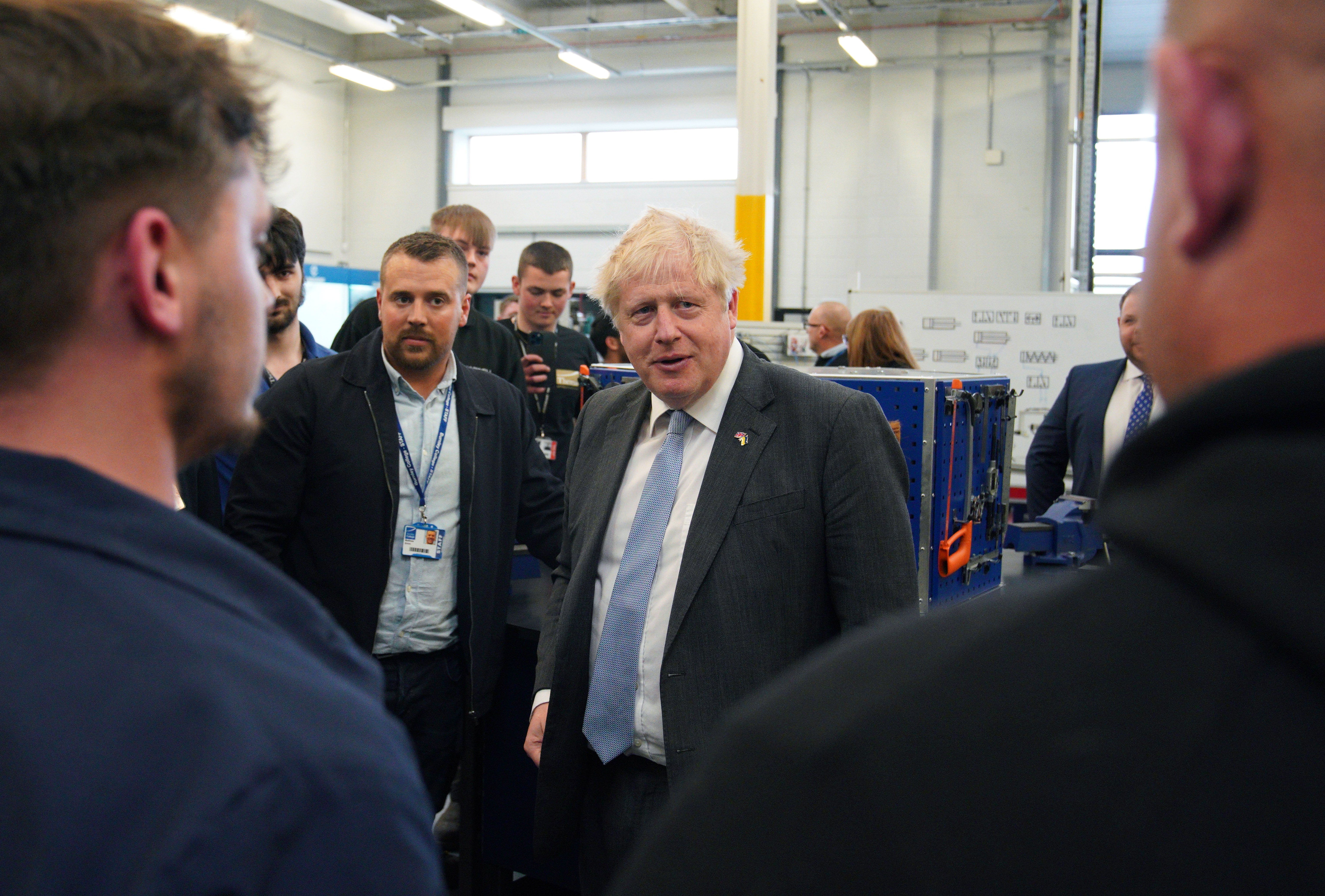
Labour is likely to “win” the local elections next week – but not by enough to threaten Boris Johnson’s hold on office. For most of this year, a disastrous showing by the Conservatives in these elections has been talked about, not least by Tory MPs themselves, as the moment that they might launch an attempt to force out the prime minister.
As the day approaches, however, it looks as if the results won’t be bad enough to induce the necessary panic in the Tory party. There will be claims on Friday that the Conservatives have lost councils they have controlled for decades, or that they have lost hundreds of council seats, or that Labour has failed to gain ground in places they need to win.
But what really matters is the projected national share of the vote. In the years before the last two changes of the national party of government, in 1997 and 2010, the opposition opened up huge leads in share of the vote in local elections. Labour was 22 points ahead in 1995, and the Conservatives were 19 points ahead in 2008.
Labour at the moment is about 7 points ahead in national opinion polls, and even if it performs better than this in the local election vote share – and it tends to underperform in local elections – it is not going to be in the “impending change of government” zone.
All the same, we can expect a concerted effort by all parties to talk up successes. Labour is likely to gain control of several councils, including Wandsworth in south London, which it hasn’t controlled since 1978. It may even gain Barnet in north London, which would be a significant indicator of Keir Starmer’s success in rebuilding trust with Jewish voters after the Jeremy Corbyn years.
Also in London, expect a Labour data geek to count up the votes in Boris Johnson’s Uxbridge constituency and proclaim him the loser.
In Scotland, where the preferential voting system means fewer seats and councils are likely to change hands, Labour will be hoping to come second in the share of the vote, pushing the Tories into third place, which will allow them to claim to be making progress without seriously challenging the dominance of the Scottish National Party (SNP).
However, the Conservatives are bound to make some unexpected gains that will allow them to claim that Starmer is stalling. Labour are devoting considerable resources to defending Sunderland council, for example, which is a remarkable indicator of the continuing Brexit effect.
The changing pattern of minor parties is likely to throw up some surprises. In northern England the success of independents and hyper-local parties is eating into the traditional Labour vote, and sometimes a gateway to voting Tory. In the south, the Greens are increasingly rivalling the Liberal Democrats as the parties of protest against local one-party states. Although the Lib Dems should be able to claim some advances from the depths of the coalition years and the “revoke Brexit” disaster of 2019, the Greens are increasingly becoming the fashionable anti-establishment vote.
The elections to the Northern Ireland assembly on the same day could be significant for the future of the whole of the UK in a different way. But the local elections in England, Scotland and Wales will also matter beyond their effect on the lives of local residents. The most important thing, amid all the spin, the hype and the unexpected results, is the gap between Labour and the Conservatives in the estimates of how the whole of Great Britain would have voted if there had been elections everywhere (there are many parts of mainly rural England that won’t be voting on Thursday).
That gap is unlikely to be big enough to convince Tory MPs that they are doomed if they keep Johnson as leader. That doesn’t mean that the prime minister ought to be safe. James Johnson, who was Theresa May’s pollster, said this week that a reasonably good showing for the Conservatives in the local elections would be the worst result for them because it would mean the prime minister stays on.
It is a pleasingly paradoxical line of analysis, but it presupposes that by keeping Boris Johnson as leader the Tories “risk sleepwalking to electoral defeat”. In fact, if the Tories do unexpectedly well, that may be evidence that their leader isn’t yet the toxic vote-loser that James Johnson believes he is.
In any case, there are still two years until the likely date of a general election, and given some of the reversals in politics over the past two years Boris Johnson may recover his popularity and lose it again more than once before then. Which is why the message for Tory MPs from the local elections is likely to be: Don’t panic – yet.
Join our commenting forum
Join thought-provoking conversations, follow other Independent readers and see their replies
Comments
Bookmark popover
Removed from bookmarks