‘Whatever it takes’ should not just be for the NHS – it’s time we rewarded care workers equally, too
The NHS may be getting all it asks for, but it has taken almost two months for the plight of the fragmented care services and the care homes to command attention at all, writes Mary Dejevsky

First there was the testing and equipment panic. And now the social care panic. One by one, the coronavirus emergency is exposing the inadequacies of our supposedly envy-of-the-world healthcare: its lack of capacity; its hopeless procurement and distribution system – described by none other than the head of the army, General Sir Nick Carter, as “the single greatest logistic challenge” he had faced in all his 40 years of service – and the twilight world that is the provision of care for those people with long-term needs.
Could it be that the reality of poorly paid carers, dashing from one home to another, last in line for protective clothing and excluded from the shopping privileges available to NHS staff – let alone from their job security, career progression and pensions – will finally be seen for the disgrace that it is?
More to the point, can we hope that it will not just be seen as a disgrace, but also recognised as a situation so intolerable and so urgent that it will actually be addressed forthwith?
There is no advanced country in the world I can think of where what we call “social care” is as dysfunctional and inequitable as it is in England and Wales. (Scotland is different, but not beyond reproach.) Even in the United States, everyone knows the score – you insure or you pay or you default, and the state in the shape of Medicare foots at least some of the bills once you reach 65.
Here, it is worse, because no one really knows the score. Many employees in the care sector may be exemplary in their empathy and their skills. But what passes for a system is a disaster. Almost anyone, and I include myself, who has brushed up against the care “system” in whatever way in recent years, soon finds themselves at their wit’s end, frustrated and flabbergasted that it is possible for such neglect to persist in what most people regard (still) as a reasonably well-ordered country with a reasonably reliable safety net. For those needing long-term care, there is no such thing.
To add insult to injury, I even heard it remarked (by a politician) recently that one of the reasons the social care system had perhaps been left in this parlous condition was partly “our” fault – for not doing enough to make our voices heard in the upper reaches of power. As an MP, he found it astonishing that he did not receive more representations from constituents about care.
To which there is an answer that will be obvious to anyone who actually does any caring – paid or unpaid – and it is this: what do you think we do all day? The paid carers are trying to scrabble together a patchwork living without the basics that belong to a secure job, while for the unpaid carers, it is about being there 24/7. Neither have enough hours in their day to do what they do, let alone start organising and lobbying, too. Whatever government agency evinced happy surprise a few years ago at the number of carers who were using online services in the nocturnal hours warranted a similar response. Just think for a second; why might that be?
Compared with the tribulations of many, my own experience of the care system – on behalf of my late husband, who had Parkinson’s – was limited in time to a couple of years, and still more limited in scope. There was simply not much the so-called service had to offer us (as became clearer the more I tried to navigate the system). The problems I glimpsed, though, go across the board.
And the most perplexing and capricious (because a postcode lottery operates as well) is the border, no, the wall, that stands between NHS care and local authority-administered social care. From the user’s perspective, NHS care means it is “free at the point of use”; “social care” means that it is paid for (ie means-tested). From the perspective of those who work there, the NHS comes with all the pluses (and a few minuses) of the public sector; social care – usually contracted out by local authorities – is the private sector at its worst: low-paid, insecure and fragmented. The two systems are quite separate.
This is how you get people stuck in hospital while the local authority decides what care “package” can be offered and who pays, while the NHS decides whether discharge is “safe”. It is also how you get to the distinction of cancer care – free; dementia care – paid for (at at least £600 a week). Chronic illnesses, Parkinson’s, MS, etc, tend to be treated more like dementia. And it is also how you get to the point that distressed partners are calling in to night-time phone-ins in tears, because all their salary is being spent on means-tested care. How can this be, they ask, in a country with a socialised health system?

There is only one solution to any of this, and it is real integration of the two systems. But it is almost 10 years now since David Cameron – who was familiar with the contradictions because of his disabled son, Ivan – pledged to do just that. It is 10 years, too, since Cameron’s coalition government commissioned the economist, Andrew Dilnot, to report on the funding of “social care” – a commission that reported in almost record time a year later.
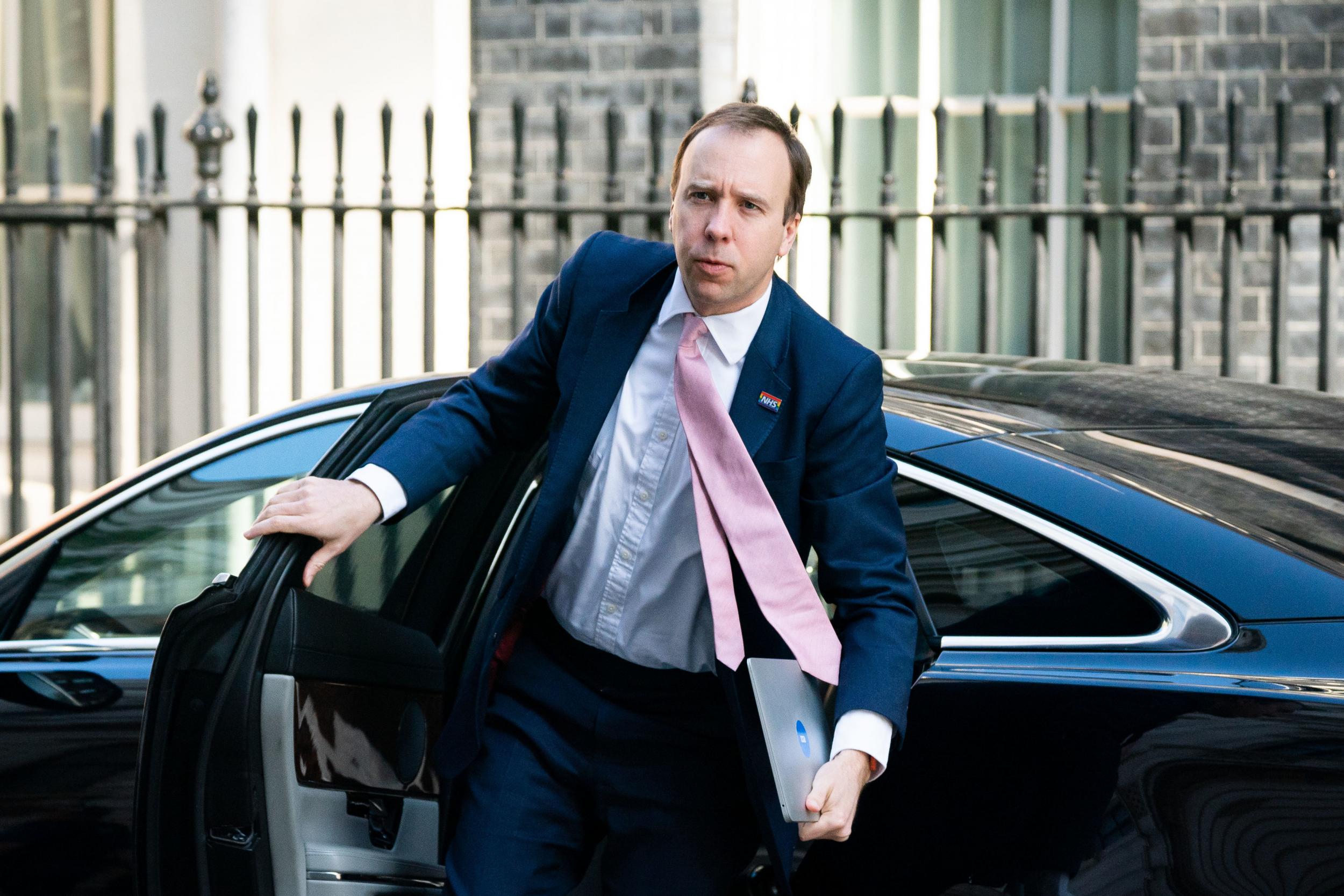
Since then, there have been essentially only two advances. Andrew Dilnot has received a knighthood for his trouble, and the Department of Health has been renamed the Department of Health and Social Care. Dilnot’s actual recommendations – not perfect, but an improvement – remain unimplemented. Oh yes, and Theresa May lost her majority at the 2017 election in part because she offered an ill-judged adaptation of the Dilnot report. And the current health secretary offered care workers a badge, like NHS staff have, but saying “care”.
Meanwhile “integration” has become both mantra and panacea, without ever coming to pass. Nor will it, so long as the routes travelled by the money are separate, along with the hierarchies that administer it. Health and social care remain different empires, with different cultures, and little love, dare I say, lost between them. There was one occasion when two authorities – one NHS and another local government – seriously considered transferring my husband from an ambulance to a taxi at a designated place on the London North Circular, because they could not agree on who should pick up the tab.
There have been elements of “relabelling”, but precious few – except by rare local initiative – of actual cooperation. Nor has coronavirus helped: the NHS may be getting all it asks for – in funds, equipment, even new hospitals – but it has taken the best part of two months for the plight of the fragmented care services and the care homes to command attention at all.
If integration is to mean anything – and it finally must, for the benefit of users, staff, and the public finances alike – the two have to be brought under the same roof and into the same channel for funding. Maybe I am wrong, but it is not at all clear to me that NHS England’s many highly-paid managers running fractured departments with opaque names have contributed a great deal during the current pandemic. Maybe when it is all over, heads will roll and those that remain can be banged together to produce a National Health and Care Service that is worthy of the name.
The two sectors must be part of the same thing. For all that they are included in the Thursday clapping and their new badges qualify them to shop alongside nurses, care workers will never have anything like the same status as NHS staff unless they have equivalent pay, security and prospects for advancement, including the possibility to transfer between the two branches. Thus must also end the pernicious distinction as between cancer and dementia care.
If the government, with a little help from the NHS and the army, can turn the ExCel conference centre into the Nightingale Hospital in nine days flat, it should surely be able to drum up a National Care Service under the same jurisdiction as the National Health Service in a month or so. And if opponents in the NHS cite cost, there are two equally valid responses. The first is David Cameron’s view that, in the end, integration could actually save money. The second is the pledge that the health service has basked in since the coronavirus threatened: whatever it takes.
Join our commenting forum
Join thought-provoking conversations, follow other Independent readers and see their replies
Comments
Bookmark popover
Removed from bookmarks